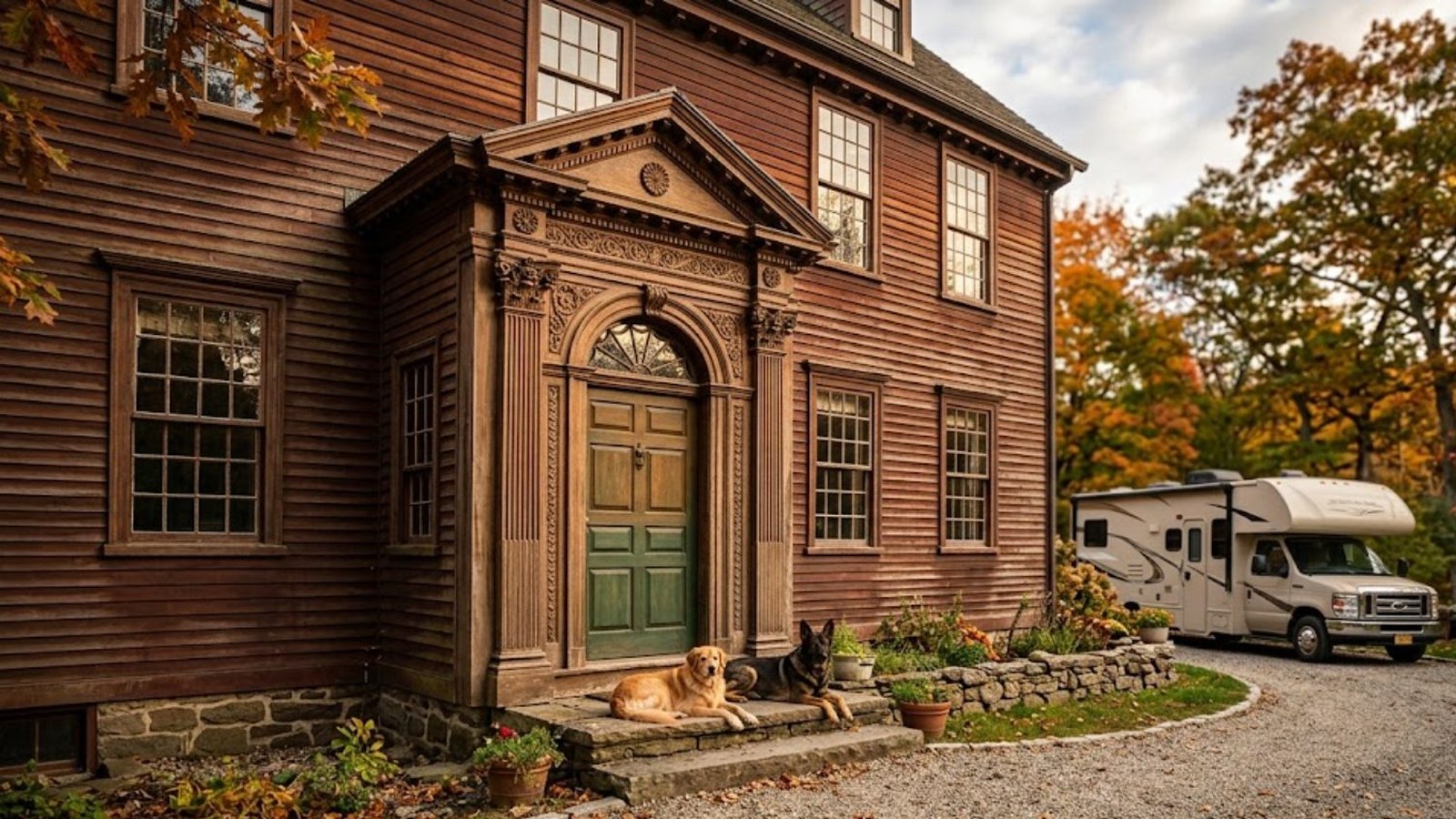
At the end of September a nor'easter knocked over the huge white oak on Amy Myers Jaffe's property in southern Connecticut. It missed the house. That wasn't luck. Jaffe is an energy and sustainability expert at New York University who has studied climate resilience under a NASA grant, and she'd spent years getting ready for exactly that storm. She told the story in the Journal.
Her caution comes from living in the wrong places at the wrong time. In Houston a hurricane turned on the city too fast to flee. She waited upstairs with a life raft and axes, then lost power for more than five weeks. In Davis, Calif., heat waves kept blowing out the transformer on her block, and wildfire smoke left everyone sick. In New Haven she rented a thin-windowed house the winter Boston got 108.6 inches of snow.
Pick the ground before the gadgets
When she bought, the site came first. The house sits on a hill that stays dry on the 2050 flood maps. She can walk to the grocery store and the train, whatever the snow. The driveway has drains built in. She passed on anything with high wildfire risk or a forest next door. An arborist thinned the oak's canopy and cabled its main limbs. That held through countless storms, but not this one. She thinks it may still have saved the house.
After the site comes power. Her house came with a whole-home propane generator. Her expert pick is rooftop solar plus a battery, but her gabled roof lacks the room. She steers people away from diesel generators. Storms cut off diesel deliveries, and a unit that sits idle gets finicky. Her electric car, charged off the generator, beats a gas car in a blackout, since gas pumps need power too. The sump pump once ran on a battery that failed in a storm. Now it's on the generator-backed house circuit, and it handled about 7 inches of rain in a couple of hours this month. A whole-house surge protector came after a Davis transformer blew and fried her fridge's circuit board. Add basement shelves, mold-resistant wall covering, HEPA purifiers and three blocked-off fireplaces. She writes that every buyer should “give at least some thought to climate issues.” Her family finds some of it excessive. She's fine with that.
Our read
This is Housing M6 and Insurance M11 together, and we'd read it as a loss-prevention plan. Every item on Jaffe's list protects something an insurer would otherwise have to pay for, or wouldn't. A flooded basement is usually a separate policy or a rider. A tree through the roof is a claim, and a claim can raise premiums for years. A generator keeps the freezer and the sump pump running, which can head off two claims at once. An arborist bill is small next to those. The gadgets are the cheap part. The site is the part you can't fix later. That's why the flood map and the forest edge come before the house tour.
The connection to your plan is your homeowners policy, specifically the declarations page, the one-page summary of your coverage. You probably haven't read it since closing. This week, pull it up and check three lines. Water-backup or sump-overflow coverage, and for how much. The wind and hail deductible, which some policies now set as a percentage of the home's value, not a flat dollar figure. And flood, which a standard policy doesn't cover at all. Then type your address into a flood map. Jaffe checked hers against 2050. You can at least check this year's. The umbrella is cheaper on a dry day.