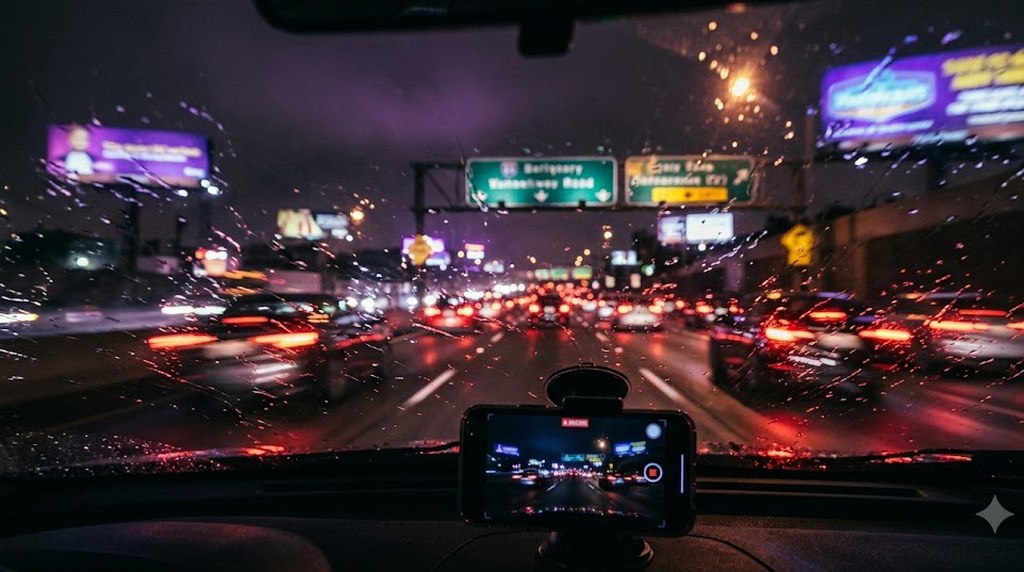
Artur Gevorkyan had a good week. His Uber (UBER) statement showed $1,006 before taxes for about 22 hours of active driving. That's nearly $45.50 an hour. He also spent 30 more hours online, waiting for rides and driving back empty. Count those and the same week pays under $19.50 an hour. Then subtract the car. "The gas is killing me," he told the Journal.
He's one of more than 50,000 California drivers who signed cards to join the new California Gig Workers Union, Paul Kiernan reports in Tuesday's paper. It's the biggest attempt yet to organize gig workers in the U.S. Margarita Peñalosa, 46, started driving for Uber and Lyft (LYFT) in 2017. Eight hours a day then covered her bills and the money she sends to family in Colombia. Now it takes 12-hour days. She says the cost of driving has doubled.
Two clocks
Uber's answer is a different clock. Its spokesman says California drivers earn more than $34 an hour "when actively working," up 17% since 2019. Active means the stretch from accepting a ride to dropping the rider off. The waiting time and the empty ride back from a far drop-off go unpaid. Several Los Angeles drivers told the paper that once they count all their hours and costs, they often land under the state's $16.90 minimum wage. As contractors, they sit outside most labor law. California does give them a wage floor, but only for the active minutes. Workers' comp and bargaining rights don't reach gig workers in most states.
Gevorkyan's costs show why. A $600 monthly payment on a 2019 Infiniti QX60. Nearly $800 every six months for insurance. Close to $70 of gas on a typical 250-mile day, with California regular around $6.31 a gallon, the highest state average by AAA's count. Gas is up more than 50% nationwide this year. Gridwise, an app used by hundreds of thousands of drivers, puts average gross pay at $24.38 an online hour in the second quarter. That's up 7.3% from a year ago and still about 10% below 2021. Uber and Lyft haven't fought the union, the paper notes, partly because the same California bill cut their insurance costs.
Our read
This is Cash Flow, M5, with a Career edge. Gevorkyan's two numbers are the whole lesson. The wage the app shows and the wage you actually earn are different things. The difference is time nobody pays for plus costs nobody reimburses. That's true far beyond ride-share. Anyone paid by the job, the client or the commission has a real hourly wage they've probably never worked out. It's also a reminder of why the books hold energy as a hedge. Chevron (CVX) sits in 37 books and Exxon Mobil (XOM) in 34, nothing added. When gas runs 50% higher, somebody collects that money, and a plan can own a piece of it.
Here's your check this week, and it's one line of math. Take last month's gross from any work that doesn't come with a W-2, the driving, the side clients, the commission checks. Subtract the costs the work causes, the gas, the insurance, the software, the miles. Divide by every hour, including the waiting and the drive home. That's your true wage. If it lands under $16.90, you've learned something the app wasn't going to tell you. And if any of your income is contract income, find the retirement line in your plan. No employer is putting money in for you, so a SEP or a solo 401(k) is your umbrella. If you'd like help choosing one, that's what a review is for. It's easier to open one in a good week than to wish for one in a slow one.