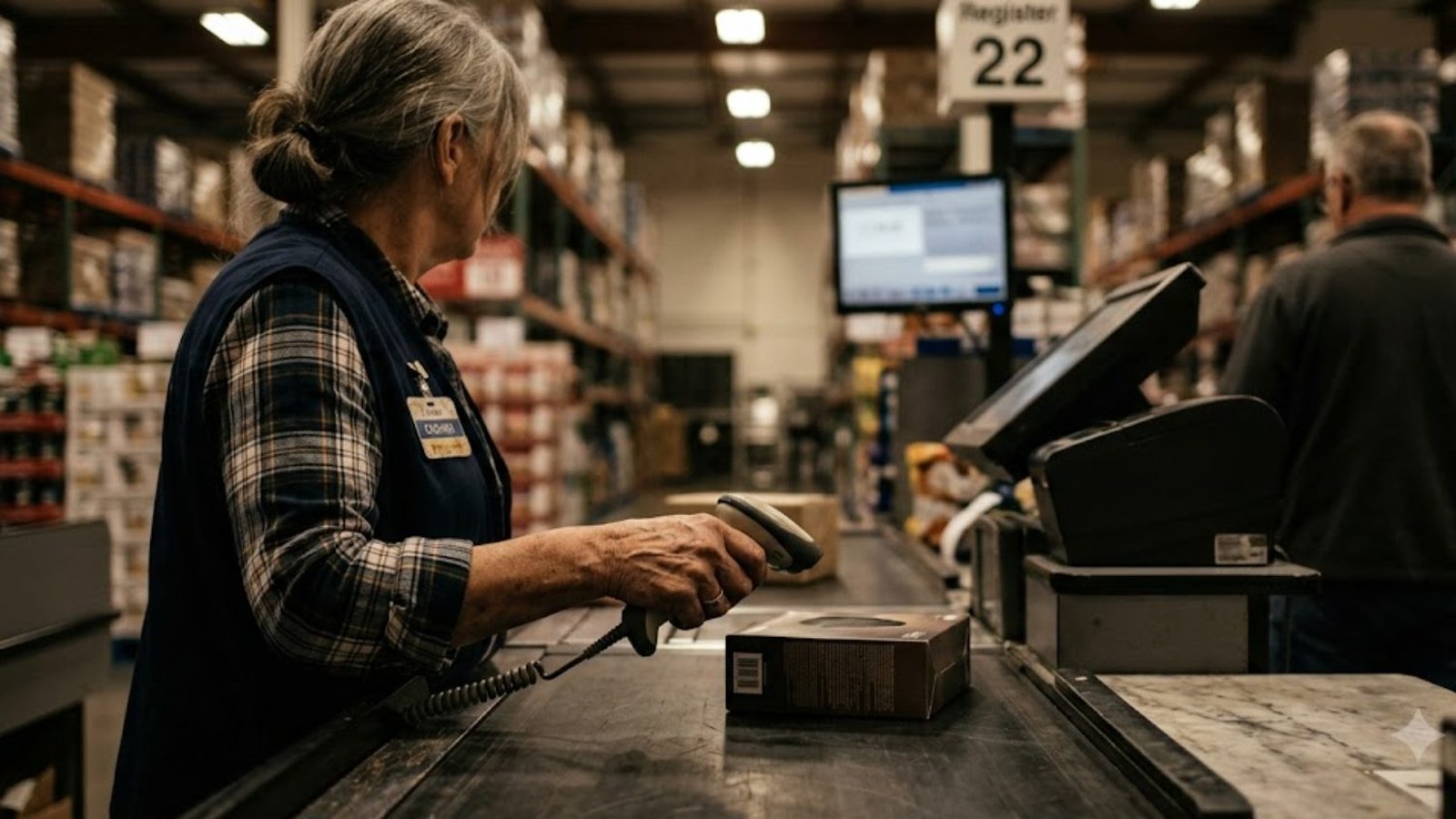
The cashier looks up and asks if you'd like to give a dollar to Unicef. The line behind you waits. You say no, and you feel it. A new study says that moment can cost the store a shopper's good opinion.
Lisa Ward reported the study in the Journal's C-Suite Strategies report. Ying Zou, a Ph.D. candidate at the University of Adelaide Business School, and her co-authors asked 329 people to imagine a grocery checkout. The cashier asks for a donation to Unicef. Then the shoppers answered a survey. Nobody stood in a real line. They pictured one, and the feeling still showed up.
The team scored how much time pressure each person felt, on a scale of one to seven. The average came in at 3.35. Zou says a normal shopping trip should bring little or no pressure at all. Then they split the group at that average, 167 people above it and 162 below. The pressured half rated the store 4.78 on a seven-point scale. The calmer half gave it 5.83. The pressured half said they were less likely to come back, 5.55 against 6.14. They were also more suspicious that the money ever reached a charity, 3.52 against 2.6. The same gap showed up when the group was split by social pressure instead. Zou's fix is to tell shoppers about the cause on posters and fliers while they shop. Then the ask at the register is a decision they've already thought about. Otherwise, she warns, "the fundraising campaign could backfire."
The thank-you that backfires
A second piece on the same pages finds a cousin of that mistake. Katherine C. Lafreniere and Yi Wei of the University of Alberta studied how businesses answer good reviews. The usual reply thanks the reviewer and echoes the praise back. That's what the review platforms recommend. The authors call that advice "exactly wrong." Hotels that echoed the compliment got a little worse from the next guests. Those later ratings came in 0.3% to 0.6% below what silence would have earned. In one of the authors' studies, 83% of people saw a good review as a compliment. And nobody likes a compliment repeated back at them. Across 12 experiments with over 7,000 people, humble replies beat both silence and plain thanks. Say "We're glad it was good," or credit the suppliers or staff who were actually involved. And answer more of them. Some 81% of reviews are positive, and nearly 85% of those never get a reply.
Our read
Our read sits under Behavioral, with a note for business owners. Both studies say the same thing. People don't like being put on the spot, and they remember who did it. The fix in both cases is to lower the pressure. Tell shoppers about the cause before they reach the register. Answer a good review the way you'd answer a compliment on the street, with a quiet thanks and credit to someone else. If you own a business, this is cheap to try. Reply to the good reviews you've been ignoring, and keep the reply humble.
For your own money, the lesson runs the other way. A checkout ask works on you the same way it works on everyone else. The guard against it is a giving plan you set in advance. That can be a yearly amount, or a donor-advised fund you give from on purpose. Then the register never decides your charity for you. This week, look at what you gave last year and write down one number for this year. A plan made on a calm Sunday beats a choice made with a line behind you. You pack the umbrella before the forecast turns, and a short review is a good time to set that giving number.