In 1984 Michael Dell put $1,000 into a computer business in his college dorm room. He steered it through the dot-com bust. Today his company builds the giant AI computers that big tech keeps ordering, and he has a rule. Dell builds a machine only after the customer orders it, and it takes the money up front. Two days after he explained this to the Journal's Christopher Mims, his stock fell more than 10%.
Here's the rule in plain words. Dell (DELL) makes an AI server when an order arrives. The customer pays first. Dell pays its own suppliers later. So Dell holds the customer's cash for days or weeks, and it avoids getting stuck with unsold machines. Michael Dell said the company's cash-conversion cycle is “still negative.” That cycle is the time between paying for parts and getting paid for the product. Below zero means customers, in effect, fund the business. Compare that with the big cloud companies and the so-called neoclouds, CoreWeave (CRWV), Nebius and Crusoe. They borrow heavily to build their AI hubs. One side holds orders and cash. The other holds debt.
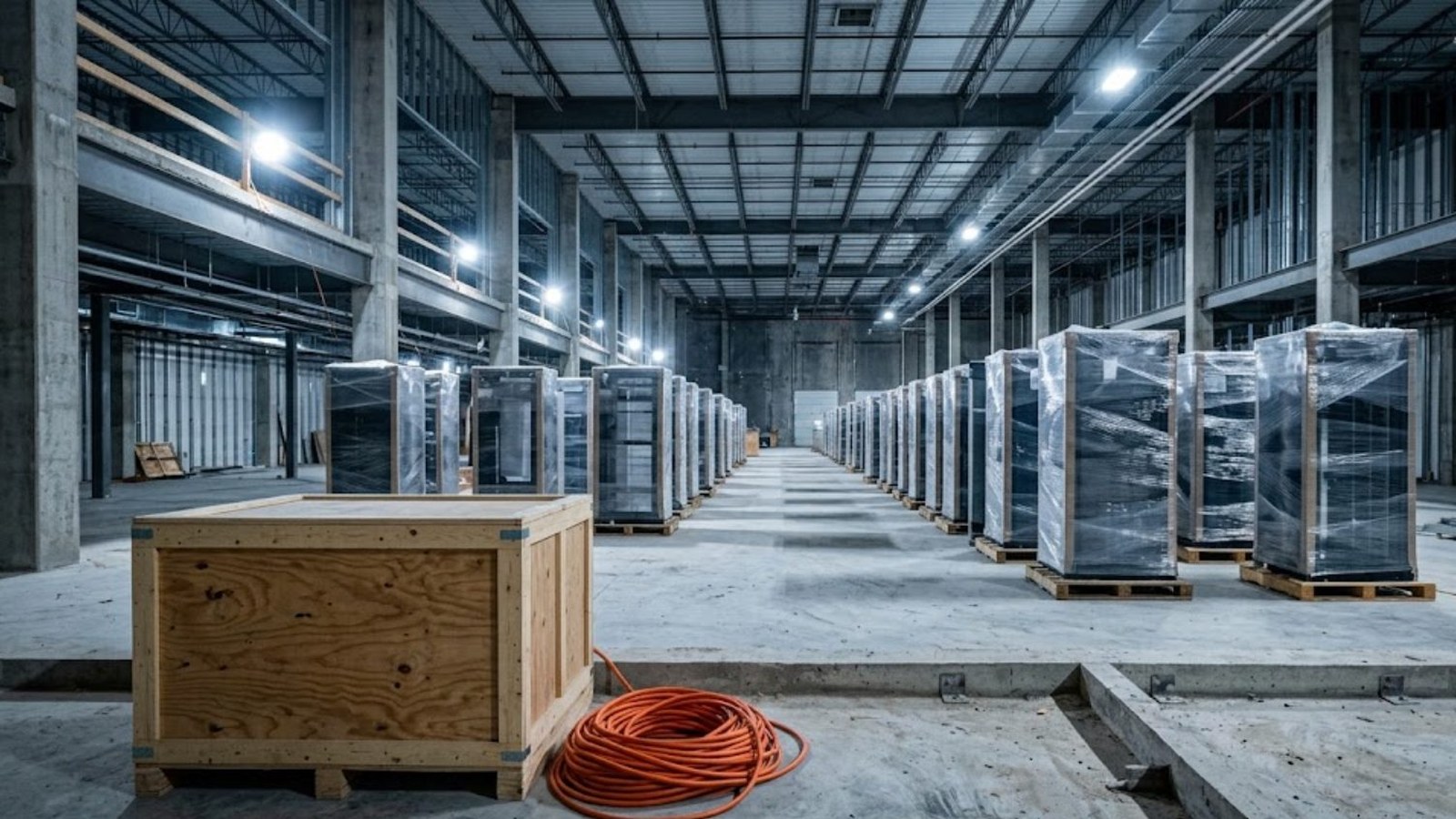
The orders are large. Dell has $95 billion in back-orders for AI server racks. Each rack weighs 3,000 pounds and draws as much power as 100 or more U.S. households. It took eight quarters to sign 3,200 customers building AI data centers with Dell gear. The last three quarters added 3,300 more. The bottleneck is memory chips, and Michael Dell says next year “it's gonna get worse.” His company is worth almost four times what it was a year ago, helped by a projected 70% jump in revenue this fiscal year.
A bellwether, because the pain shows up fast
Mims's point is that a just-in-time company works like a thermometer for the whole boom. If customers pull back, Dell's revenue drops almost at once, with no stockpile to cushion it. For now the stock fell with everything else. Dell lost 22% in the week to Friday, Oct. 16, its worst week yet, and closed at $451.71. Corning, run by another dot-com survivor, uses a related approach. Nvidia (NVDA), Amazon (AMZN) and Meta (META) help pay for its new fiber factories, so those partners can't easily walk away. Mims puts the same test to every AI supplier. He wants to know what happens to each one if the $3.5 trillion of AI spending needed by 2032 never arrives.
Our read
This is Investments/Risk · IN04, with a Cash Flow · M5 lesson for business owners. In a building boom, look at who carries the debt and the inventory. A seller that's paid before it builds bends in a bust. A builder that borrowed to pour the concrete can break. Dell is held at weight in 7 books, nothing added. Nvidia is in 31, Amazon in 19 and Meta in 20, all at weight. CoreWeave, one of the neoclouds Mims names, sits in one satellite sleeve. Nothing added, nothing trimmed. Dell's 22% week is a reminder that a strong balance sheet doesn't protect a stock price in the short run. It protects the company.
If you own a business, your plan touches this in the working-capital line. Dell's edge is a cash-conversion cycle below zero, and a small firm can move toward the same thing. This week, check the gap between when you pay your suppliers and when your customers pay you. Then ask for a deposit on the next big order. The deposit is the umbrella, and you ask for it before the rain. If you invest instead, the check is simpler. Find the AI names in your growth fund and sort them by one question, whether they're paid before they build or borrow to build. Bring the list to a review and we'll go through it with you.