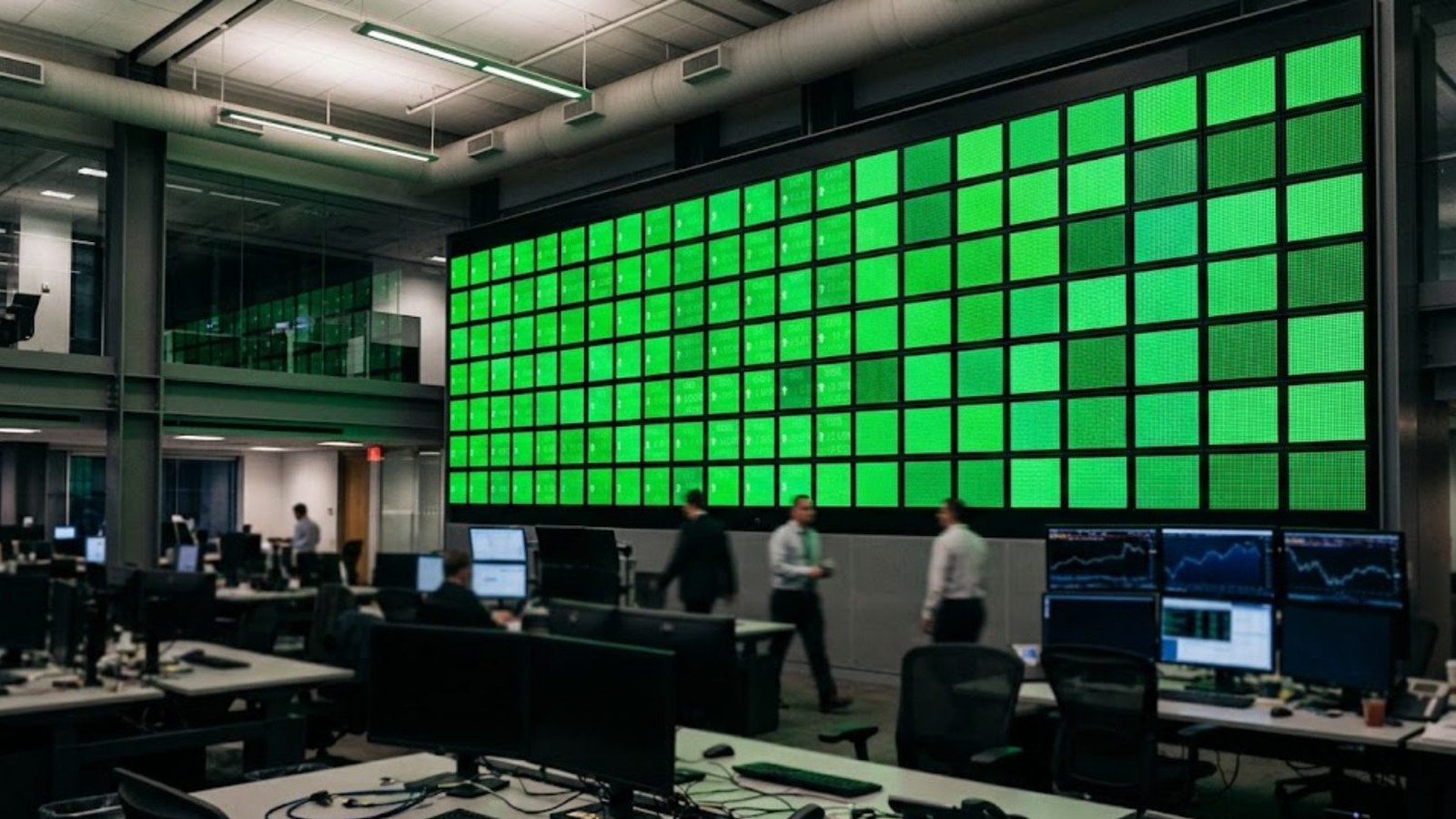
Wall Street had a bad week, and tech had a worse one. The Nasdaq Composite fell 4.5% in the five days to Friday, Oct. 16. That's its worst week since June. The S&P 500 lost 1.9%. The Dow, which owns little tech, gained 0.7%. One index down hard and another up tells you where the trouble lived.
The Journal's Sam Goldfarb, Gunjan Banerji and Jack Pitcher called it the week Wall Street “wavered on the U.S.'s Teflon economy.” That's an economy nothing seemed able to hurt. Several worries hit at once. Chip stocks sold off on reports that China is gaining ground in chips. A hot inflation report rattled bonds. CoreWeave (CRWV), a heavily indebted AI cloud company, lost 12% on Friday and 25% for the week. The chip index fell 3.8% Friday, its longest losing streak since 2008. Dell (DELL) dropped 22%, its worst week yet.
Investors ran to the safety of government bonds. When bond prices rise, their yields fall. The 10-year Treasury yield dropped 0.146 point to 5.097%, its biggest weekly fall since mid-February. Underneath it all, the Journal says, was a fear that higher borrowing costs could slow the AI build-out. That build-out now drives much of the economy's growth. Still, tech didn't fall as one block. Apple (AAPL) rose 2% for the week, the only one of the Magnificent Seven to gain. Tesla (TSLA) lost 7.3% and Nvidia (NVDA) 6.6%.
Monday's bounce was narrower than it looked
Monday, Oct. 19 looked calmer. The S&P 500 rose 0.41% to 7,690.73 and the Nasdaq rose 1.11%. Amazon (AMZN) jumped 5%, Micron (MU) 3% and Nvidia 1.4%. But on the New York Stock Exchange, 1,751 stocks fell and 961 rose. New lows beat new highs, 157 to 35. The equal-weight S&P 500 fund (RSP) gives every company the same small slice. It fell 0.32% while the regular, size-weighted fund (SPY) rose 0.42%. A few giants lifted the index while most stocks sat the rally out. The 10-year yield climbed back to 5.135%. On Friday, futures put the odds of another Fed rate hike by year-end at about 85%. The Fed meets Oct. 27-28.
Our read
This is Investments/Risk · IN04, and the number we keep coming back to is 39%. About 45 S&P 500 companies with heavy AI exposure made up around 39% of the index's 14.1% return through Oct. 11. So a plain S&P 500 index fund is partly an AI bet, whether you meant it or not. That shaped the desk's one move. On Saturday, Oct. 17 we put the first third of the North Star reserve to work in its ten model books, about 5% of each book. We did it before the S&P 500 reached our written level of 7,175. About half went to the equal-weight S&P 500 fund, with small slices of the power builders and Micron. The other two thirds wait for 6,863, about 11% below Monday's close, and for the week of Nov. 3. That was our decision for our model books, and it isn't advice. Nothing else was bought or trimmed. Nvidia is held at weight in 31 books, Micron in 23, Dell in 7 and CoreWeave in one satellite sleeve.
Your plan touches this in the index fund at the center of your 401(k). Say it tracks the S&P 500 and weights companies by size. Then about four in ten dollars of its gain this year, through Oct. 11, came from those 45 AI names. This week, open your 401(k) app and find that fund. Look at its top ten holdings and the share of the fund they make up. Then decide if that's the AI bet you want, at that size. You check the roof before the storm, not during it. If the answer surprises you, that's a 20-minute talk we'd be glad to have in a review.