Nvidia (NVDA) looks cheaper than it did. Its stock rose 15%, yet investors now pay 15 times next year's expected profit for it, down from 23 times. That ratio is the P/E, price over earnings. Micron (MU) tripled and trades at just under five times. That sounds like a bargain. James Mackintosh, in Monday's Streetwise column, reads it as a warning.
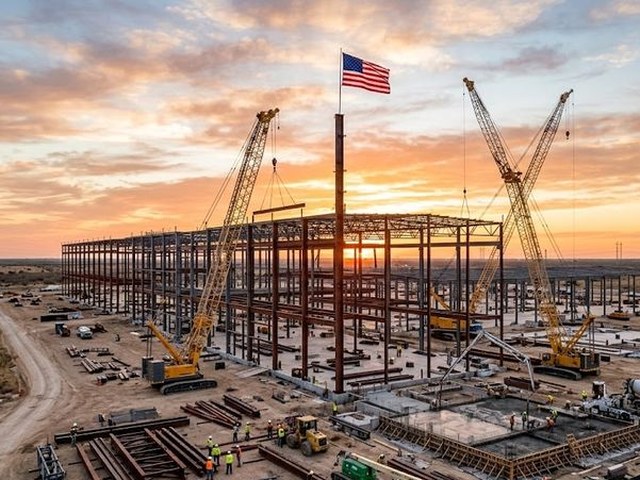
His case is simple. When one company spends on a building boom, other companies book it as sales. Makers of chips, cooling gear, cables, backup generators and turbines have raised prices, so their profits have soared. Those profits are real. But they last only as long as the building does. Once the data centers are finished in a few years, spending drops hard. Repairs and upgrades cost far less than new construction. Investors know that. So share prices rose less than profits did, and P/E ratios fell. As Rob Almeida of MFS puts it, the market “doesn't have a P problem, it has an E problem.”
Here are the numbers behind the earnings. Gerard Minack of Minack Advisors counts eight giants plus the next 11 AI players. The eight are Amazon (AMZN), Alphabet (GOOGL), Broadcom (AVGO), Meta (META), Microsoft (MSFT), Nvidia, Oracle (ORCL) and Palantir (PLTR). Their forecast earnings rose $700 billion this year. The rest of the S&P 500 added less than $500 billion. If those AI earnings shrink, the stocks stop looking cheap. Last week gave a taste of that. Hot inflation pushed up borrowing costs. CoreWeave (CRWV) fell 24%, wiping out its gains for the year. Micron fell 11%. Its Korean rivals, Samsung Electronics and SK Hynix, fell about twice as much.
Canals, railroads and the fiber bust
John Templeton called “This time it's different” the four most dangerous words in investing. Mackintosh's verdict is that so far, this time isn't. A Columbia professor, writing for Brookings, put the AI bill at $9 trillion by 2032. That's about 3.2% of GDP, the economy's total output, every year. No U.S. capital project has ever been bigger. History has a pattern here. Canals in 1790s England, railways in the 1840s and 1880s, electric power, radio, television and dot-com fiber all paid off for society. Their investors were “sorely disappointed.” Sometimes the payoff came too slowly. Sometimes profits were thinner and later than hoped. And sometimes competition passed the gains to customers instead of owners.
Our read
This is Investments/Risk · IN04, with a Behavioral lesson inside it. A low P/E on a boom-time profit isn't a margin of safety. It's a bet that the boom runs longer than the crowd thinks. We hold the build-out at weight and treat it as a cycle. Nvidia is in 31 books, Micron in 23, Broadcom in 29, Microsoft in 29 and Alphabet in 28, all at weight. Micron did get a small slice in the North Star books on Saturday, Oct. 17, as part of the desk's one recent move. That was our decision for our model books, not advice. CoreWeave sits in one satellite sleeve. Nothing else was added, and nothing was trimmed.
Your plan touches this in the growth fund, the tech fund or the single chip stock you've let ride. Micron tripled, and a stock that triples can turn a small position into a big one by accident. This week, pull up that position and check two things. First, what share of your whole account it has grown into. Second, whether you're counting on this year's profit to repeat next year. Then write down the size you'd choose on purpose. Umbrellas get checked on dry days. If the two sizes are far apart, that's a review conversation worth having.