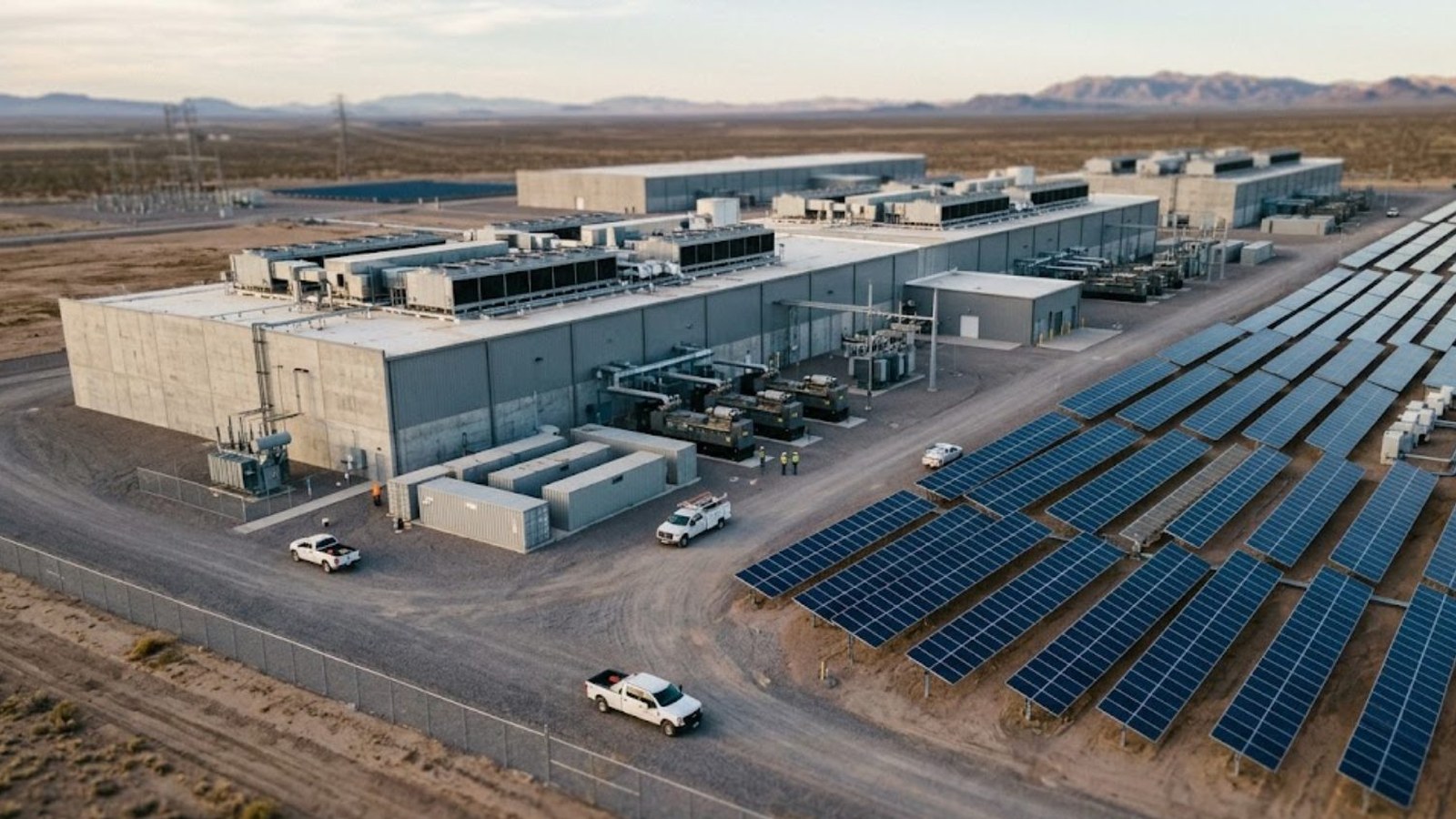
A data center next door used to come with a tax break. Now the president wants it to come with its own power plant, and maybe a check for the neighbors. That's the idea President Trump laid out in a social-media post, the Journal reported Thursday, Oct. 22. It isn't clear yet how it would be enforced.
Trump had only recommended that data centers make their own power. Requiring it looked like a new step, Gareth Vipers and Amrith Ramkumar write. Building a power plant is costly, and local rules slow it down. That could be hard on smaller developers in some states. Trump also said builders should pay host towns or residents a “dividend.” Amazon (AMZN) and Meta (META) have each said they'll put at least $1 billion into host communities. Firms that took Trump's earlier pledge build in power markets that deliver about 80% of the nation's electricity, per a White House official.
The pushback crosses party lines. In a March Gallup survey, 71% of Americans said they'd oppose a data center near them. Just 53% said the same about a nuclear plant. Pennsylvania's Democratic governor, Josh Shapiro, set strict new rules for projects. Texas's Republican governor, Greg Abbott, halted approvals of some 1,800 new data centers. A Senate bill would speed up permits and make data centers pay all of their own transmission costs. Former officials from the Trump, Biden and Obama years urged lawmakers to pass it. A coalition of 185 groups urged them to oppose it, and some lawmakers want to wait for the new Congress. Jason Furman, who served in the Obama White House, said “the problem was permitting, not money.”
When a hookup stalls
Australia showed what a stalled hookup can cost. A power company serving one Melbourne site of NextDC, the country's largest data-center operator, stopped work. It cited safety and pushback from neighbors. NextDC paused every project without a signed customer. Its stock fell 42% and lost more than $2 billion of value. Back home, the power builders in our North Star books had a split Thursday. GE Vernova (GEV) fell $98.50 to $827.42, and Vistra (VST) fell $15.31 to $140.83. That's about 10% each. NextEra (NEE) rose $3.62 to $81.90. The paper doesn't tie any of those moves to this rule. GE Vernova and Vistra fell with the AI build-out names in the Meta-led selloff.
Our read
This is Investments/Risk (IN04). Data centers need power, and the companies that build plants and turbines are part of that bet. A rule that makes builders supply their own electricity could, if it sticks, send more orders their way. That's our inference, since the story names no power company. The other side of the ledger keeps getting louder. Halted approvals, local fights and stalled hookups are demand risks, and NextDC shows how fast they can hit a stock. For now this is an idea with no clear way to enforce it, so we watch. GE Vernova is held at weight in 30 books, NextEra in 21 and Vistra in 17. Nothing added.
Here's where it reaches your money. Many retirees own a utility or infrastructure fund for steady income, and those funds can hold the same power names. This week, pull up the top ten holdings of any such fund you own. Count the names that sell power or equipment to data centers. That count is your stake in a rule nobody yet knows how to enforce. If it's higher than you thought, bring it to your next review. Better to know where the umbrella is before the forecast changes.