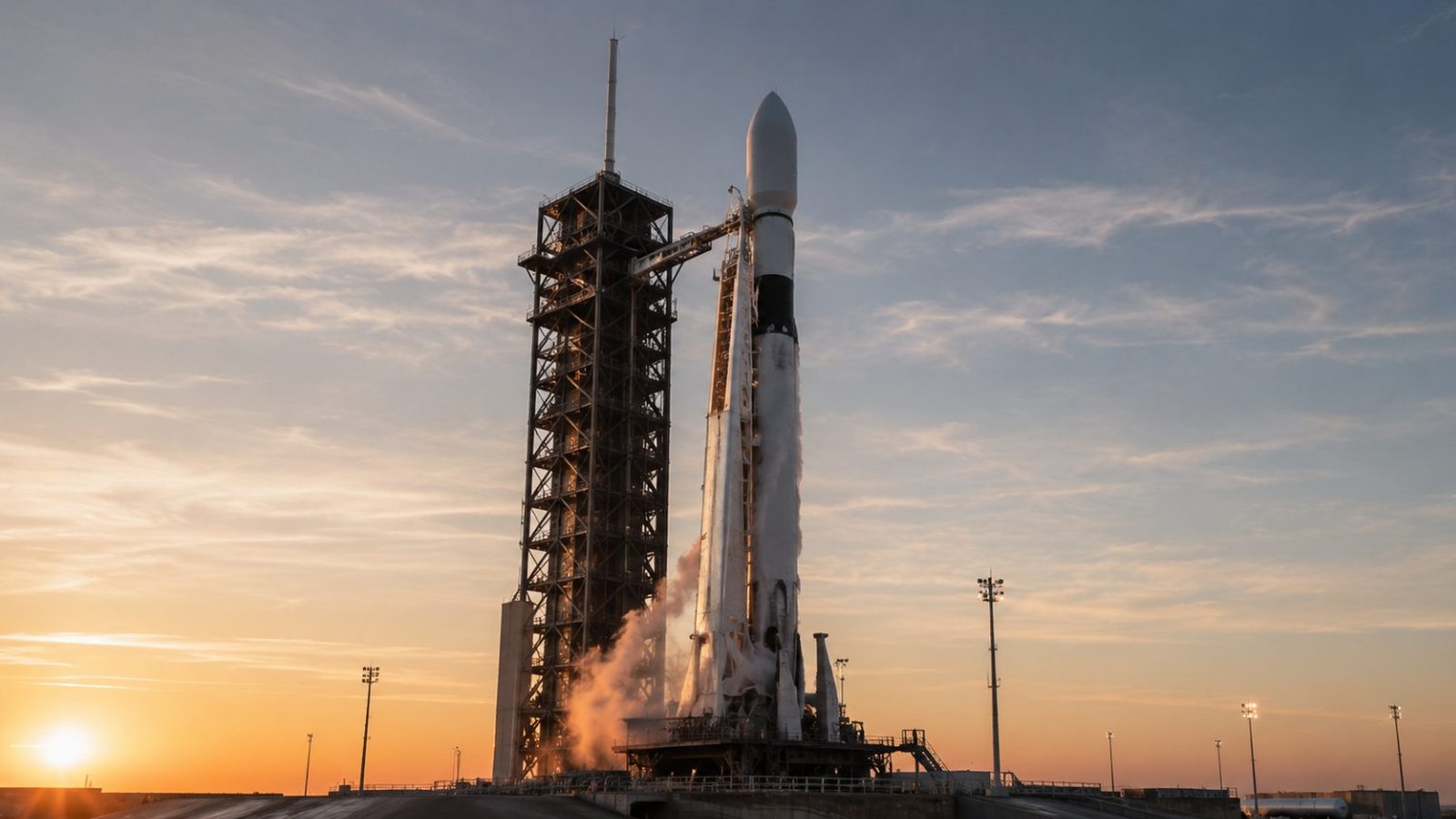
Elon Musk runs two companies worth about $3.66 trillion between them. On Tuesday, Oct. 20, he said merging them "would be a good idea." Both companies set up special committees to study it. It would be the biggest corporate merger of all time. On Thursday, Oct. 22, SpaceX (SPCX) fell 9.1% and Tesla (TSLA) fell 3.1%.
Asa Fitch and Aaron Black make the case against it in Friday's Heard on the Street column. They think Tesla's owners stand to lose the most. The upside is size. A giant with many kinds of revenue could raise money more cheaply. The downside is the mix. One stock would hold rockets, satellites, a social network, robots, AI, solar and cars. Investors tend to pay less for a company they can't make sense of. Wall Street calls that a conglomerate discount.
In August, Deutsche Bank's analysts valued SpaceX's AI business at 5 times revenue and its Starlink internet unit at 58 times. On Tuesday, SpaceX reported third-quarter revenue of $14.6 billion, up 161%, and net income of $4.4 billion, its first profit as a public company. It also spent $19.6 billion on capital projects, $16.4 billion of it on the AI unit. Adding Tesla would make the sum even harder to price. The columnists think a merged company would likely be worth less than $3.66 trillion. They also worry that Tesla's cash could end up rescuing other units that stumble, instead of paying for Tesla's own growth.
Already one family
The two companies don't need a merger to do business. Thursday's Page One story listed the ties. Last year Tesla sold SpaceX $143 million of cars and $430 million of Megapack batteries for its data centers. It bought $3.3 million of ads on X. Tesla has put $2 billion into SpaceX. They share a chip venture called Terafab, which Musk hopes reaches volume production late in 2028, with "big error bars." Tesla's new Roadster uses SpaceX thrusters.
Then there's control. Individual investors hold about 30% of Tesla's voting power, and Musk owned about 20% of Tesla as of Sept. 30. At SpaceX, the June IPO gave him more than 80% of the votes. Some investors and analysts expect an all-stock deal, with SpaceX paying a modest premium for Tesla shares. If SpaceX buys Tesla, Thursday's story says, Musk would likely stay in control. Any deal would go to a shareholder vote. He isn't on either committee, and he called the process "an odd kabuki dance."
Our read
This is an Investments/Risk IN04 story. Tesla is held at weight in 13 books; nothing added. SpaceX is in none. A company you own because you trust one person is a bet on that person. The column notes that Wall Street forgave Berkshire Hathaway's sprawl out of faith in Warren Buffett. Berkshire (BRK.B) is held in 22 books. Musk's fans extend him the same faith, for a mix with far more spending and far less certainty. A Tesla holder who swapped into SpaceX stock would join a company Musk controls. That's a vote you'd be giving up. Our verdict is watch.
Here's the connection to your own plan. You probably own Tesla without ever buying it. It sits in every S&P 500 index fund, and likely in your 401(k)'s target-date fund too. This week, open your 401(k) app and pull up the holdings of your biggest fund. Look for Tesla, and for SpaceX if your fund holds it, and add up their weights. That number is your bet on one man's judgment. If the total surprises you, bring it to a review and we'll look at it together.