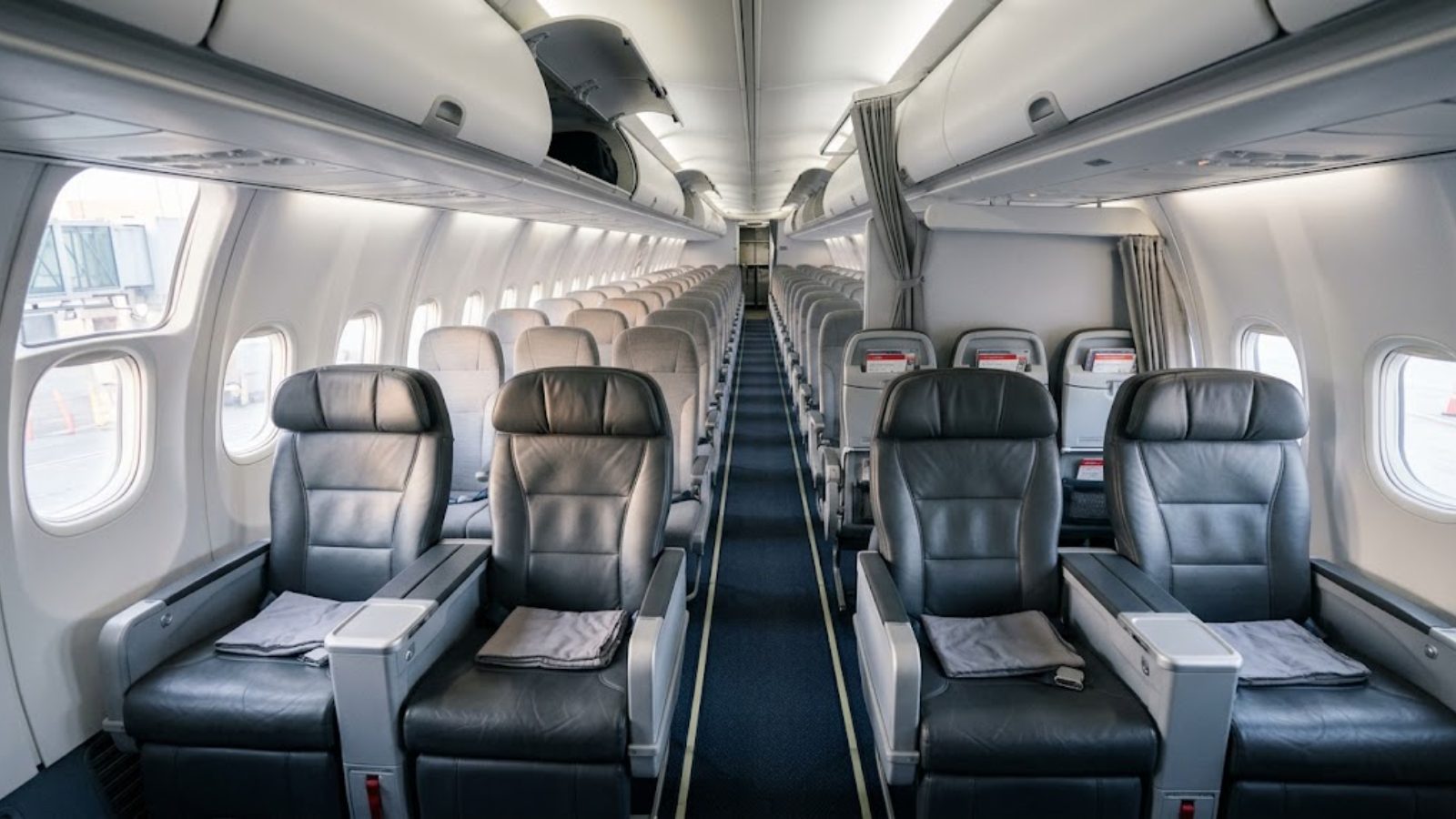
The last man standing in American budget flying is bolting a first-class cabin onto the front of the plane. Jimmy Dempsey, 51, runs Denver-based Frontier Group Holdings (ULCC), the biggest U.S. discount airline left after Spirit Airlines, the poster child for everything wrong with the model, shut down this year. His conversation with the Journal’s Alison Sider reads like a man cheerfully renovating a house during a fuel-price storm.
Dempsey took the helm last year with a two-part job: fix the operation and make money again, while adding amenities that would once have been heresy at a discounter. First-class seats. In-flight Wi-Fi. Asked whether the budget model has a future, he doesn’t flinch: ‘I think we have a really good future ahead of us. And we’re going to adapt to the environment we’re in. Customers are seeking more premium products.’ Starlink is slated for early next year, which he calls a real game-changer, because today Frontier isn’t ‘in the decision set for a lot of customers who need connectivity.’
The 40% Gap and the Spirit-Size Hole
The bones of the business are cost. ‘Our cost differential is about 40% versus the rest of the industry,’ Dempsey says, and the plan is to run a better operation, create reliability and keep the productivity. Spirit’s liquidation is the opening: ‘It does give us an opportunity. There’s no doubt about it.’ The two carriers overlapped on about 100 routes. Asked whether a customer gets left behind as everyone climbs the premium ladder, he answers that the model ‘continues to grow the addressable market, and encourages people to travel who wouldn’t normally travel.’
The first-class story is a real-estate story. Two and a half years ago Frontier blocked the middle seat in the first two rows and called it Upfront Plus; ‘we saw a meaningful improvement in the revenue generated for that real estate,’ so now the first two rows become effectively two-by-two true first class, with Upfront Plus likely continuing in the row behind. As for whether Starlink is free: ‘We haven’t finalized the commercial model.’ Is the credit card the profit engine it is for the majors? Not realistic for Frontier, he says; the program is ‘pretty immature,’ which he frames as ‘a huge opportunity for us to invest in the loyalty program.’
Then fuel, and here the cheer drops a notch. ‘It’s very unpredictable at the moment. I think you’ve got to plan for managing higher oil prices for the foreseeable future.’ That’s not a throwaway line. West Texas Intermediate closed Thursday at $91.30, up 55% this year, and the same paper’s World section reports airlines rerouting around Russian and Gulf airspace, which costs both fuel and time. A CEO planning for expensive oil in September is finding his umbrella before the first drop.
Premium Creep Is Lifestyle Inflation With a Boarding Pass
Here’s the part that flies home with you. The $49 fare is real, and so is the $240 trip it becomes once you add the seat, the bag, the Wi-Fi and the coffee. Nobody lies to you; the ladder is just built so every rung looks cheap from the one below. That’s the airline version of lifestyle inflation, and the only honest travel line in a household budget is the all-in number: fare, fees, ground, food. Write down what the trip cost, not what the ad said.
Second, the loyalty economy. The card programs Dempsey envies are bank businesses wearing airline costumes. Points are a liability the airline controls, can devalue overnight and can expire. They’re a coupon, not a savings account, and they never belong on the asset side of a plan. Spend them, enjoy them, and count them at zero.
Third, the industry tell. When the cheapest airline in America decides the front of the plane is where the money is, it’s telling you where the margin lives: the premium cabin. That’s a mild positive for the legacy carriers that already own it and a reason not to chase the discounters on a good tape. Which is why the book holds United Airlines (UAL) small in the dividend sleeve as capacity, not as pricing power, and why we didn’t buy Frontier on the Spirit news. Fifteen minutes, bring your statement, and we’ll look at the travel line together, all-in.