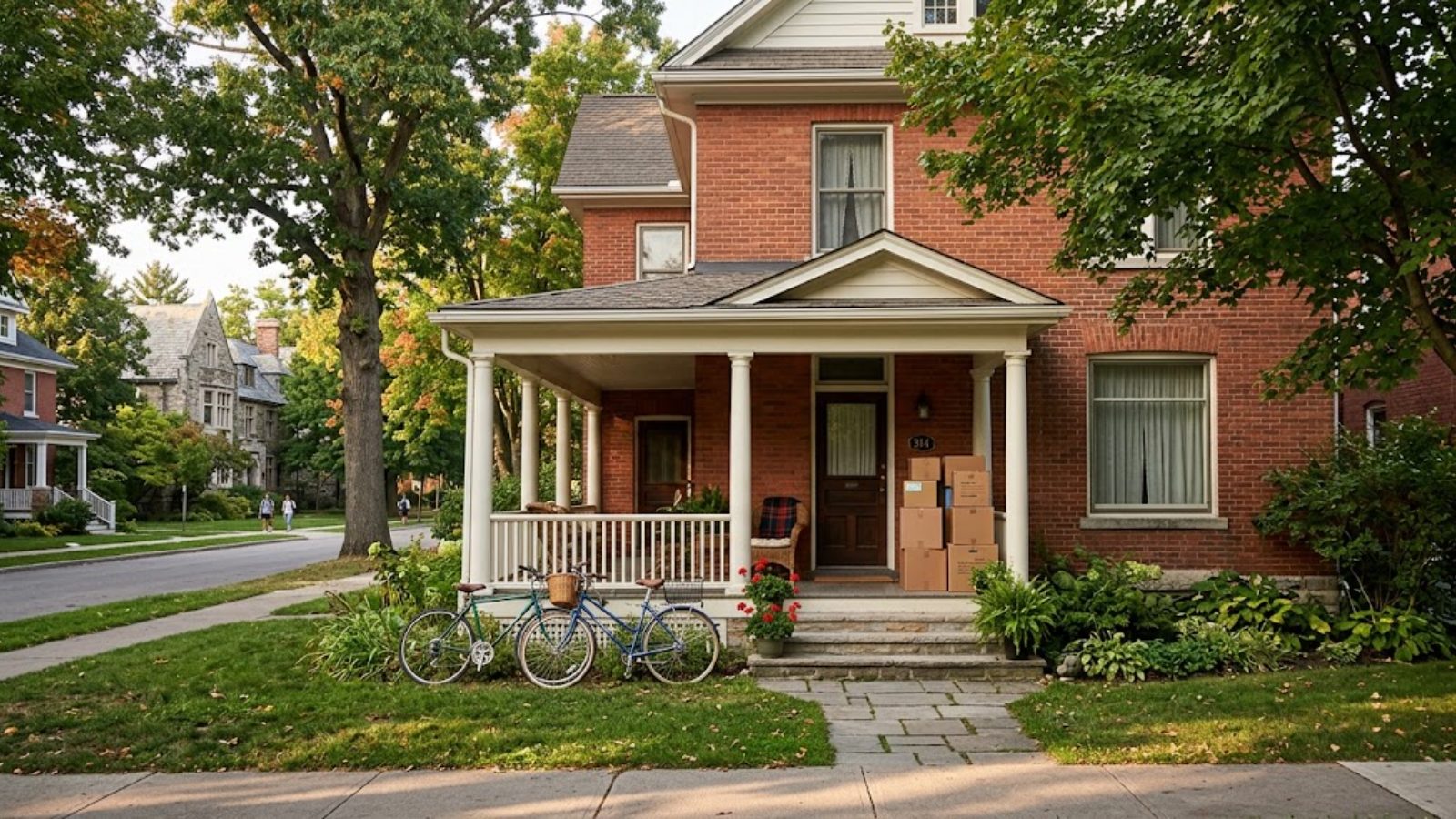
Four years of room and board, or a mortgage. Rent to a landlord, or rent to us. The kid has to live somewhere. It’s the most persuasive bad argument in family finance, and every September it gets made in a realtor’s window in every expensive college town in the country, usually by a parent who is very good at math and has just skipped a step.
The Journal’s Mansion section reports that in America’s higher-education corridors the campus boundary line doubles as a lucrative real-estate border, and that from New York City to Los Angeles wealthy parents have long helped drive demand by buying residences for student children. What’s new, agents say, is the intent: the purchases are shifting from pure investment to second family homes, places the parents mean to use themselves. It isn’t universal — in Wellesley, Mass., traditional buyers still rule the block — and the campus dividend is real beyond property values, in the public lectures, the arts and the events that keep a college town lively; Pearl Street Mall in downtown Boulder, Colo., is the kind of hub locals and students share. The paper ranked college-town ZIP Codes across five school types by median listing price using July data from Realtor.com. We’d rather talk about the behavior than the table.
What has to be true
Start with what the pitch leaves out. Four years of carrying costs: the mortgage, property tax, insurance, any HOA, maintenance on a house full of nineteen-year-olds, and three summers of vacancy unless you find sublets. Then the round trip. Buying and later selling a home typically costs 8-10% of its value between commissions, transfer taxes, title, inspections and the repairs a buyer’s inspector finds — which means the house has to appreciate that much before you’ve broken even on the mere act of owning it.
Then the market itself. A college town is a single-employer town, and the employer is an institution facing falling enrollment demographics for the rest of this decade. And there’s the part nobody models: the exit is scheduled. Graduation is a specific spring, and the house goes on the market that spring whether or not the market cooperates. Every other seller in the country chooses the timing. This one is chosen by a registrar.
The boring alternative
Compare it with the dullest line in the plan. A 529 grows tax-free and comes out tax-free for qualified expenses, which generally include room and board up to the school’s published allowance for a student enrolled at least half-time. No leverage, no tenants, no property manager, no spring deadline. The house has to beat that after costs, after taxes and after the risk of a bad exit year, and it has to do it while carrying a mortgage at rates that closed Thursday at 6.71% for a 30-year loan.
Now let’s be fair, because the case can work. It works when the parents genuinely want a second home in that town for the next twenty years, not four — the version the agents are now describing. It works when the purchase is unlevered or lightly levered, so the carrying cost is an opportunity cost rather than a monthly bill. And it works when the child is not the property manager. If the student is collecting rent from roommates, fielding the 2 a.m. plumbing call and explaining the security deposit, you haven’t bought an investment; you’ve bought your kid a second job.
Two things the lawyer says
First: don’t title it in the student’s name to “keep it simple.” That’s a completed gift, with gift-tax reporting above the annual exclusion, and it turns a parental asset into a student asset, which federal financial-aid formulas weigh far more heavily. Second: a student-occupied house with roommates is a landlord relationship. It needs a real written lease, a landlord policy rather than a homeowner’s policy, and an umbrella liability policy on top, because the party that ends in an ambulance becomes a claim against the owner, not the tenant. None of that is a reason not to buy. All of it is a reason to decide on a Tuesday in March rather than on move-in weekend.