In 1970, the year of the Beetle and the Bus, Volkswagen sold more cars in America than it ever has since, and it has spent the fifty-six years after that trying to get back there. This week it tried again. Volkswagen (VWAGY) said veteran executive Marco Schubert takes responsibility for North America in October and that Kjell Gruner — hired in December 2024 after a stint at electric-vehicle startup Rivian (RIVN) — is leaving. It’s the second shake-up of the region’s leadership in less than two years.
The tell is in the org chart. Schubert, unlike his predecessor, reports directly to CEO Oliver Blume, who said the company would “intensify our commitment in the most important growth market for the Volkswagen Group.” A regional boss who reports to the chief executive means a market the chief executive has decided to own personally, which is either a commitment or a confession. At Volkswagen it has usually been both.
The prize is real: about 16 million vehicles a year and a lot of profit for whoever adapts to American taste fastest. Japanese rivals did that in the 1970s and never gave the ground back. Volkswagen recovered some of it this century, mostly through Audi and Porsche, but its group share in North America still hovers around 4%, far below its standing elsewhere — and elsewhere is getting harder too. Its once-lucrative China business has fallen prey to local competitors, and in Europe it’s cutting tens of thousands of jobs and closing or repurposing factories.
The $5.8 billion that doesn’t go away
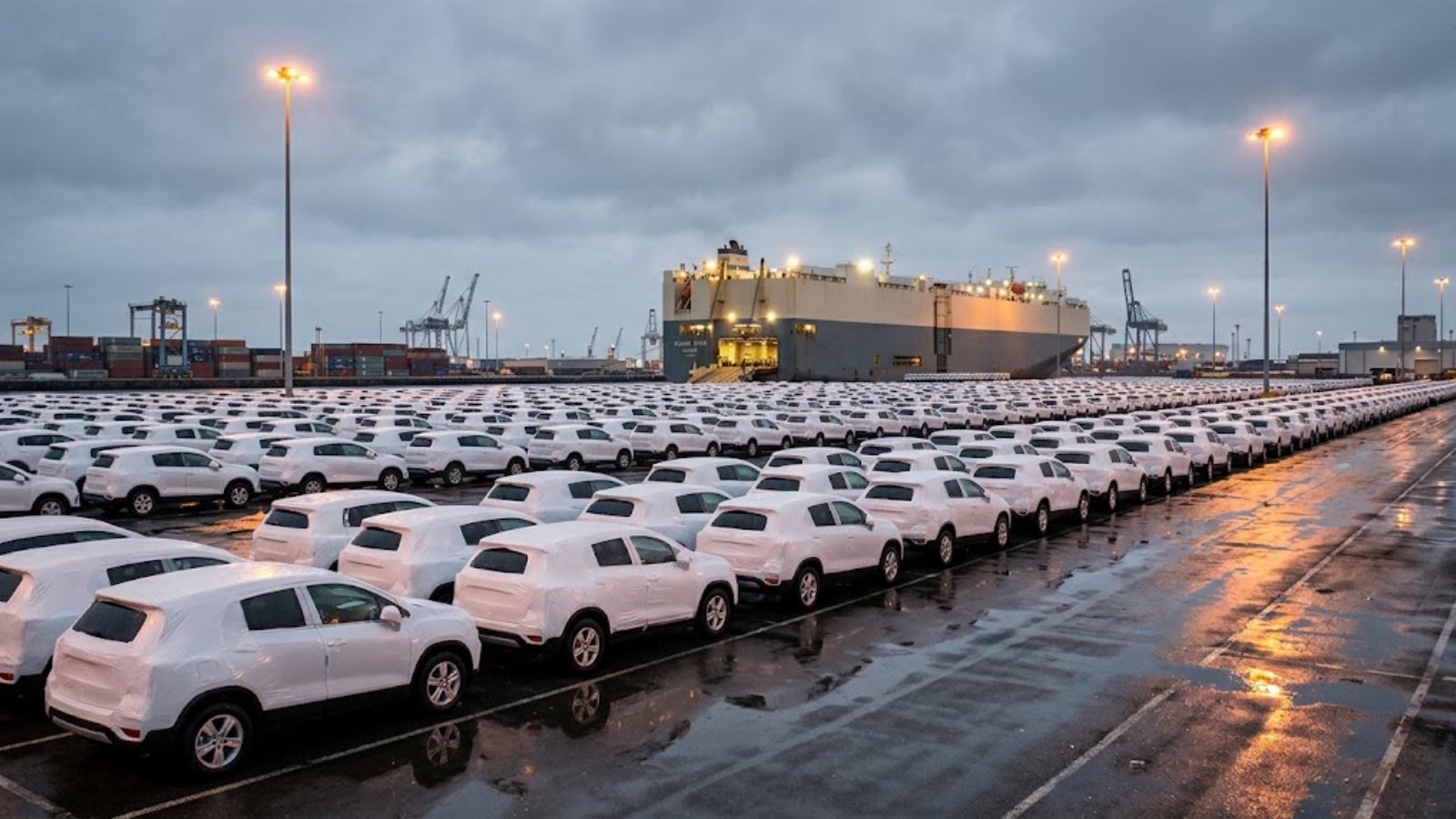
With one small plant in Chattanooga, Tenn., Volkswagen imports most of what it sells here, which makes it one of the automakers hurt worst by President Trump’s trade policy. The company’s own estimate of the annual hit is the equivalent of $5.8 billion. Blume, in a question-and-answer session published on the company intranet last month: “Our cars are becoming more expensive and therefore increasingly difficult to sell, not because they have become inferior but because the rules of the game have changed.” Read that as a consumer, not an investor. A cost the manufacturer can’t absorb and the dealer didn’t create ends up on the window sticker, and a household shopping an imported car this autumn is negotiating against it.
Fourth restructuring, third strategy
Here’s the pattern, and it’s the whole story. Martin Winterkorn, CEO from 2007 to 2015, set a goal of 800,000 U.S. sales a year; the company has acknowledged that the pressure of that plan contributed to the diesel-cheating scandal. Herbert Diess, an avowed Elon Musk admirer, pinned a 10% U.S. share goal on electric vehicles, and his signature products — the U.S.-built ID.4 and the imported ID.Buzz — struggled for traction even before the Biden-era subsidies were withdrawn. In April the company ended U.S. production of the ID.4. Each strategy arrived with a number, and each number outlived the strategy.
Blume is doing something genuinely different: lineups tailored to regions rather than the same car everywhere. He has poured money into Scout Motors, the Diess-era revival of a historic SUV brand as an all-American EV startup, since pivoted to extended-range electric vehicles — a big battery with a small gasoline engine alongside it. He has committed billions to Rivian for access to its vehicle electronics and software. Audi launched its first full-size SUV, the Q9, in New York last month, developed squarely for American buyers, and independent analyst Jurgen Pieper thinks Schubert’s Audi background makes a U.S. factory dedicated to the luxury brand more likely. Some of that may work. None of it is cheap, and all of it is on the clock.
Why we own the other one
Capital Wealth doesn’t own Volkswagen. The international sleeve owns Toyota (TM), and the reason is precisely the fifty years in this story: Toyota kept being better at reading American taste while Volkswagen kept announcing targets. The transferable rule applies to serial turnarounds anywhere. The fourth restructuring under the third strategy isn’t a value opportunity; it’s a pattern. And the tell isn’t the board — boards change slowly — it’s churn at the operating level, the regional chief who lasts twenty months. When the people who actually have to hit the number keep leaving, the number is the problem.