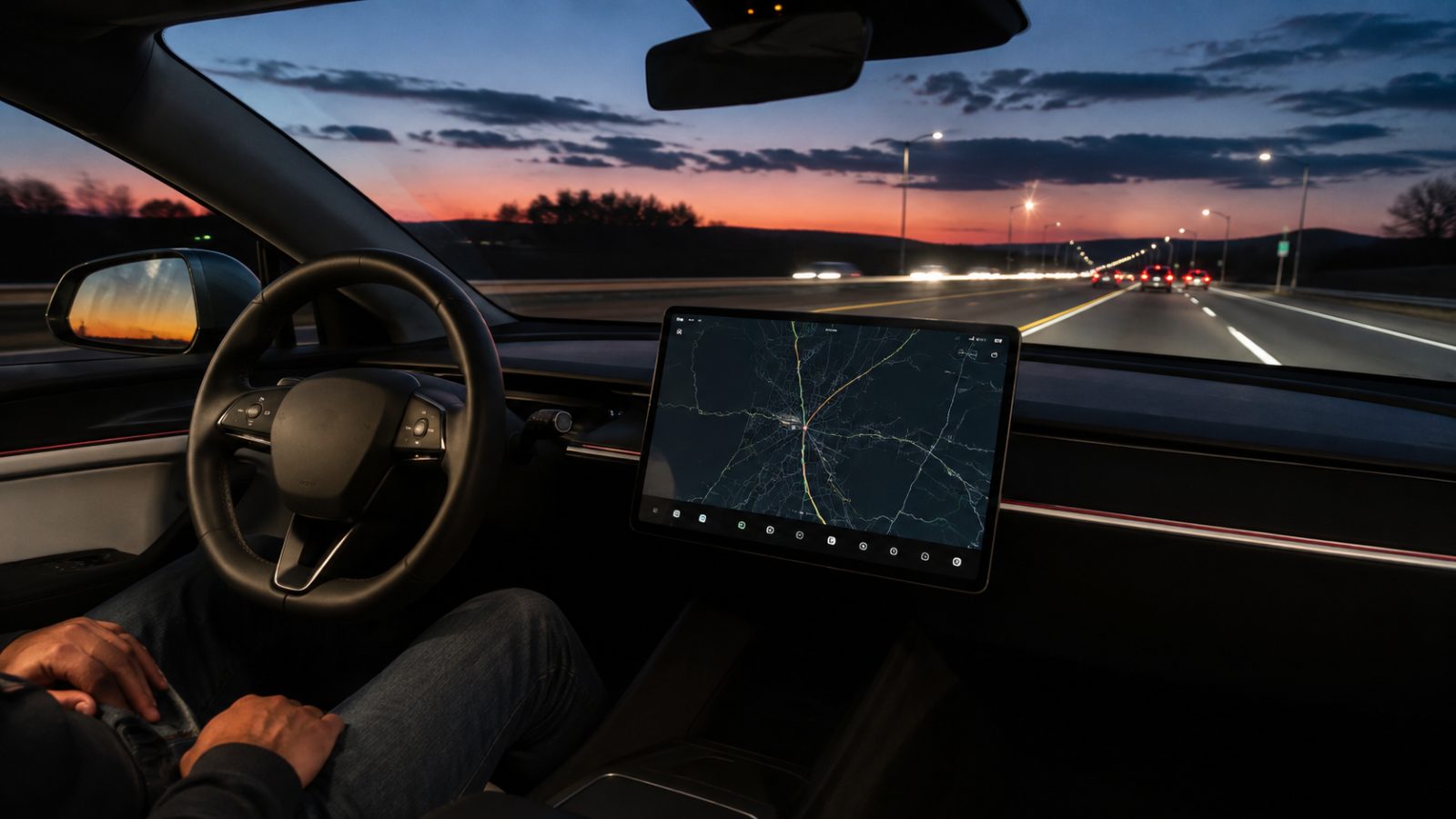
On Thursday, Tesla launched the Cybercab in Austin: a two-seat vehicle with no pedals, no mirrors and no steering wheel. Within days, the National Highway Traffic Safety Administration opened a safety probe into its design and whether it complies with federal standards. The agency said it would audit the extent to which the company’s certification rested on determining that certain standards were simply inapplicable to a car of this kind.
That word — inapplicable — is doing an enormous amount of work, and it is the entire story. In the United States, carmakers do not need permission before building a vehicle. They self-certify that it meets the relevant safety rules, and the regulator only gets to sort out whether that was true after the cars are already on public roads. The rules in question were written decades ago by people who assumed every car would have a steering wheel, because at the time every car did.
This has happened before, and it took three years
In 2022, Amazon’s Zoox self-certified that its own robotaxi met federal safety standards despite having no steering wheel or pedals. The regulator objected and ultimately found the vehicle did not comply with certain standards. Zoox was granted an exemption to begin commercial operations only this past July — and it operates under real limits: barred from roads in heavy rain or snow, and from any road posted above 45 miles an hour. Tesla has not filed the petition that produced that exemption.
The possible outcomes are wide. The agency could find the Cybercab compliant and require nothing. It could determine it is not, and after a series of procedural steps order a recall — and refusing such an order could expose the company to major fines. Regulators have also proposed new rules that would eliminate the manual-pedal requirement for autonomous vehicles, with an eye toward getting the technology onto roads faster. Those changes are not yet in effect. So the same company faces a rule that may disappear and a probe that may not.
What this is really a lesson about
Not about Tesla, and not about self-driving cars. It is about a category of risk that does not appear in any of the numbers people usually look at. You can read a balance sheet, a cash-flow statement and ten years of earnings and learn nothing about whether an agency will decide a certification was too clever. Regulatory risk is binary, poorly correlated with fundamentals, and lands on the calendar of somebody who does not work for the company.
In a portfolio, that has one practical implication and it is about size. A position exposed to a single regulatory decision should be sized so that an adverse ruling is a disappointment rather than an event. This is the same discipline that applies to a company facing one patent expiry, one court case, or one large customer. The question is never whether you are right. It is what happens to the plan if you are wrong on a date you do not control.
Households run into the household version of this constantly — a concentrated stock from an employer, a single rental property, one pension election that cannot be revisited. The umbrella is the same shape every time: know which of your outcomes depend on somebody else’s decision, and make sure none of them can ruin the plan alone. That is a fifteen-minute inventory, and it is worth doing before the ruling, not after.