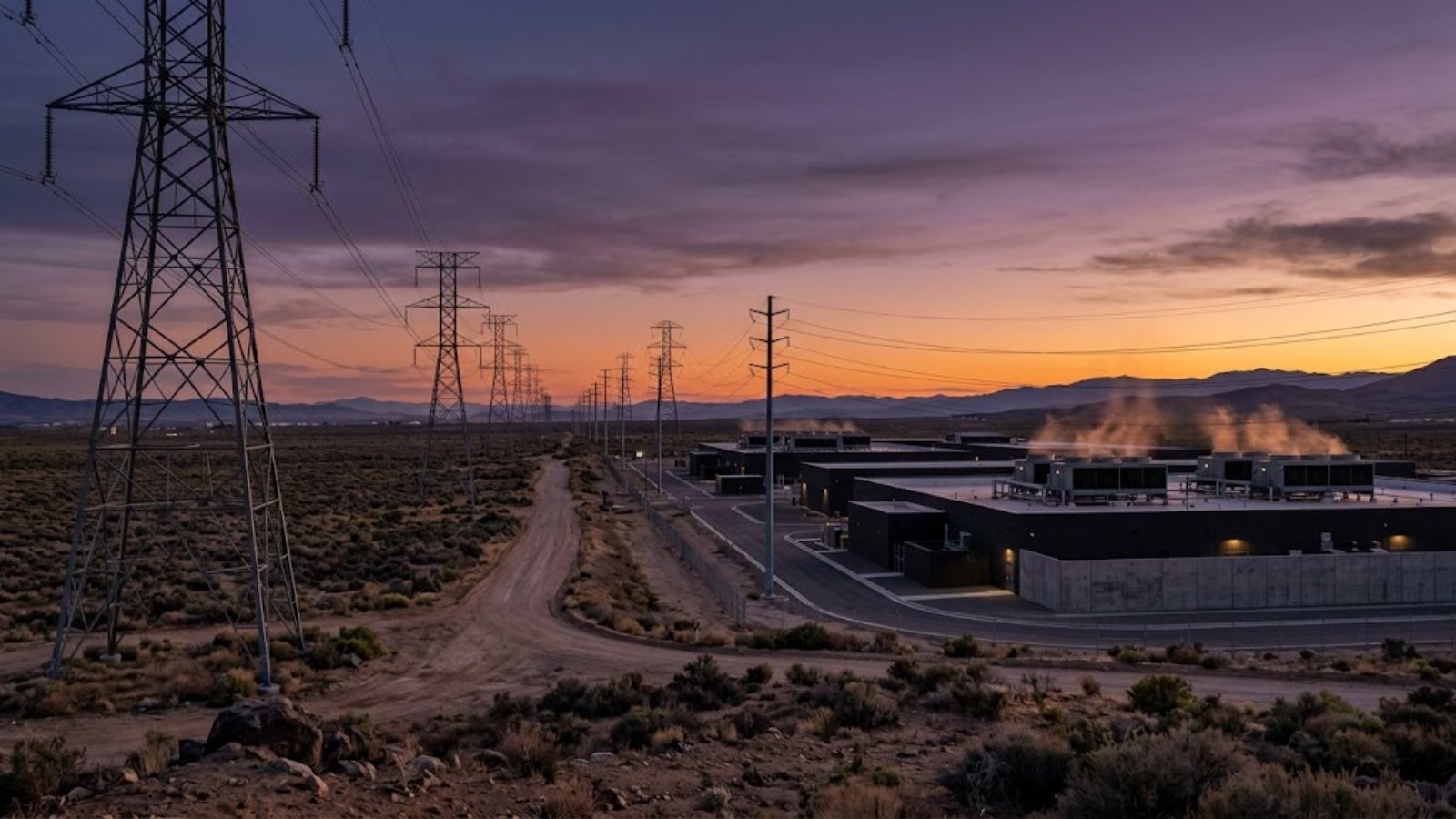
Brandon Oyer leads energy and water strategy for Amazon Web Services, and he is quick to tout the company’s commitment to buying renewable power. When the Journal pressed him on why Amazon is simultaneously financing construction of the biggest natural-gas power plant in U.S. history — in Pecos County, Texas — his answer was straightforward: the volume of demand from Amazon’s cloud-computing customers drove that decision. Both things are true at once, and that tension is the story of the American grid right now.
The arithmetic is unforgiving. It will take electric utilities years, and in some cases decades, to build enough infrastructure to power all the enormous data centers already in the pipeline. Companies say they are committing to pay for the upgrades, and the administration is pressuring them to cover those costs fully, but how the deals actually play out remains to be seen. In the meantime the question of who pays has escaped the regulatory filings and landed in politics: New Jersey Governor Mikie Sherrill is among those who ran and won on pledges to hold rates down.
The workaround is to skip the grid entirely
If the wires are not coming fast enough, build your own generation. That is what is happening, and for the most part the new infrastructure runs on natural gas. Companies are also exploring geothermal and nuclear power, but all of it still costs more than the gas option. Historically Google, Amazon, Microsoft and Meta have been among the world’s biggest buyers and developers of renewable energy — and they are now among the largest builders of gas capacity, because the demand curve does not wait for the cleaner answer to get cheaper.
Community resistance is shaping outcomes at the margin. Oracle, facing pushback against its Jupiter data center in New Mexico, pivoted from powering the site with natural-gas turbines to cleaner and quieter fuel cells from Bloom Energy — up to 2.45 gigawatts of them. An Oracle spokesperson framed it as each site having distinct priorities shaped by its physical layout, power source and local regulatory framework. Elsewhere, one operator posted that it has shut down eleven temporary turbines as part of a longer push to replace them with a large permitted gas plant. And OpenAI announced $80 million in community investment in Effingham County, Georgia, where it wants to build 3.2 gigawatts.
Where this lands for an ordinary household
In two places, and neither is the stock market. The first is the utility bill, which is now a contested political object in several states. If the cost of grid upgrades gets socialized across ratepayers, that is a recurring monthly expense increase for households that will never use a data center. If it gets pushed onto operators, it changes the economics of the buildout. Nobody knows which way it settles, and it will likely settle differently state by state.
The second is the one this desk keeps flagging. A large share of what people own in retirement accounts is now tied, one way or another, to the assumption that this buildout continues on schedule. The chipmakers, the cloud companies, the power builders, the industrial suppliers — a great deal of the index’s recent performance rests on the same set of expectations about electricity that has not been generated yet, in plants that have not been built, on land that in several counties is being actively contested.
That is not a bearish claim. It is a concentration observation, and it is the third time it appears in this edition for a reason. The useful exercise is not predicting whether the buildout continues. It is knowing how many different ways your portfolio is expressing the same bet — and whether you would have chosen that exposure if someone had described it to you plainly. Fifteen minutes with the fund holdings answers it.