There is a number in Friday’s paper that deserves more attention than it will get, because it does not fit the story anyone is telling. Diesel hit an all-time high: $5.85 a gallon on average, surpassing the record set in 2022 when Russia’s invasion of Ukraine sent energy markets into a tailspin. It is up 56% since the war with Iran began six months ago and $2.14 a gallon higher than a year ago. Gasoline is around $4.15, the most expensive it has ever been at this point in the calendar, nearly 95 cents above last Labor Day.
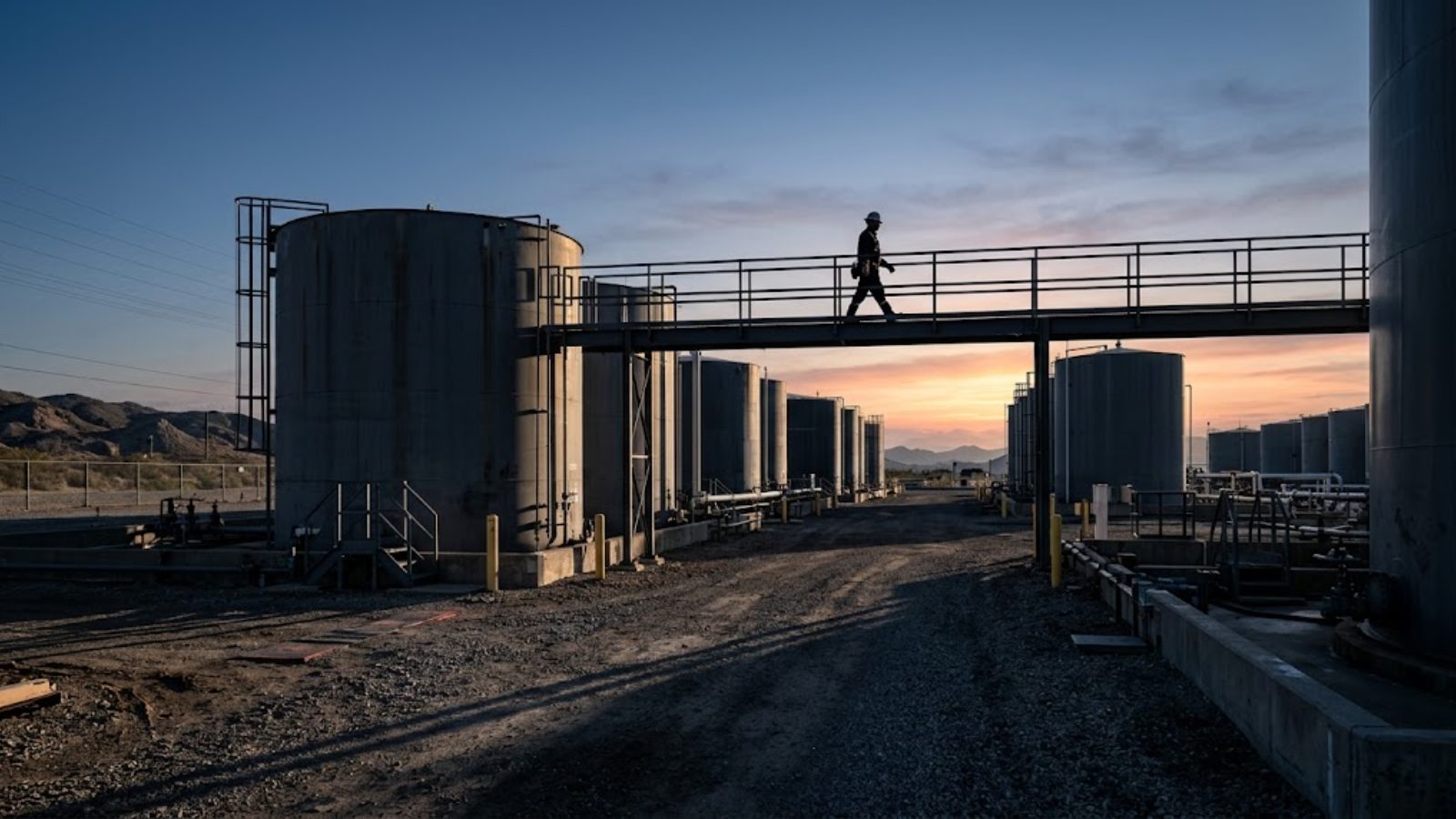
Now hold that against the other number. Crude oil closed Friday at $91.48 a barrel. It has spent most of the last six months oscillating between $80 and $90. It never went above $100, despite a closed Strait of Hormuz and a fifth of the world’s supply bottled up. The barrel is fine. The fuel made out of the barrel set a record. That gap is not a detail. It is the entire mechanism.
Why the barrel and the tank came apart
Oil-and-gas executives have been warning for months that the country risked higher fuel prices even with crude behaving, because the constraint is not in the ground. It is in refining and moving what comes out of it. The White House largely treated those warnings as alarmist, and pointed out that the industry had predicted crude above $100 because of the closure of Hormuz — a prediction that did not come true. Both things can be right. The industry was wrong about the barrel and correct about the pump.
This matters more than the gasoline number, and here is why. Diesel is the lifeblood of the physical economy. Trucks and trains run on it. Farmers plant with it. It is the fuel underneath almost everything that arrives somewhere. When it jumps, the cost does not stay with the trucker. Scott Litchfield, a Boston-area driver, put it plainly in the Journal: the more money you spend on fuel, the less you have to pay bills and to profit at the end of the year. The freight company he consults for runs eight medium-size trucks each burning 40 to 60 gallons a day, and he estimates it now pays an extra $480 to $640 daily. It is charging some customers more.
Which is where it turns into your problem
That extra $480 a day does not evaporate. It gets passed to a customer, who passes some of it to a retailer, who passes some of it to a shelf price. It filters into already-high inflation on a delay measured in months, not days. And it does so through a channel the Federal Reserve cannot do much about — raising interest rates does not refine more diesel. Which brings this back to the meeting on Sept. 15 and 16, and to the inflation report on Friday that will decide it. If prices come in hot, some meaningful share of that heat will have arrived through a fuel pump rather than through a paycheck.
For a household this is a cash-flow item, not an investment item, and the distinction is worth being strict about. The right response to a fuel-driven price increase is almost never to change a retirement allocation. It is to update the household numbers that were set when fuel cost two dollars less. Most people last revisited their monthly budget assumptions a year or more ago, which in this environment means they are working from figures that no longer describe their own life.
So the umbrella here is a small one, and it is not in the market. Pull the last three months of actual spending — groceries, deliveries, commuting, anything trucked — and compare it to what the plan assumed. If the gap is meaningful, that is worth fifteen minutes to fix, because a retirement projection built on stale spending is wrong in the one direction that matters. Bring the statement and the real numbers; we can reconcile them faster than you would think.