Capital Wealth
TUE CLOSE · SEP 15   S&P 500 7,585.73 ▼0.45%  ·  DJIA 52,093.11 ▼0.63%  ·  NASDAQ 25,981.57 ▼0.78%  ·  10-YR 4.996%  ·  2-YR 4.673%  ·  WTI $106.05 ▲4.6%  ·  GOLD $4,337.00 ▼0.3%  ·  VIX 17.42 ▲1.9%
Sports · The Human File

Alexander Zverev Won the U.S. Open, Then Got Ready to Return Serve

The new champion seemed to think he was merely up 5-1 in the fourth set. It took a stadium’s worth of confusion before his arms went up.

By Sean Anees Saifi · Capital Wealth · Published Tuesday, September 15, 2026 · Source: The Wall Street Journal, September 15, 2026 edition (Sports)
Key Points
23,000
people in the stadium for Sunday’s final
5-1
fourth-set lead Zverev apparently thought he held
0-10
Zverev’s record against Sinner in their last 10
$140
price of a plain USTA hoodie at the Open
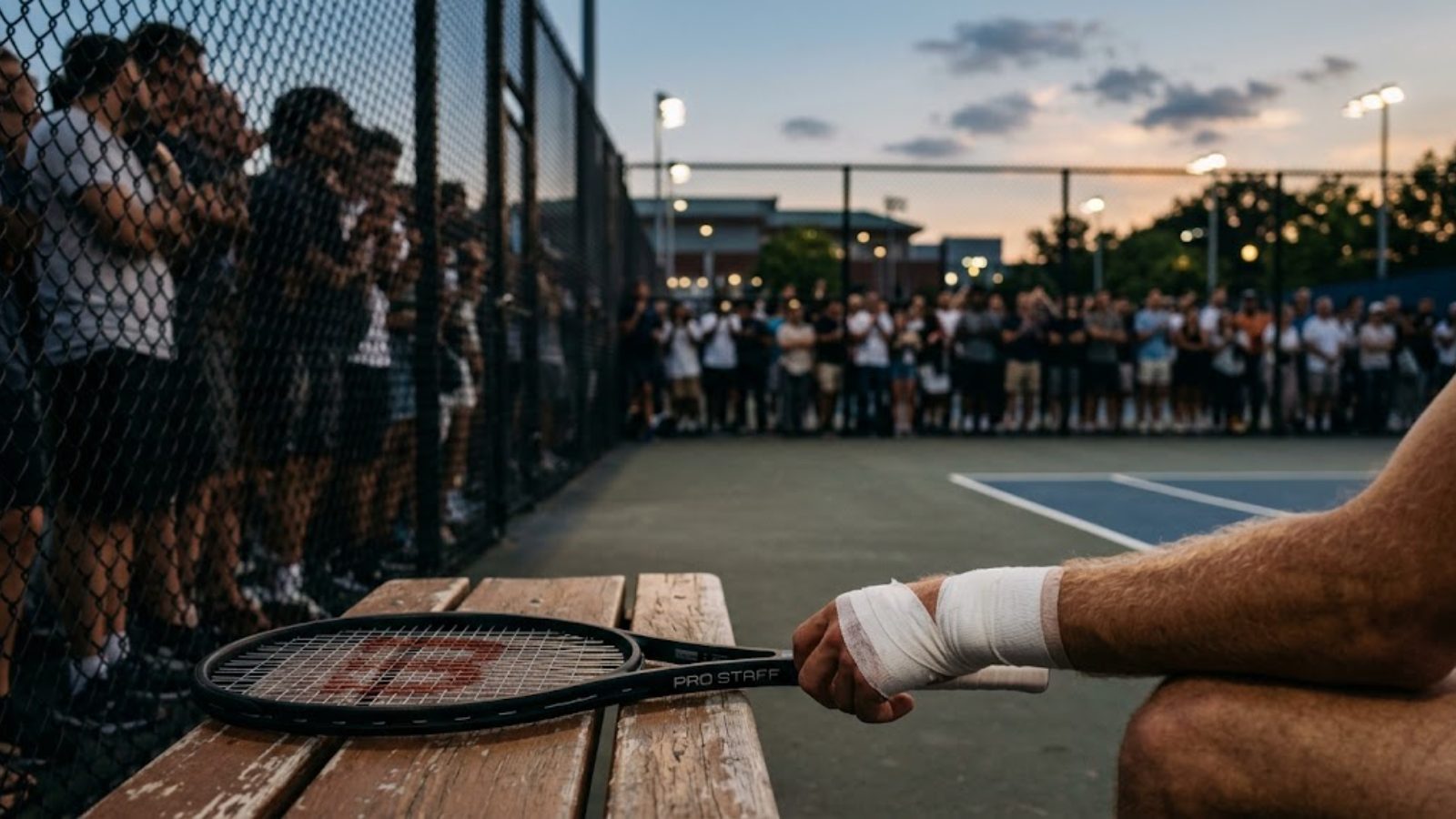
A tennis player’s bandaged hand grips a racket on a courtside bench as spectators crowd the fence at dusk.
Alexander Zverev beat Ben Shelton in four sets for his second career major, then briefly carried on as if the match weren’t over. The crowd in Arthur Ashe Stadium was left wondering why he wasn’t celebrating.
In one line: Alexander Zverev won the U.S. Open and didn’t notice at first — a reminder that the hardest part of any plan can be recognizing you’ve already won.

Match point came and went, and Alexander Zverev kept working. He tapped balls back to the ball kids. He got ready to return serve. He seemed to believe he’d merely gone up 5-1 in the fourth set against Ben Shelton. In fact, he’d just won the U.S. Open in front of 23,000 people, and they couldn’t figure out why the new champion wasn’t celebrating.

The scoreboard knew first

Zverev never seemed to hear the chair umpire call the match. When he finally caught on, up went both arms. Jason Gay, the Journal’s sports columnist, nailed the look: “He looked like a seventh-grader who heard it was pizza day.” Gay saw it as a happy poke at the idea that champions are flawless machines tracking every detail.

Credit where it’s due. The 29-year-old beat Shelton 6-3, 7-6(2), 5-7, 6-2. That’s his second major of 2026, after the French, and his third straight major final on a different surface. In a season marked by injuries to Carlos Alcaraz and Jannik Sinner, he’s on track to finish ranked No. 1.

Gay isn’t ready to call it a new Big Three. Zverev is 0-10 against Sinner in their last 10 matches, and he admits the gap: “If everyone’s healthy, I think Jannik is still ahead.” Shelton, 23, made his own leap, reaching his first major final after a quarterfinal win over Alcaraz that ended at 3:33 a.m.

Noticing you’ve already won

The tournament fielded a few complaints of its own, over late-night finishes and a luxury push. A plain USTA hoodie runs $140, a lobster BLT cost $42, and Arthur Ashe Stadium is in the middle of an $800 million renovation. In a rare act of mercy, the Honey Deuce cocktail stayed at last year’s $23.

Zverev’s delayed celebration is a familiar scene in financial planning. Some savers reach their number — the savings their goals actually require — and keep swinging as if they’re still behind, taking risks they no longer need. The point was never the biggest possible score. It was winning the match you set out to play.

So check the scoreboard now and then. If the plan says you’ve won, protecting the lead may matter more than running up the score.

What It Means For Your Portfolio

Hold — check the scoreboard before swinging harder

If your plan says you’ve already reached your goal, the next move may be protecting the win rather than chasing a bigger score.

A plan’s scoreboard is simple: what you have against what your goals require. Once you’re there, extra risk can add little, and a bad stretch can cost a lot. Revisit the number regularly, and when you’ve reached it, consider locking in more of the win. These are general planning principles, not advice for anyone in particular.

Nothing in the Capital Wealth portfolios changes because of a tennis match, and nothing new is being bought ahead of Wednesday’s Fed decision. The household move: find your number and see how close you are. Nobody wants to learn in the middle of a storm that the umbrella in their hand was never opened. Let’s read the scoreboard together: fifteen minutes, one recent statement.

Book a 15-Minute Review → Back to Edition No. 170 →