The pictures out of Tehran on Friday were built for television: rifle-toting supporters of the theocracy, hundreds of thousands by the state’s count, trucks carrying the drones that have been thrown at ships in the Strait of Hormuz, chants that have not changed since the 1980s. The event marked 200 days of war and, not by accident, the anniversary of the 2022 death in police custody that set off the last great protest movement. Ali Vaez of the International Crisis Group read it for the Journal: the message to Washington is “we are in control and you will not be able to undermine us at home.”
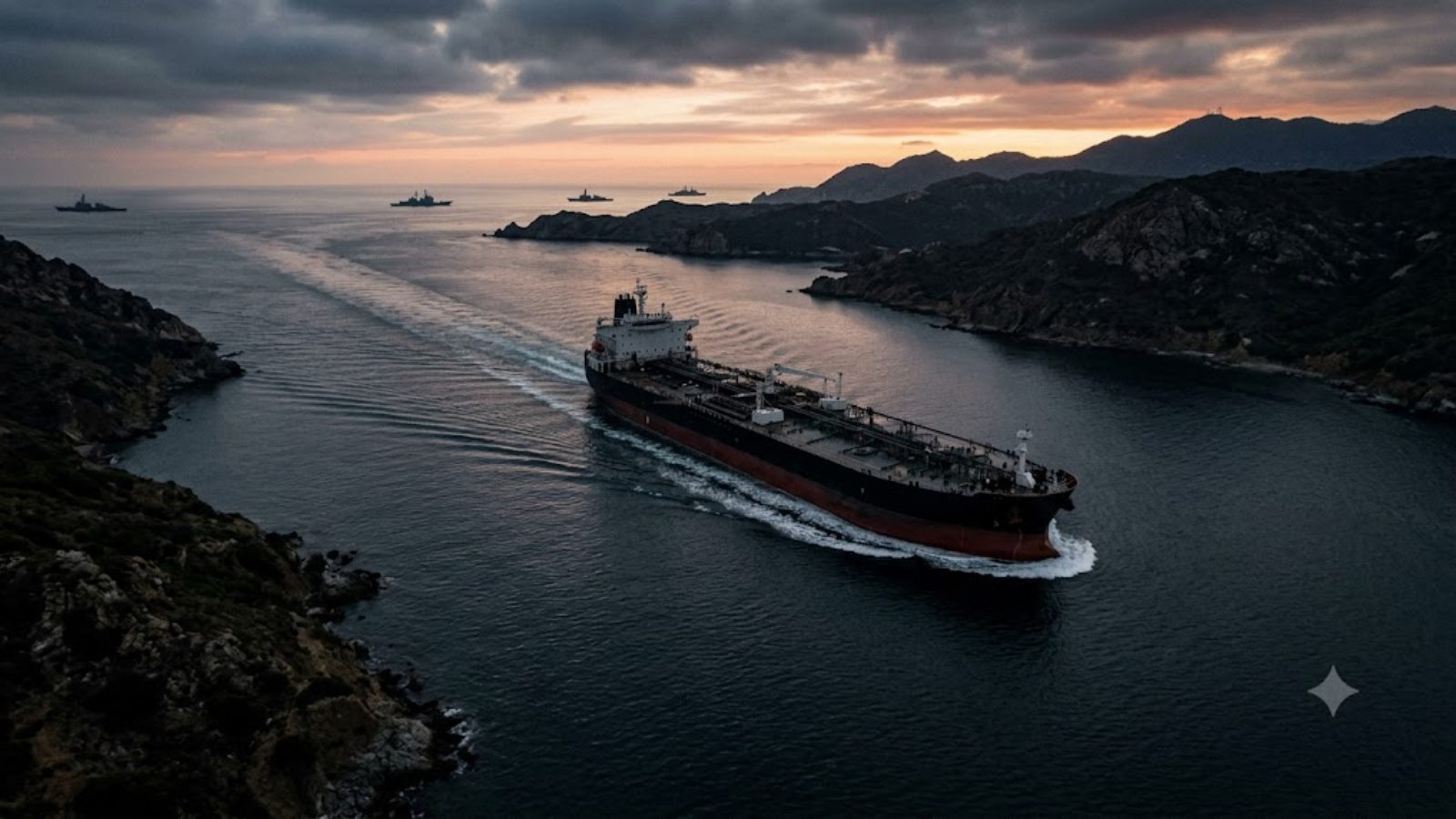
The economic picture behind the parade is what matters for a barrel. Washington’s blockade of Iranian crude exports is biting. Truckers and taxi drivers have gone on strike after the government cut subsidies and raised fuel prices. On Friday a projectile hit a vessel in the strait and set it on fire; the crew put it out. Despite a ceasefire, the attacks on shipping have continued.
What the market did with all of that
It sold. West Texas crude fell $1.61 to $100.30, a third straight daily decline, and Brent traded around $104. The futures curve is the most informative thing in the paper: November $96.08, December $92.05, January $88.85, next June $78.69, December 2027 $73.51. Every month further out is cheaper. Traders are paying $100 for a barrel today and $73 for one in fifteen months, which is another way of saying the market believes the strait reopens, the pipeline gets fixed or the war ends — and it is not sure which, or when.
On the opinion page, Miad Maleki, who ran sanctions policy at Treasury from 2017 to 2025, makes the argument that the blockade is the sanctions program finally working: Iran entered the war with 62% inflation, now 88%; no fresh Iranian crude has reached China since mid-July; the regime is assembling missiles from stockpiled parts because the propellant ingredients cannot get in. His conclusion is a policy position — no relief that front-loads cash — and this desk takes no side on it. The facts are what an energy investor needs: the pressure on Iran is real, the regime is signaling it will not fold, and the outcome that reopens the strait is the one that takes $27 off the price of a barrel.
Our read
This is why the energy sleeve is a hedge at weight and not a trade at $100. Exxon Mobil (XOM), Chevron (CVX) and ConocoPhillips (COP) are up 36% to 41% this year and they are held for what they do when the strait is closed: they pay for the inflation a rate increase cannot reach, and they pay a dividend while doing it. Adding to them here means paying the war price for a business the curve says will sell oil at the peace price in 2027. Valero (VLO), up 154% on the year, keeps its written tripwire — a policy move toward restricting diesel exports, not the fuel price.
The S&P energy sector lost 1.25% this week while gasoline futures rose 6.66%. That gap is the trade in one line: the pump is still rising, and the stocks have started to price the end of the reason. Hold the sleeve. Do not chase it.