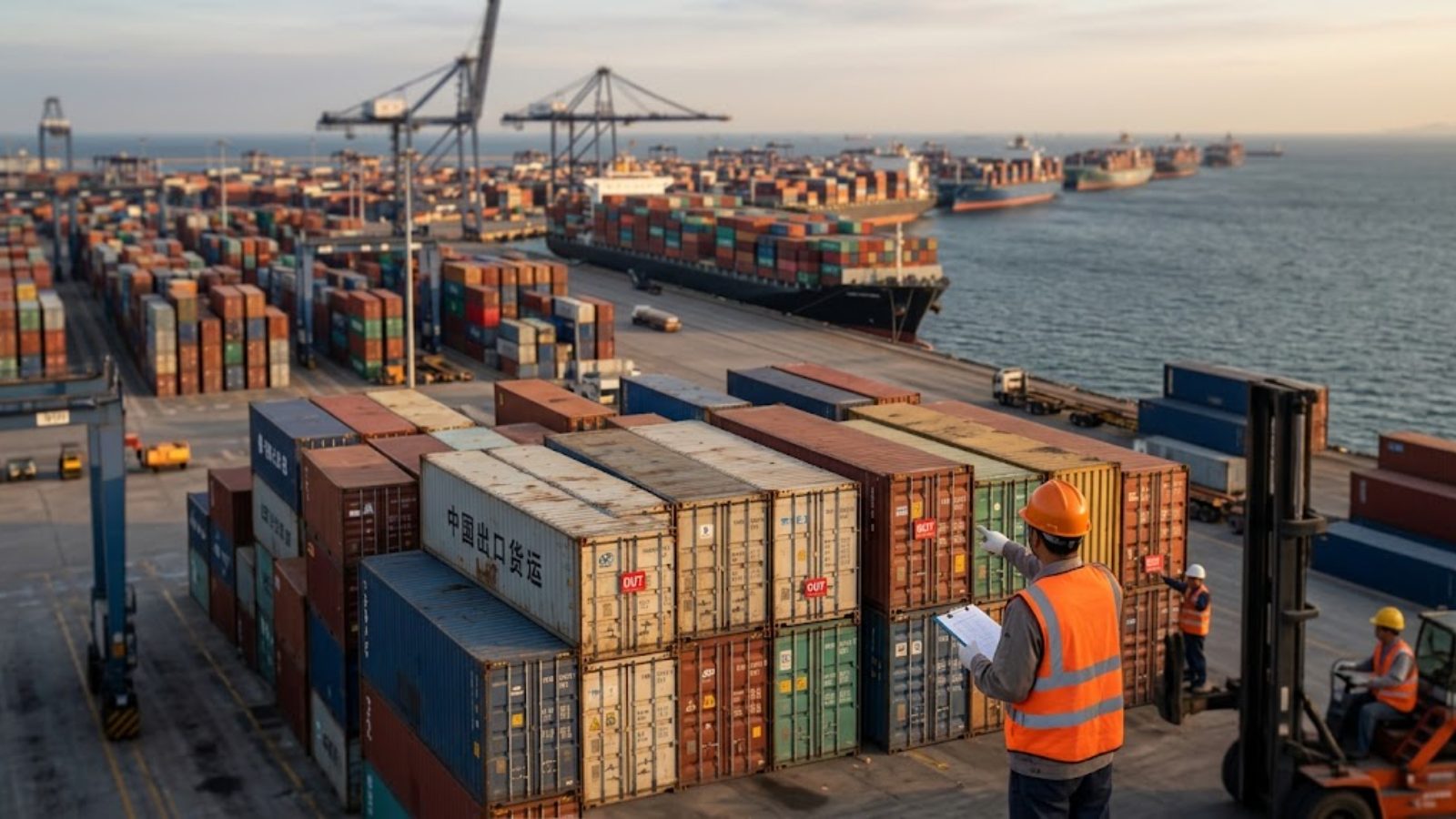
China’s factories are now building export cars faster than the world can find ships to carry them. That is a nice problem for the factories, an expensive problem for anyone renting a ship, and a genuinely serious problem for Europe’s carmakers, who are watching it all happen from the dock.
The cost to charter — that is, rent — a car-carrying ship is up 65% this year. A large car carrier now goes for about $70,000 a day, according to shipping researcher Clarksons, up from $42,500 at the end of last year.
Freight rates — the price of moving goods by sea — are not glamorous. They are also very hard to fake. A press release can describe a strategy. A charter rate tells you how many cars actually need a boat.
| The squeeze, in numbers | Figure |
|---|---|
| Large car-carrier charter rate, June | $70,000/day |
| Same rate, end of last year | $42,500/day |
| 2023–24 peak | $115,000/day |
| Charter rates, year to date | +65% |
| Growth in the global car-carrier fleet | about 40% |
| Chinese car and van exports, 2019 | just under 600,000 |
| Forecast for this year | up to 10 million |
| Shipped in containers or alternatives | up to 4 million a year |
| Ocean freight rates for cars vs. prepandemic | roughly double |
The five-year number
Look at those export rows again. Just under 600,000 cars and vans left China in 2019. As many as 10 million are forecast this year, according to Mobility Global.
Andreas Enger, who runs the shipping line Höegh Autoliners, puts it plainly: China went from a bit player to the world’s biggest vehicle exporter in five years. Industries do not usually move that fast. Industries that move that fast tend to break the things around them.
What broke here is the shipping. The world’s car-carrier fleet has grown by roughly 40% and still cannot meet demand, says Lasse Kristoffersen, who runs Wallenius Wilhelmsen. When you grow capacity 40% and still fall short, that is not a supply problem. It is a demand problem wearing a supply costume.
So automakers have started squeezing cars into ordinary shipping containers — the metal boxes designed for sneakers and washing machines. Up to four million vehicles a year now travel that way, or by some other improvised route. Nobody does this because it is efficient. They do it because the alternative is a car sitting in a parking lot in Guangdong.
Where the cars land
Mostly Europe. First-half registrations there tell the story, courtesy of the industry group ACEA. China’s SAIC is up 19%. BYD (BYDDY) more than doubled.
Now the old guard. Stellantis (STLA) up 6%. Volkswagen (VWAGY) up 2.6%. Renault (RNLSY) down 4.2%.
That is not a fair fight, and it is not a temporary one. One side is growing fast from a small base, with costs built in the last five years. The other is defending its turf with plants, pensions and labor deals built over the last fifty.
American buyers are not part of this. Chinese cars are effectively kept out of the U.S. by tariffs — import taxes — and by software security rules. That protection is real. It is also why American investors keep underestimating how fast this is happening everywhere else.
The engine behind it
Here is the detail that makes everything else make sense: car sales inside China fell more than 20% from a year ago, according to the IEA.
Chinese buyers slowed down. The factories did not. So the cars went abroad, in volumes the world’s ships were never sized for. This is less a story about ambition than about capacity with nowhere else to go.
The shippers have figured it out. Maersk and MSC now sell directly to automakers, skipping the middle of a market they used to serve at arm’s length. When the freight lines start going straight to the customer, they have decided where the pricing power lives for a while.
Our takeaway is narrow and boring, which is usually a good sign. The freight rate says the flow is huge and still growing. Europe’s old-line carmakers face a lasting problem, not a passing one. We do not need a view on which Chinese maker wins — just distance from the ones losing.