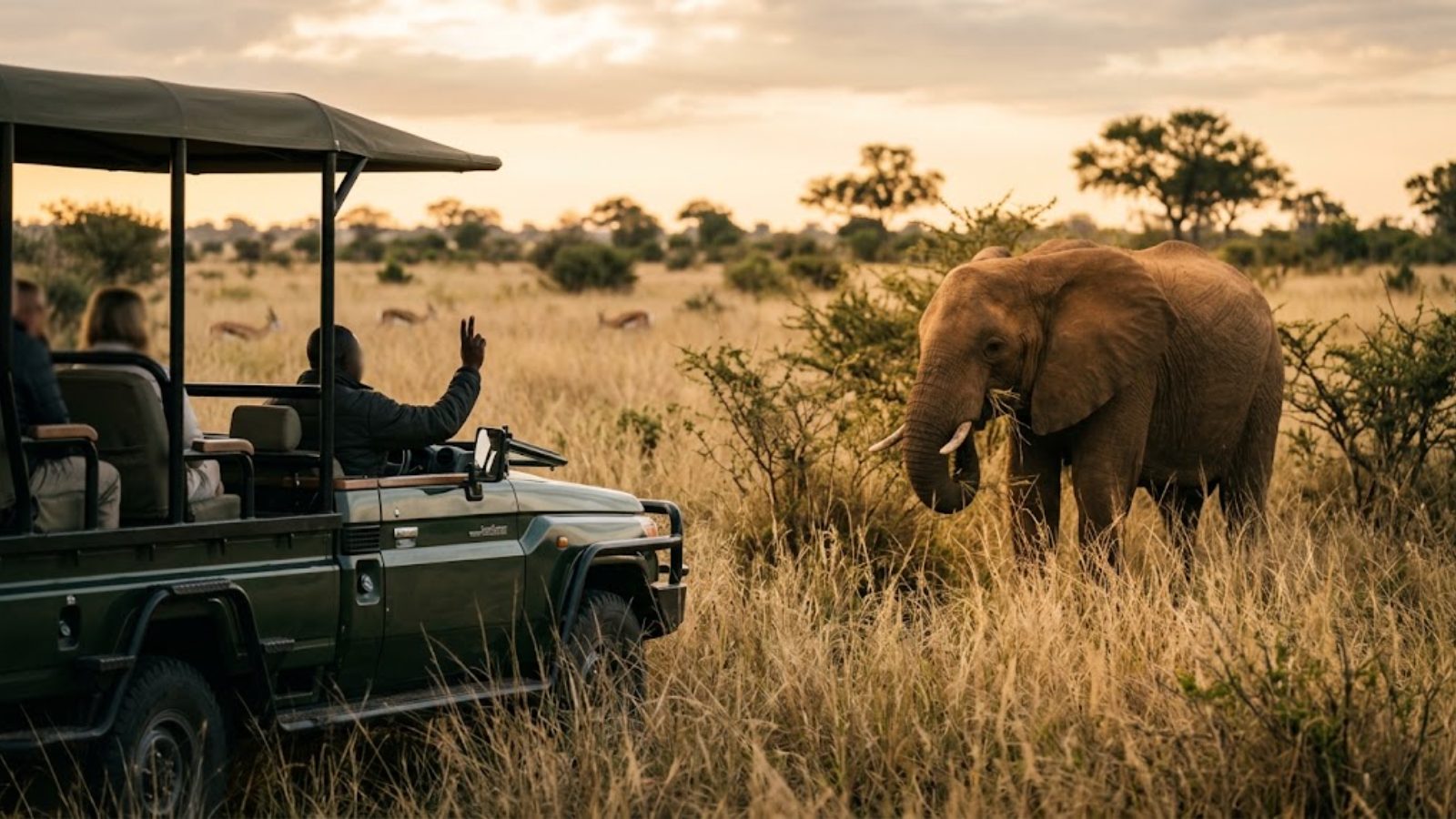
It took two days for safari guide Kago Kanowa to find a violet-backed starling in the bush near northern Botswana’s Chobe Game Lodge, and she was not about to bungle the sighting for her client, a photographer who had flown to Africa for exactly this moment. Holding her breath, she maneuvered the vehicle in for the shot. “We were able to approach the bird quietly, without disturbing it,” she said, and credited the super-stealthy electric truck she was driving.
The Journal’s Jen Rose Smith reports that Chobe started electrifying in 2014 with a solar-powered safari boat — a first for the continent — and now runs five boats and four trucks on batteries. Other lodges have followed: a solar boat hunting hippo pods in Zambia, retrofitted battery Land Rovers, “silent game drives” in South Africa’s Sabi Sand that trade engine noise for the rustle of elephants eating grass, a riverside camp that brought the idea to Kenya’s Maasai Mara in 2021.
Why the animals care
A repeat visitor from the Netherlands, 66, put it simply: skittish animals — elephants, buffalo — are more on their guard when they hear an engine running. Marine mammals are the same. Boat noise stresses whales, disrupts their hunting and drowns out their ocean-spanning songs, which is why the Norwegian company Brim Explorer is converting its whale-watching fleet to run entirely on batteries by 2030. Its head of training, a marine scientist, says the whales seem less inclined to flee the electric boats: “A lot of the time, the whales approach us.”
In the Galápagos, an eco-tour operator is debuting the archipelago’s first electric panga this year, a maneuverable skiff the expedition leader expects will let travelers linger with rays the way the islands were explored in the canoe days.
The cold-weather catch
Here is the honest part. The electric snowmobiles introduced two years ago by Lapland Safaris in northern Finland get only about 30 miles on a charge; the gas ones go 155 on a tank. So the outfitter had to redesign its tours to cover less ground in search of reindeer, elk and ptarmigan, and is betting that a shorter, more intimate experience is worth it. Many guests try both. Churchill, Manitoba’s polar-bear tours only go about 20 miles anyway, well within the 31-mile range of the electrified tundra buggies with their five-foot wheels. The electric versions get stuck less thanks to superior torque, but the guide’s real prize is the sound: “You can hear the wind. You can hear the bears walking. When the males interact with each other, you hear the thump, thump, thump of their paws.”
A safari expert at Go2Africa thinks widespread adoption will take time — high upfront costs, limited charging between parks on long itineraries. The quiet truck is more expensive and goes less far.
The planning shape of this
It is the rare travel story that is also a clean business case. The electric vehicle costs more, has a shorter range, and delivers the one thing the customer actually flew across the world for: closeness. Less coverage, more of what counts. The operators who are winning redesigned the product around the constraint instead of pretending it was not there.
That is not a bad description of a good retirement plan, either. Most of the ones that work have accepted a shorter range — less stuff, fewer moving parts — in exchange for hearing the bears walk. If you are spending the travel line of your plan this decade, this is the version to book. The starling was worth two days. It is usually worth the battery.