When Jason Gay watches the Little League World Series, he does not pay much attention to the players. He watches the parents — the journeys, the sacrifices, the terrible fast-food breakfasts that got them there — and suspects that however proud they are, they will be secretly thrilled when the season is mercifully over and they do not have to sleep in another highway motel with an overchlorinated pool and a vending machine that sells only Twix and Pall Malls.
This is his survival guide for the American sports parent. It is the funniest thing in the weekend paper. It is also, if you read it with a calculator, a very good piece of household finance.
The system is broken
You may have learned this the first time you walked into a sporting-goods store and laughed at a $300 bat — and Gay knows some readers are thinking that is not even a bad price, buddy. The professionalization of youth sports, he writes, the incursion of for-profit companies strip-mining American childhood, has not only wiped out recreational sports, it has created a pernicious money culture. And wherever there is money culture, there is extra pressure. Your kid is no longer striking out with the bases loaded. Your kid is striking out with gear that cost more than a Cape Cod weekend.
Bring back the canvas bag
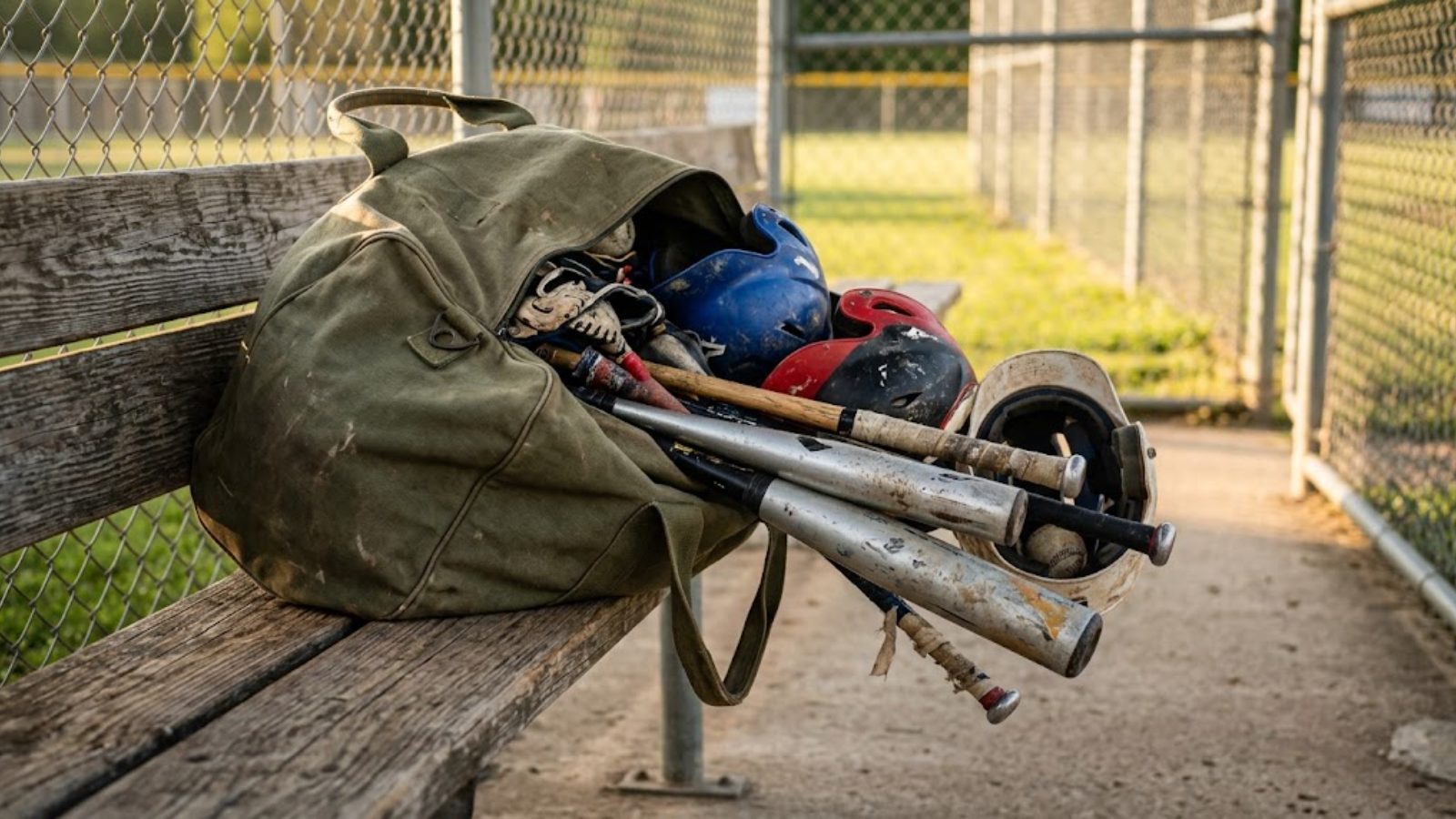
Gay’s Little League coach arrived with an Army-olive canvas bag containing bats in various states of decay, four ill-fitting helmets, and catcher’s equipment that looked stolen from a yard sale at Yogi Berra’s house. There was the bat everyone thought was a thumper and the bat that made you feel electrocuted below 70 degrees. The team played twenty games with that cruddy communal gear, scored a fair number of runs, and nobody’s parents had to go into credit-card debt or get a second job to pay for a sliding glove.
The expert racket
The self-appointed sports-parent guru on social media, delivering unsolicited advice about how to get your hopeful athlete in the eye line of a college coach, is in Gay’s view the worst creature online. The business of youth sports, he writes, is not creating memories for kids. It is fearmongering, preying on the emotional and financial insecurities of parents. Everyone asks whether they are doing it correctly, and the system is built to capitalize on that. We are conditioned to think there is always a better team, schedule, stick. Spoiler: there is really not. It is all the same deal in different colors of poly-fiber laundry.
The only thing that matters is whether the kid runs out the door to play, or has to be pried off the bed like a cat that hears the bathtub running.
Why it belongs on a planning page
Because the single most common line item that blows up a household budget in our practice is not a car or a kitchen. It is the slow professionalization of a child — the club fees, the travel weekends, the private coaching for an Under-8 team that somebody is treating like FC Barcelona. It arrives $300 at a time, it is emotionally impossible to say no to, and nobody puts it in the spreadsheet because it does not feel like a financial decision. It is one. For a lot of families it is the 401(k) contribution they did not make.
Gay’s honesty is the useful part. He admits he is terrible at this, that he got paranoid hearing other parents discuss competing clubs, and that after dropping his daughter at a camp where other parents decorated doors with ladders while his kid sat in a gray cell block, he is absolutely coming back next year with a ladder. Nobody is above it. The point is to know the number.
And the last paragraph is the one that earns the column: he can already feel the pit in his stomach counting down the car rides where he makes his kids take off their headphones so he can explain, for the thirtieth time, why Van Halen’s “1984” was an important album. He will not miss the doubleheaders. He will miss that. So will you. Budget for the car rides. Go easy on the bat.