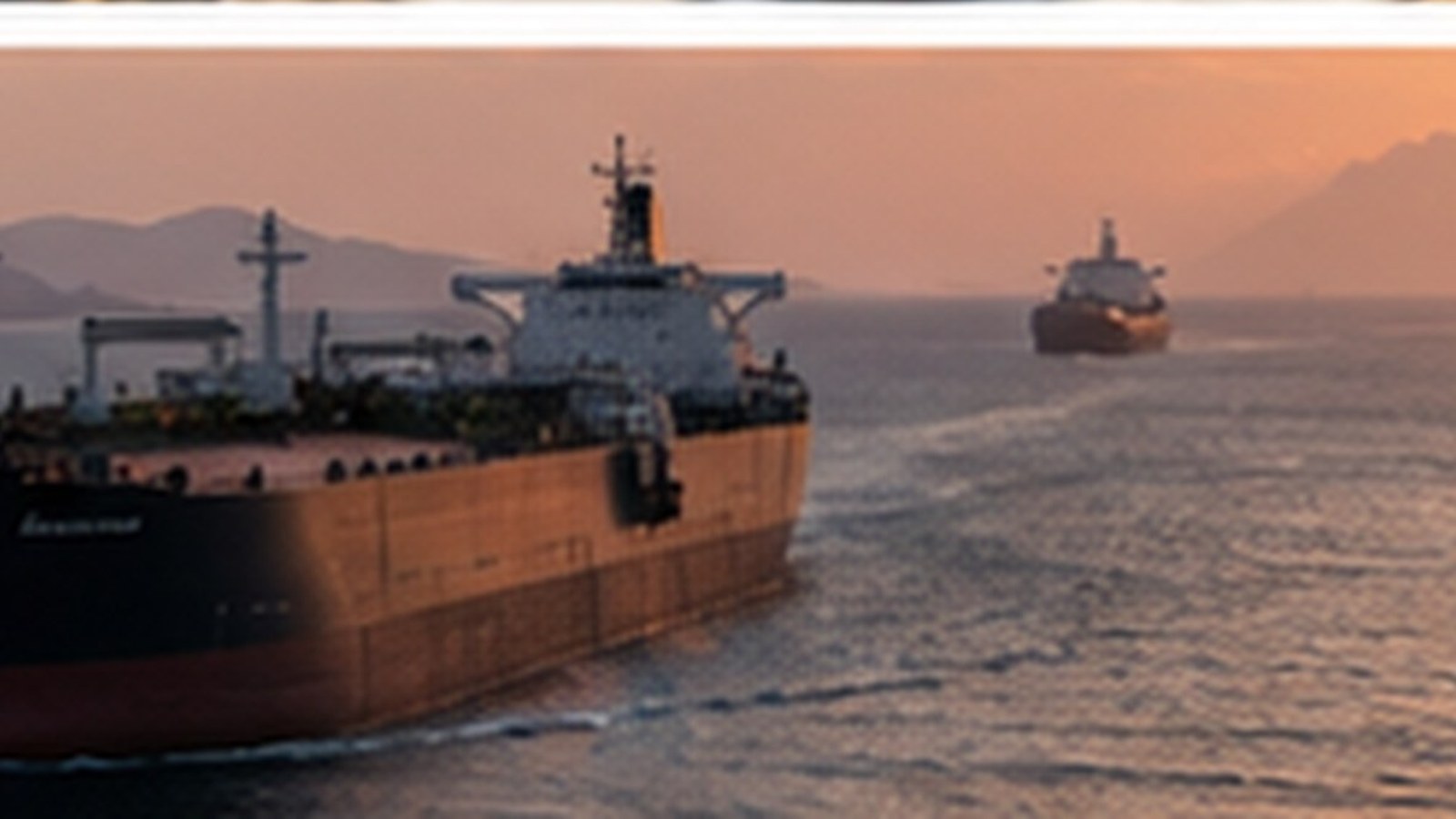
There are two versions of the Strait of Hormuz right now. In Washington’s version, the U.S. military has helped ship more than 15 million barrels of crude out of the waterway in a week, transit is running above 8 million barrels a day, and Iran’s economic war is failing. In the version compiled by the people whose entire job is counting tankers, the flow is somewhere between 2 and 6 million barrels a day, and nobody can be sure because the ships keep disappearing.
Not sinking — disappearing. Tankers normally broadcast identity, position and speed through AIS transponders. Crossing Hormuz these days, many switch them off. Analysts at Lloyd’s List and elsewhere reconstruct the traffic from satellite imagery, which captures moments, not movements, and misses most of what happens at night. A very large crude carrier holds roughly 2 million barrels — if it’s full, which a photo can’t tell you. The cleanest check is downstream: barrels have to surface somewhere, as imports into Asia. London Stock Exchange data shows about 11.6 million barrels a day of Middle East crude and products discharging in Asia — but that includes pipelines routed around Hormuz, so it can’t settle the argument either.
Sanctions day, falling prices
Into this fog, Treasury Secretary Scott Bessent walked out Monday with a new campaign he called “Operation Economic Outcast”: more than 60 entities, individuals and vessels sanctioned, every smuggling “node” and “facilitator” mapped, and a warning that economic engagement of any kind with Tehran “will expose those responsible to the full reach of American power.” Iran’s currency is at a record low; the President posted that the country is “completely collapsing.” Iranian officials called the campaign ineffective — though notably, the Journal reported just a day earlier that Tehran’s top politicians are urging the regime to negotiate an exit while it still has leverage.
Now watch what the price did. West Texas Intermediate fell $2.05 to $85.01. Brent dropped 2.35% — while Bessent was still talking. Rystad Energy’s analyst summed up the market’s read: “a wide gap between the rhetoric and the substance… much more like an expansion of the existing sanctions regime than a fundamentally new economic weapon.” Oil traders heard the drums of economic war and marked crude down two dollars, because the alternative they’d been pricing was worse. The prediction markets tell the same story: 16% odds on a U.S. invasion of Iran before 2027, single digits that Kharg Island changes hands by New Year’s.
The planning point inside the fog
Here is the discipline this story teaches, and it applies to far more than oil: when an official number and a market number disagree, the market number is the one with money behind it. Podiums announce; prices confess. Crude at $85 — down from $87 on the week — is the market confessing that supply is finding its way through, dark transponders and all.
For the models, nothing dramatic changes. Our energy exposure was never a bet on catastrophe in the Strait — it’s Chevron (CVX) with twenty-year contracted power deals for data centers and an investment-grade balance sheet, a thesis that works at $85, at $75, and frankly gets more interesting if crude keeps deflating while the power contracts keep paying. What we don’t own, and won’t: anything that needs the war premium to stay in the price. Premiums built on fog have a way of burning off at exactly the wrong moment.