 Capital Wealth Daily
The Week Begins: Everything Is a Test.
The Monday and Tuesday Journals, August 24 and 25. The week opens with everything on trial. Nvidia’s Wednesday earnings are the vote on the whole AI trade. A 50% tariff wall is going up on the Canadian border. Druckenmiller says Treasury is muzzling the bond market. The oil math in Hormuz doesn’t add up. Plus a billionaire losing to a zoning board, an $11 billion whiskey family at war, and a 1,700-year-old temple full of young people praying for jobs.

The most important earnings call in the world is Wednesday.
Nvidia has fallen seven days in a row, its longest losing streak in four years. Meanwhile the $5 trillion chip maker is quietly becoming its own customers’ banker. That means a $500 billion lending backstop, a stake in a data-center power developer, and a $6 billion deal for the startup Poolside to build an open-weight rival to China’s DeepSeek. Monday the semiconductor index fell 2.7%. Samsung dropped 8.7% in Seoul. The volatility index rose almost 5% on a day the Dow closed up. That is the options market buying rain gear in the sunshine. Wednesday afternoon, Jensen Huang picks up the microphone and settles the argument.
Our TakeSeven down days before a yes-or-no event means the market is pricing doubt, not offering a gift. Action: we own the AI theme and the power that feeds it, and we add nothing new to the chip complex until Huang finishes talking Wednesday.
Wednesday is the most important earnings call in the world. Nvidia reports, and everything watches.
Canada built a 50% tariff wall. Hockey sticks, honey, and your grocery bill.
Druckenmiller: let the bond market speak. The 30-year is at 5.23% and talking.
Washington says the oil is flowing, but the ship-counters say otherwise. Hormuz math.
One in five job ads is a ghost. Lawmakers want the fake listings outlawed.
Off Duty · The Human File
6 stories · 3 pictured · 3 listed
He runs $800 billion. His most distressed asset is a lobster shack.
Money buys the property; it doesn’t buy the process. Price the approvals before the wire, because the lobster is just the dividend.

The whiskey bust is tearing apart an $11 billion Kentucky dynasty.
Concentrated family stock is an estate plan until it’s a crisis. Write the exit rules at the picnic, not in the proxy fight.

America’s seniors are getting high. Their neighbors are getting even.
The retirement you’re planning includes neighbors. Read the governing documents like a lease, because they decide who owns the air.
Your Money · Work, Phones & Fixes
4 stories · 3 pictured · 1 listed
One in five job ads is a ghost. Lawmakers want fines for the haunting.
The emergency fund is now a job-search fund. Past fifty, that means twelve months of expenses, sized before the layoff, not after.

Used iPhones are going up in value. Don’t get burned buying one.
Keep the phone a year longer, bank the gap, and never buy the discount that catches fire. The chip crisis is a household story now.

The $30 part broke. He printed a new one for pennies.
Everything plastic breaks at its cheapest part. In a 50%-tariff month, the repair habit is the best inflation hedge in the house.
Markets & The Macro
3 stories
Hockey sticks, honey, and a 50% wall: the Canada trade war is on.
Tariffs on parts are inflation with a passport. That’s why we own the bonds that get paid if rates rise, and no automakers.
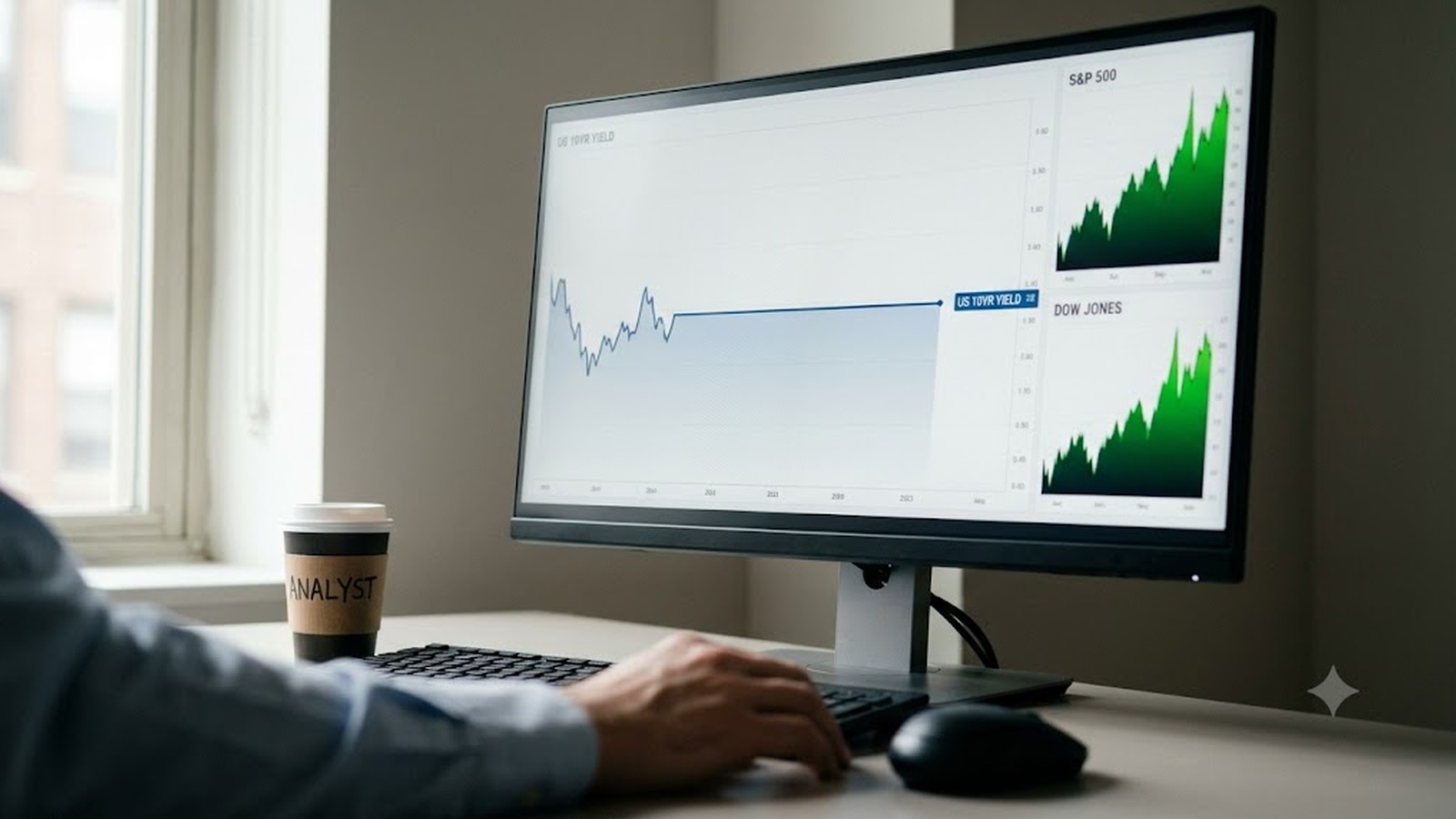
Druckenmiller: let the bond market speak. Your mortgage already is.
When Washington argues with the bond market, pick a maturity, not a side. Ours stays short, floating, and inflation-protected.

Washington says the oil is flowing. The ship-counters disagree.
Podiums announce; prices confess. Crude at $85 says supply is getting through, and our energy sleeve never needed the war premium.
From the desk Bias, the book, what’s priced, the planopen
A quiet Monday with a loud subtext. The Dow rose 140 points, while the Nasdaq fell 0.8% and the Philadelphia Semiconductor Index dropped 2.7%. The selling is concentrated in exactly one place, AI hardware, ahead of Nvidia’s Wednesday report. The volatility index (VIX) rose almost 5% to 15.85 into a mixed tape. That is hedging, not panic. The 10-year yield eased to 4.703% as Treasury’s buyback argument rolled on. Crude fell $2.05 on the day new Iran sanctions were announced. That is the market’s way of saying the risk premium was already too fat. And a new trade war opened on the northern border. The stock market shrugged it off. The inflation math should not.
Signals suggest a calm surface with narrowing breadth underneath. The volatility index rose on a day the Dow gained. Crash-protection demand (the SKEW index) is elevated near 146, while the volatility term structure stays in its normal calm shape. Positioning points to a market bracing for one event, Nvidia’s Wednesday earnings, rather than broad stress. That argues for holding quality, adding nothing to the crowded trade before the print, and owning the things that get paid if tariff inflation forces rates higher. Not a forecast; a posture.
- As of Tuesday morning, Aug 25, these are crowd odds, not forecasts: 66% that September’s Fed meeting is a hold, 34% a quarter-point hike, about 1% any cut
- 86% that the Fed makes zero cuts in all of 2026
- 16% that the U.S. invades Iran before 2027, and just 8% that Kharg Island changes hands by year-end
- Bitcoin near $79,000, with 71% odds it touches $85,000 this year and 38% for $95,000. Odds move intraday.
- S&P7,652.86 −0.3%
- DJIA53,417.16 +0.3%
- NASDAQ25,980.19 −0.8%
- SEMIS−2.7%
- 10Y4.703%
- 30Y5.230%
- OIL$85.01
- GOLD$4,640.80
- VIX15.85
- Trump’s trust disclosed 1,000-plus June stock trades, run by index-tracking computers, the White House says
- Boston bars check Apple IDs against driver’s licenses to catch fake IDs
- 90,000 told to evacuate as the Hawk fire nears Reno
- Boeing engineers reject a four-year contract; Deere workers reject a two-year extension
- Walmart launches Scenario, a trendier fashion brand
- OpenAI pauses model training to rebuild sandbox security
- SoftBank plans a record $6.3 billion retail bond for AI
- Eli Lilly’s obesity pill debuts in the U.K.
- The FTC settles with Zillow and Redfin
- China’s YMTC files a $4.9 billion IPO
- California scraps its Paramount settlement meeting
- Polestar says the White House strung it along
- Amazon’s toaster-shaped robotaxis hit the road
- Erik Prince launches an anti-drone startup
- The DOJ settled with Live Nation after a White House call
- Prince Harry comes home and William inherits a dilemma
- LIV Golf may have played its final event
- A claw machine that wants you to win, revisited by the crossword.
Three triggers from these two papers. If your bond ladder was built when the ten-year was under 2%, re-run it against 4.7%. If you are over 50 and working, size the emergency fund for a modern job search (twelve months; Lynn Lee’s took sixteen). And if a move into any shared-wall or community property is in your plan, read the governing documents like a lease before the wire. Ask Marc Rowan.