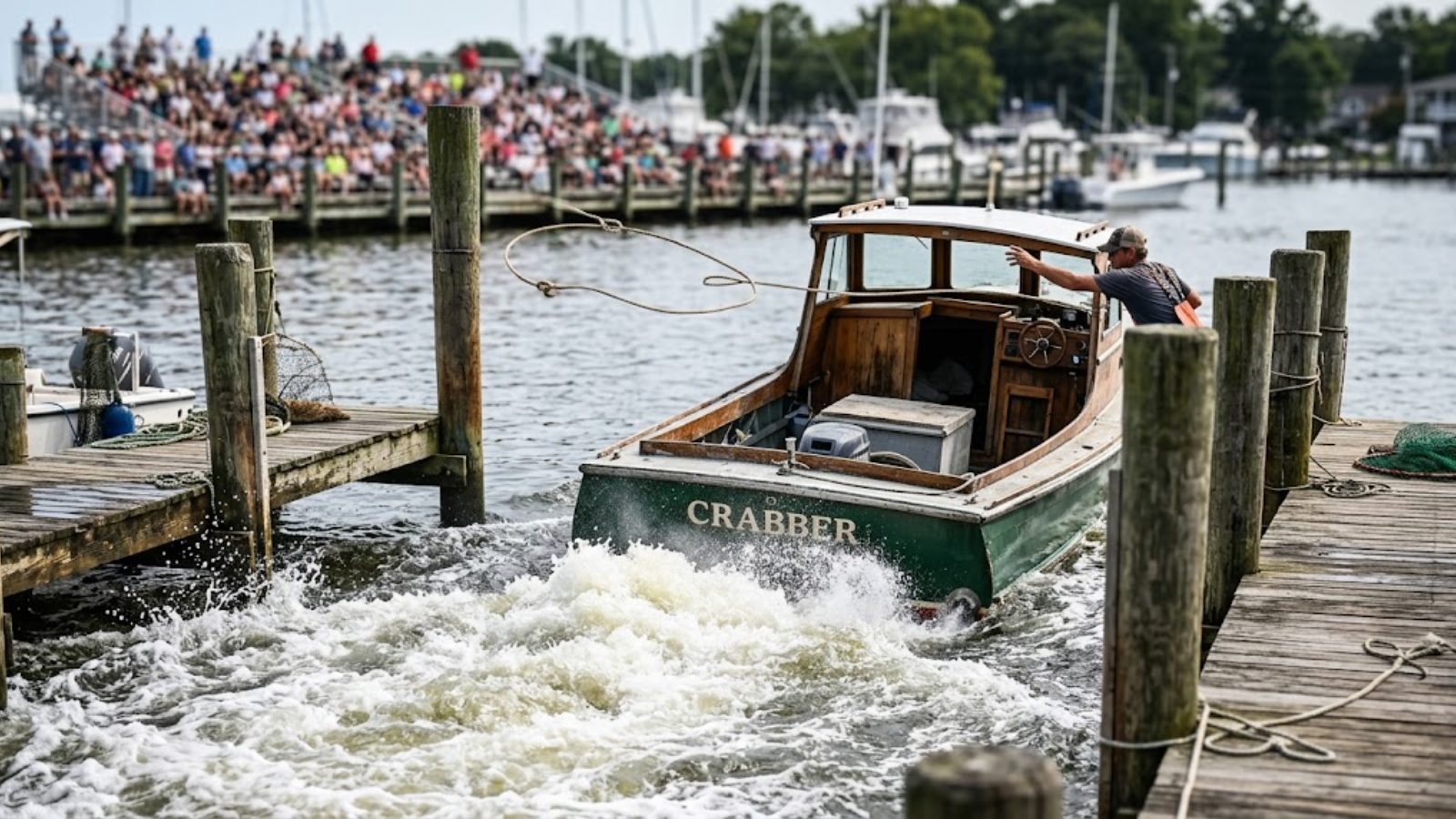
Marc Rowan spends his weekdays running Apollo Global Management (APO), one of the largest alternative-asset managers on earth, where the hard problems involve hundreds of billions of dollars and the occasional act of Congress. His hardest problem, though, lives at the end of a road in Montauk: a seafood shack with picnic tables, a sunset, and a set of neighbors who have been beating him in slow motion for twelve years.
Duryea’s Lobster Deck is, by the Journal’s account, a wonderful place to spend $97 on a lobster salad. Celebrities come. Influencers pose. Dom Pérignon flows toward the general direction of Fort Pond Bay. Just don’t call it a restaurant in front of the neighbors — because whether it’s legally allowed to be a restaurant is the entire war.
A bait shop with ambitions
The property started in the 1920s as a rustic bait shop. The previous owner spent the 1990s adding picnic tables and a bigger deck until the East Hampton Zoning Board ruled that a full-scale restaurant simply wasn’t permitted there and froze any expansion without town approval. When Rowan bought the place in 2014, he inherited the freeze — and, he admitted in a deposition, he knew the neighborhood would be hostile. He tried charm first: hosted a lunch, walked residents through his plans, made sure they had his cellphone number. One neighbor allowed that he was “technically very nice.” The rest were not swayed. “Money and power should not exempt you from the same laws that we have to follow,” says one who’s had a home nearby since 1994.
For a moment in 2019 there was a truce: a settlement worked out with a town lawyer. Then this May a judge reluctantly set it aside — because the town board, it turns out, never saw a draft and never formally ratified it. Settlements aren’t lightly discarded, the judge noted, but you can’t enforce a deal the town never actually made. The town’s new lawyer put the moral plainly: “Zoning is there for a reason.”
Since then the neighbors have run the most effective surveillance operation on the East End — monitoring Duryea’s social feeds and filing objections over a sunshade on the dock, a wooden walkway to the handicap parking, and one wedding. A neighbor whose family has summered next door since the 1970s admits the fight is bigger than one billionaire: “He’s our scapegoat: the hedge fund guy who bought the mom-and-pop shop.” His long-term thesis on the ritzy crowd is more Montauk than any zoning brief: “How much are they really going to stay in Long Island? It’s not the French Riviera.”
What the shack teaches better than a seminar
Here is what makes this a planning story and not just a rich-guy-problems story. Rowan is one of the best capital allocators alive, and this deal — personal, emotional, bought because he loves the place and has mountain-biked Montauk for twenty years — is the one that’s consumed twelve years of legal fees with no resolution in sight. The lesson isn’t that he made a bad buy. It’s that entitlements aren’t transferable the way deeds are. The property came with a frozen zoning status and forty years of neighborhood grievance, and no purchase price fixes either.
Scale that down to a normal balance sheet and it’s the most common real-estate mistake we see: the vacation property, the ADU, the “we’ll just add a deck” purchase — where the buyer prices the asset and not the approvals. Before any property purchase where your plan depends on changing what the property does, the fifteen-minute homework is the permit history, not the paint. And if a man who restructures companies for a living can spend a dozen years losing to a zoning board, budget accordingly: in real estate, the process is the asset. The lobster is just the dividend.