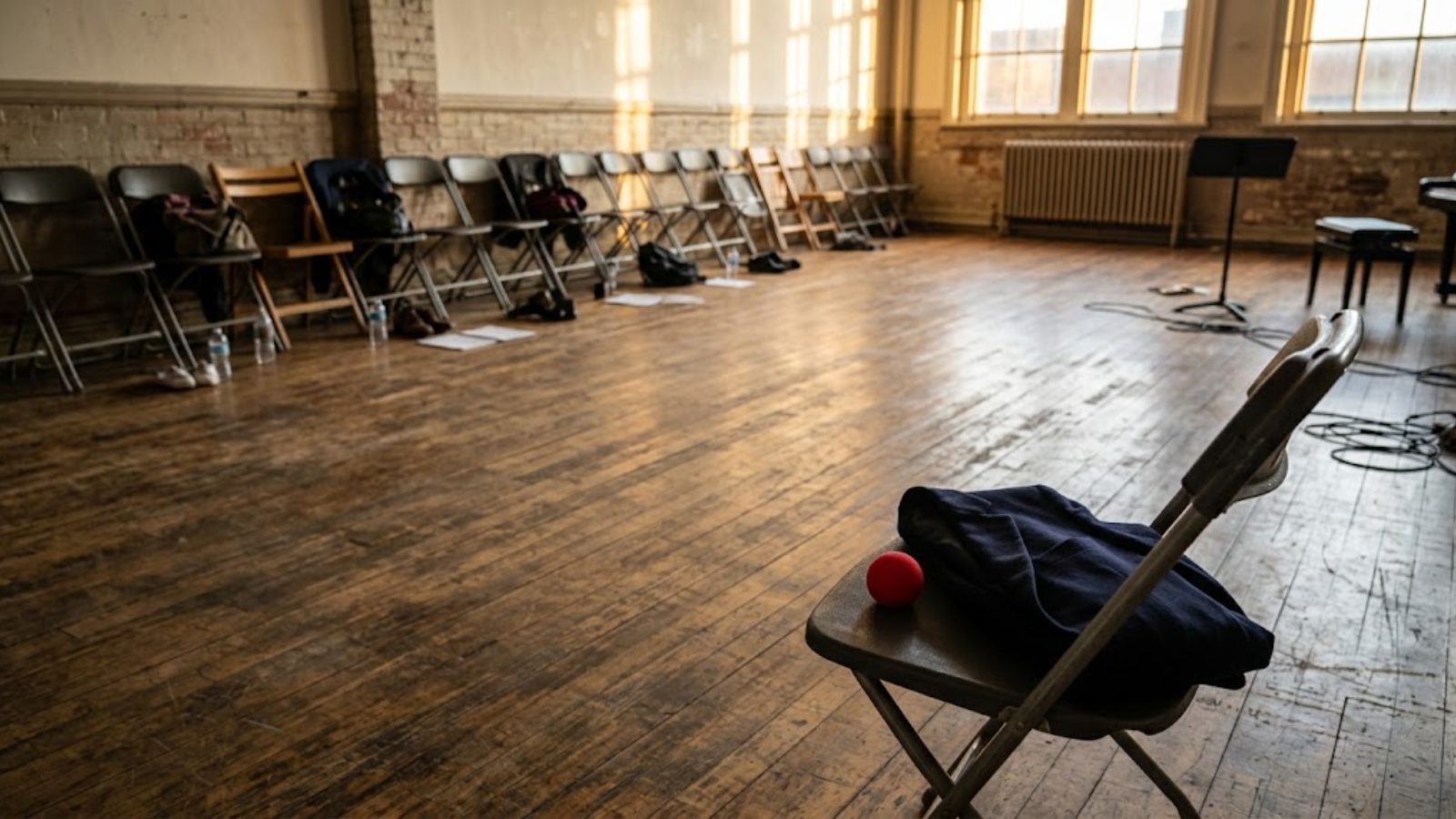
Julia Proctor was rejected from NYU's Tisch graduate acting program. The admissions officers told her they were looking for messier, more impulsive actors, and suggested she study clowning. She now teaches three clowning classes at NYU.
She also founded Clown Gym, a New York City studio focused on physical comedy. Everyone from corporate attorneys to therapists has taken her classes, and the workshops sell out quickly. Some therapists recommend that their patients sign up.
Her explanation of the appeal is the cleanest line in the reporting. "Clown is so much about embracing failure and vulnerability and acknowledging that you don't have control over your own life."
The school where a drum told you the truth
Much of this traces to Philippe Gaulier, whose famed clown school sits outside Paris. Gaulier died in February. The school's philosophy is that theater is as serious as a children's game.
He taught by showing students what was not working rather than prescribing what to do. When a performance fell flat, he pounded a small drum. One former student described the effect fondly.
"He was playing a character that was like a very crotchety old man who hated everything," Jack Grossman said. "And he played it very well."
Grossman was a chemistry major at UCLA who did stand-up on the side and decided he no longer wanted a career in science. Zoe Wohlfeld was a Shakespearean theater actress frustrated by the rigidity of classical work. Both abandoned their paths in 2022 and enrolled.
For months the running joke at the school was that Grossman was going to die alone. Then he was paired with Wohlfeld and told to imitate boiling milk. They dragged a white sheet onstage, climbed underneath and jumped up and down.
Gaulier snorted, which was a rare sign of approval. They started dating shortly after. They now produce and perform clown shows around the globe together.
What it feels like to be bad on purpose
Kylie Rolincik was assigned a slow French ballad to lip sync and told she was doing too much. Her description of that moment is worth keeping.
"My ego was death rattling at that point," she said. "It's almost like something dies and falls away, and then you're a little bit freer." She is now a communications specialist who works as a healthcare clown for Boston Children's Hospital on the side.
One caveat belongs here, and it comes from inside the field. Christopher Bayes, a Yale drama professor, warns students who expect his classes to work as treatment. "It can be deeply therapeutic, but it's not therapy. It's not medicine."
The office they went back to
The reason this reads as relief becomes obvious one page over, where the Journal ran a column on workplace monitoring. You might not even know you are being watched, because many states do not require disclosure.
The metrics can include proxies as thin as keyboard strokes and how often your screen goes to sleep. Ivan Petrovic, who runs a workforce-management platform, says companies generally aim for 60% to 80% of your day to count as work. Push it higher and you have a different problem, because hitting 90% "could look suspicious."
| The measured workday | Reading |
|---|---|
| Target share of day counted as utilized | 60% to 80% |
| Level that could look suspicious | 90% |
| Workers admitting they exaggerate AI use | 48% |
| Meta workforce cut in May, per a lawsuit | about 10% |
Andrea Derler, a principal researcher at Visier, describes the result. "There's a performative aspect where employees overblow their usage of AI so that they appear relevant in the organization." In a Visier survey of 1,000 U.S. workers, 48% admitted doing exactly that.
A group of former Meta employees alleges in a lawsuit that the company leaned on internal artificial-intelligence systems when it cut about 10% of its workforce in May. Meta says humans make the termination calls. The column's own verdict is that productivity theater has always been part of work.
The lesson, which is not about clowns
Nobody quoted here reports a windfall. The payoff is skills. Danielle Smith, a union leader who found clowning down an internet rabbit hole, lists what carried over: staying present, embracing vulnerability and reading a room. Clowning now has a line on her resume.
That is the money lesson, and it is a cheap one. Failing on a Saturday in a basement studio costs a Saturday. Failing in a career costs years, and failing with a portfolio costs the compounding you never got back.
Find a place where being wrong is inexpensive, and practice there. The one downside, per Smith, is that she and her friends now have to think twice before using "clown" as an insult.