Howard and Suze Rubin are both 77. They have been married 56 years and have owned 12 homes in New York and Florida. Their bearded collie, Buster, owns the current one in every way that counts.
Howard is a technology consultant and a professor emeritus of computer science at Hunter College. Suze is a retired veterinary technician, school psychologist and volunteer EMT. Between them they have kept eight dogs, 10 cats, five horses, a hamster and a rabbit.
Buster is almost 9 and weighs 120 pounds. He has arthritis and more allergies than they can count. "The only thing he can eat is turkey," Howard told the Journal.
What the house cost
They bought the Pound Ridge, N.Y., property in 2019 for $1,825,000. It is a circa-1955 midcentury modern on about 2.76 acres, roughly 5,000 square feet, four bedrooms.
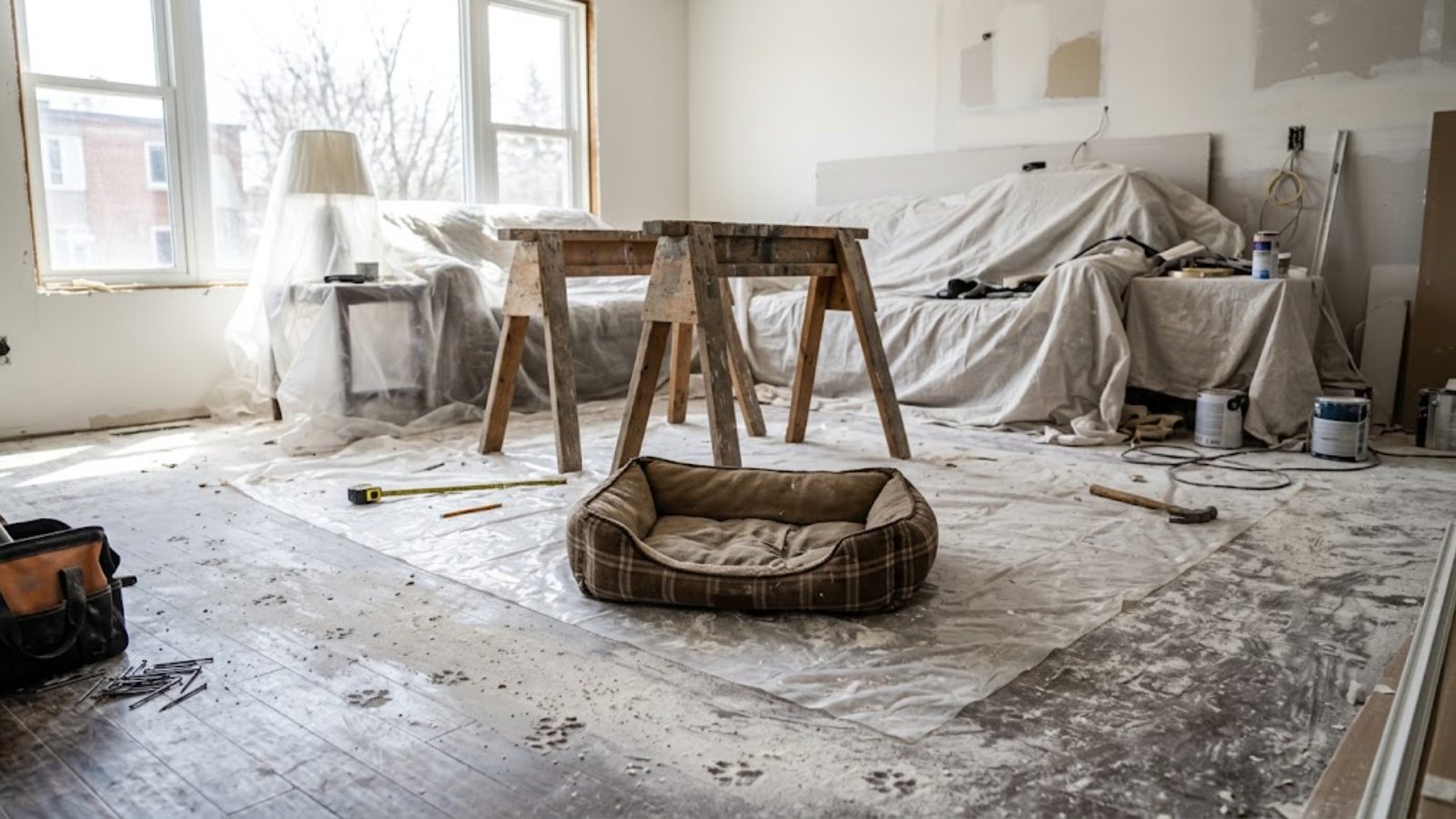
Then they spent roughly $2 million on renovations. Most of that went to the home's infrastructure, a new kitchen and new bathrooms.
Some of it did not. Two sun shelves were added to the pool for the dog, who loves water but does not swim. Howard has never once been in that pool. "We never use it. It's his."
The backyard is artificial turf with drainage and a fenced playground. Umbrellas and Japanese maples are placed so Buster "always has protection for his fuzzy body." The pool deck is composite because it deflects heat. "We don't want his little feet to get burned."
There are nine televisions. He likes a show called "Paw Patrol." No guest bedroom or couch is off-limits.
Now the arithmetic
The house is listed at $2.9 million. They are selling because Suze wants to try Florida full-time again, which means the dog's house is being sold for reasons that have nothing to do with the dog.
Add the purchase price to the renovations and you get about $3.825 million in. That total is our arithmetic, not the Journal's. The ask is $2.9 million.
The gap is roughly $925,000. Call it about 76 cents back on the dollar, and that is at the asking price, before commissions, and before six years of taxes, insurance and upkeep.
| The Buster arithmetic | Amount |
|---|---|
| Purchase price, 2019 | $1,825,000 |
| Renovations, approximate | $2,000,000 |
| Total in (our arithmetic) | $3,825,000 |
| Current asking price | $2,900,000 |
| Gap at ask (our arithmetic) | −$925,000 |
| Median Pound Ridge sale price | $1,600,000 |
The local market is not the problem. The median home sale price in Pound Ridge was $1.6 million for the three months ending in June, up 11.8% from a year earlier, according to Redfin. The ask is roughly 1.8 times that median, by our math.
The listing agent, Sally Slater of Douglas Elliman, says buyers "are willing to pay a premium for turnkey properties." She notes the market has boomed since 2020, and homes in great condition often sell within days at or above ask.
So the house should sell. It just will not sell for what went into it. A renovation is spending, not investing. Some of it comes back, a lot of it does not, and the parts tailored to one specific 120-pound dog come back least of all.
The number under the number
The same lesson shows up in a much smaller purchase. A Samoyed puppy from a reputable breeder runs $4,000 to $7,000. That is the sticker.
The double coat then needs professional grooming every six to eight weeks, for the life of the animal. One Oregon breeder, an American Kennel Club judge, put it plainly: if people do not want that time or expense, "this is not the breed for them."
Sticker price is the small number. Carrying cost is the big one. That holds for dogs, houses, pools, boats and nearly everything else people fall in love with.
None of this is an argument against the dog. Howard's own summary is better than anything we could write. "I wouldn't say we've given up part of our life for him, but we've changed our life for him."
That is a fine way to spend money. It is simply not a way to grow it. Decide which one you are doing before you sign, and fund the other one somewhere else.