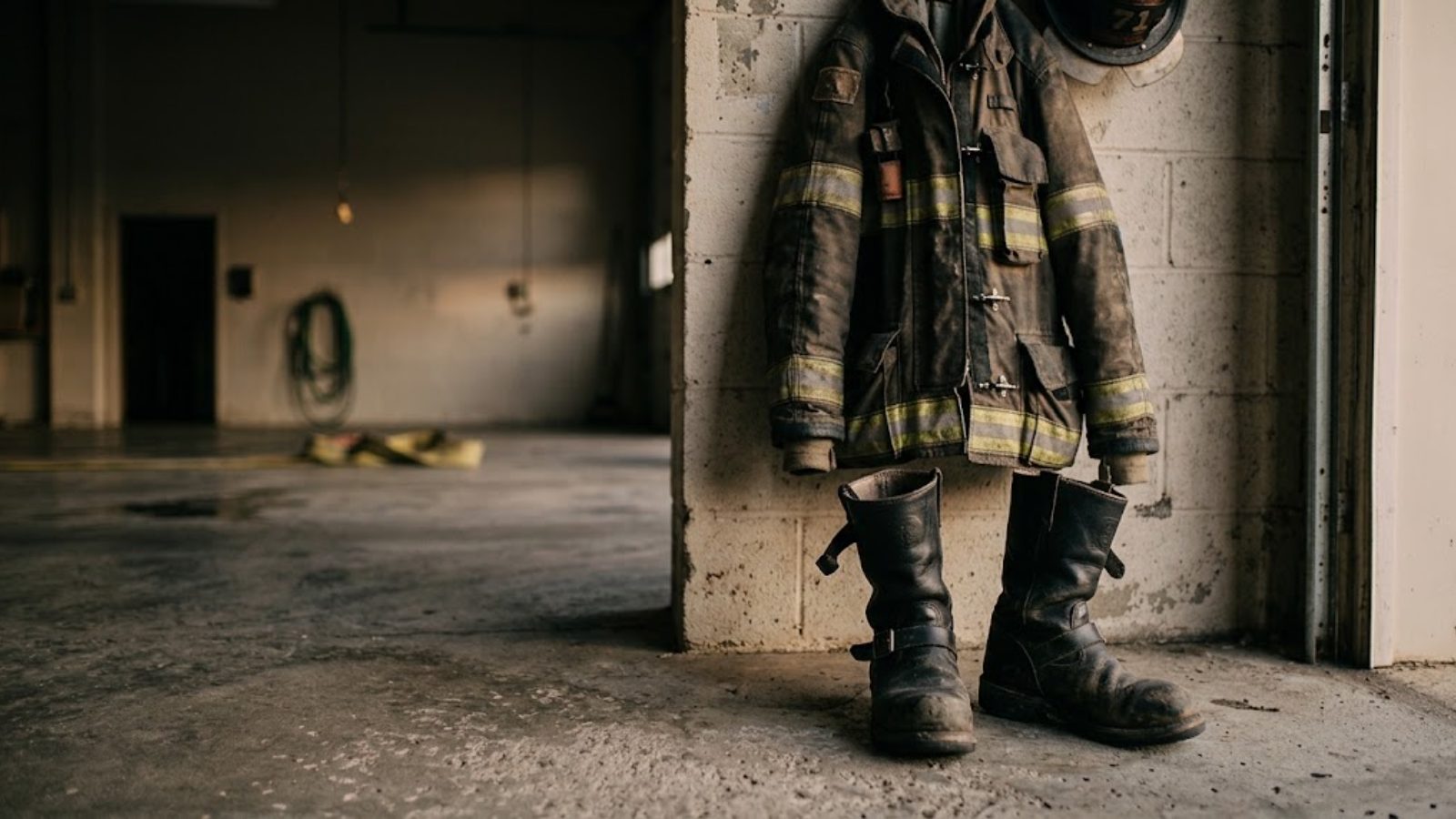
Ernie Solis fights fires in San Jose. He lives in Star, Idaho. He flies in every Monday, sleeps in free firefighter dorms during the week, and flies home on Friday. The Journal told his story in the July 28, 2026 paper.
The math pushed him there. On a firefighter's and a teacher's salaries, a home near the city was out of reach, and daycare ran about $25,000 a year per child. On the Monday flight he meets electricians, HVAC technicians and body-shop owners making the same commute.
His pension is generous on paper. His life is happening now, in cash. Every safety member knows that gap. Two state capitols just showed the two directions it can go.
California wants to sweeten the deal
The California Assembly passed two pension bills with near-unanimous support, described by the Journal's editorial page on July 17, 2026.
One would let CHP officers and firefighters who are eligible to retire keep working with pay while also collecting pension payments. That money would sit in an account with accrued sick leave and paycheck contributions, earning interest at a rate guaranteed by CalPERS. At retirement it pays out as a lump sum, on top of the regular pension.
The other bill would drop the retirement age for safety employees hired after the 2012 reforms from 57 to 55. It would also raise the pensionable-earnings cap for safety officers to $249,075 from $191,679.
The editorial argued against all of it. Its own numbers explain why members will cheer anyway. The average pension for a CHP officer with 30 years of service was $114,147 in 2024. For every dollar an officer earns, the state contributes 65 cents toward the pension. Starting pay is $122,500, and the patrol received some 33,000 applications in 2025.
Fair warning from the same page. The state's actuarial panel expects the cost of the sweetener to spike in downturns. And Los Angeles ran a similar work-and-collect program the editorial called costly and rife with abuse.
Washington shows the other direction
Washington's LEOFF 1 pension covers police and firefighters hired before 1977. It was run so well that contributions were suspended around 2000, because the plan was fully funded. By the 2024 valuation it stood at 160% funded.
Then the state hit an estimated $2 billion budget shortfall. Gov. Bob Ferguson signed House Bill 2034 on April 1, 2026. The law terminates LEOFF 1 in 2029 and sweeps out its surplus, nearly $3.9 billion by the state's own projection. A columnist walked through the wreckage in the May 16, 2026 Journal.
| LEOFF 1, by the numbers | Figure |
|---|---|
| Funded level, 2024 valuation | 160% |
| Surplus swept by HB 2034 | ~$3.9 billion |
| Routed to a climate account | $569 million |
| Parked for general spending | ~$3.4 billion |
| Annuitants | 5,945 |
| Active members remaining | 6 |
| Average payment | $5,413 a month |
That last number deserves a footnote. The column originally printed the average as $5,413 a year. Ten days later the Journal corrected it: the figure is monthly. Even the paper of record briefly misplaced a pension by a factor of twelve. Imagine what a budget committee can do.
The retirees are suing. Nine plaintiffs filed a class action on April 30, led by Dave Reichert, a former King County sheriff and a LEOFF 1 member since 1972. They argue the sweep violates the contract clauses of the U.S. and Washington constitutions.
The columnist's sharpest point is the one worth writing inside a locker door. A legislature can vote itself into a pooled trust. It cannot vote itself into your personal account.
What a safety member should actually do
Keep the pension. It is one of the best deals in American retirement, and nobody here is suggesting otherwise.
But know what stands behind the promise. The Journal described CalPERS as a $544 billion fund in June 2025 and roughly $600 billion by March 2026. Its private-equity program has grown from about $50 billion to more than $92 billion. Those holdings are valued by the managers who run them, not by a ticker.
In one deal the Journal covered in March 2026, CalPERS bought private-credit assets that overlapped about 70% with what it already owned. That is not a scandal. It is a reminder that the promise is invested, and investments carry risk.
So the plan is simple. The pension is the floor. Build the second story yourself, in accounts with your own name on them, where no legislature holds a key. Our Police, Fire & County Safety page walks through the moving parts, station by station.
Bring your annual statement to a review. We will read the fine print together, and we will count the months, not the years.