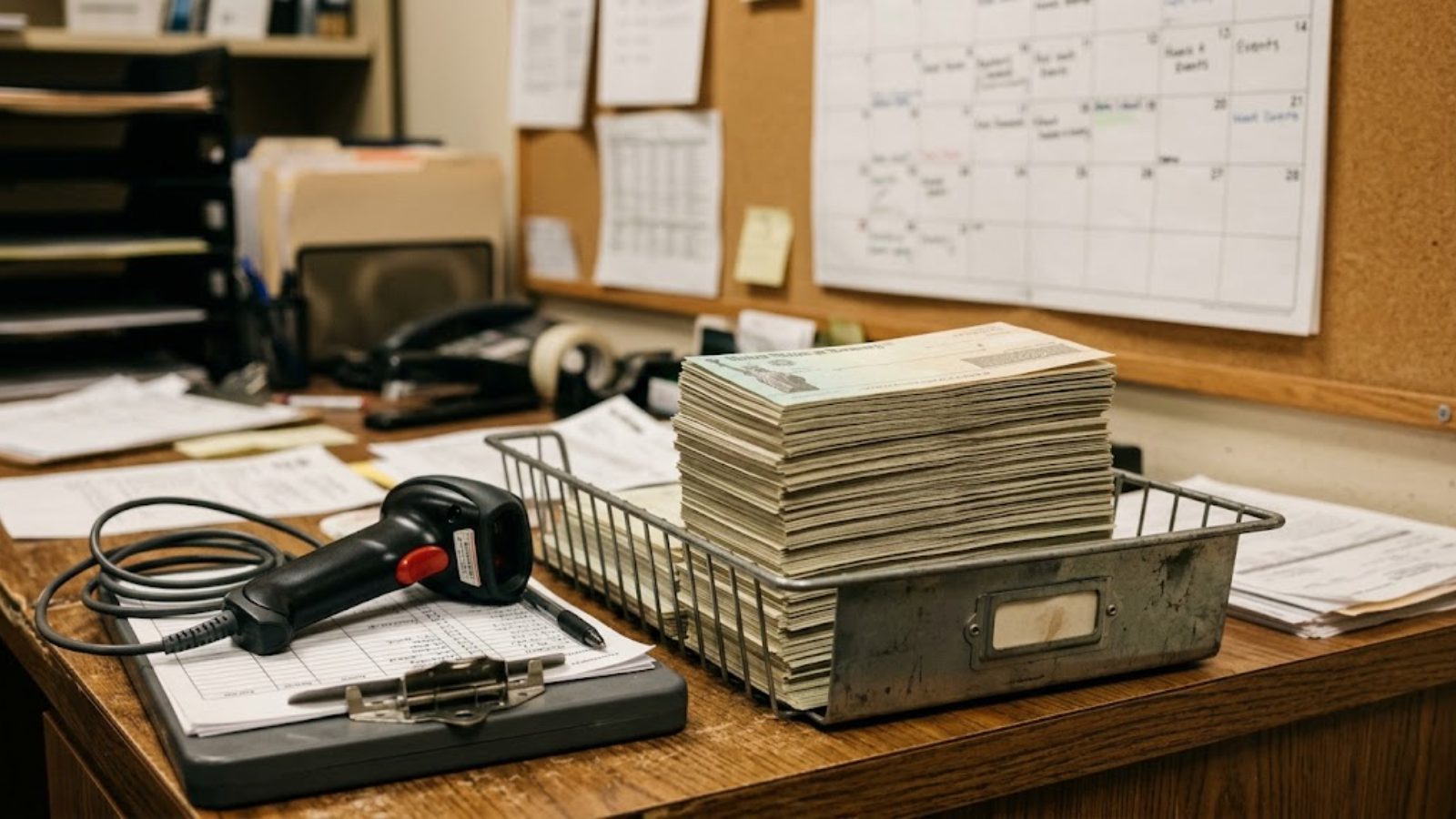
Four retailers reported quarters fattened by tariff refunds — money returned after import duties were reversed or reduced. The cash is genuine. The problem is that a refund is a one-time event, and share prices were set as if it were a habit.
Abercrombie was the loudest example. Sales rose 4.8% to $1.27 billion, adjusted earnings came in at $4.17 a share against a $1.99 estimate, and the stock jumped 36% to $147.69.
Follow the refund
Inside that beat sat $100 million of tariff refunds, with roughly $120 million expected across the full year. Management raised full-year guidance to $13.10 to $13.60 a share, up from $10.20 to $11.
Kohl’s told a similar story with a weaker business underneath. Profit was $151 million, or $1.28 a share, while same-store sales fell 0.9%. Refunds totaled $150 million, and about $100 million of that flowed straight into gross margin.
| Company | Tariff refunds | What else happened |
|---|---|---|
| Abercrombie (ANF) | $100M | Sales +4.8% to $1.27B; shares +36% to $147.69 |
| Kohl’s (KSS) | $150M | Same-store sales −0.9%; shares +1.5% |
| Bath & Body Works (BBWI) | $80M | Revenue −2.3% to $1.51B; shares +7.5% |
| Dollar Tree (DLTR) | ~$383M | Shares −3.4% |
One-time money versus real money
Bath & Body Works doubled profit to $118 million from $64 million, helped by $80 million of refunds, even as revenue fell 2.3% to $1.51 billion. Digital sales grew for the first time in five years, which is the part worth keeping.
Dollar Tree is the control experiment. It booked the largest refund of the group, about $383 million, and the stock fell 3.4% anyway. Investors sometimes do read the footnotes.
The test we apply is simple. Ask what the quarter looks like with the refund removed. If the answer is a shrinking business, the refund bought time, not progress.
Run that test on Kohl’s. Strip out the refund and you are left with fewer sales per store than a year ago. The customer did not come back; the paperwork did.
Abercrombie passes more of the test than the others. Sales actually grew, and clothes actually sold. The argument is only about how much of the beat deserves a permanent price.
What a clean quarter looks like
Dollar General is the contrast. Sales rose 5.2% to $11.29 billion and profit reached $550.3 million, up from $411.4 million a year earlier. No refund headline, no asterisk.
That is what recurring money looks like: customers walked in, bought more, and are likely to do it again. A tariff refund cannot be repeated, because you only overpay a duty once.
Refunds also carry political risk in both directions. Trade rules that gave the money back can take it back, and the next quarter has to stand on its own merchandise.
There is a household version of this lesson. A tax refund, a bonus, an inheritance and a legal settlement are all real money and none of them are income.
People get into trouble when they raise their spending to match a one-time check. Companies get into trouble when investors raise the share price to match a one-time refund.
So enjoy the windfall, then value the business without it. That is the whole discipline, and it fits on an index card.