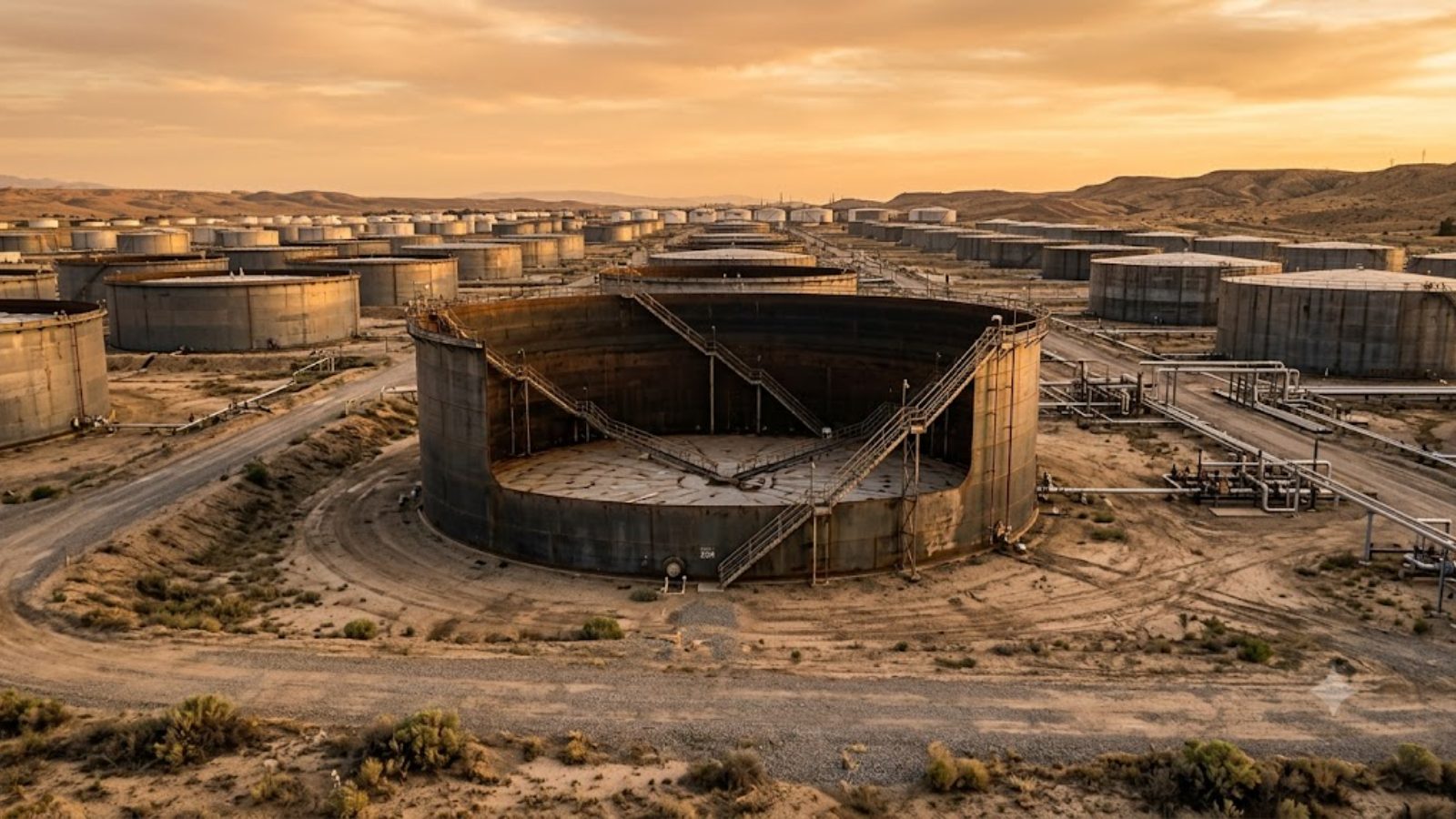
Here is a fact that sounds like a typo. Venezuela is believed to hold about 90 billion barrels of oil in the fields now under discussion with Washington. It produces about 1.1 million barrels a day. At that pace, the country is emptying a swimming pool with a teaspoon.
The Journal reports the U.S. is in talks to take a direct stake in more than 17 of those fields. Not a lease. Not a permit. A stake. Governments usually tax oil companies. This would put one on the other side of the table.
Reserves are a promise, not a product
Reserves are oil a geologist believes is down there. Production is oil somebody actually sold. The distance between the two is paid for in pipe, pumps, power, ports and people, and Venezuela has been short of all five for years.
So the 90 billion number is real and almost useless on its own. It tells you the prize. It does not tell you the price of the ticket, or how many years you stand in line to collect.
Oil people have a blunt way of saying this. Barrels in the ground are geology. Barrels on a ship are a business. Only one of those pays a dividend.
Venezuela has spent two decades proving the difference. The reserves never shrank. The ability to lift, treat and export them did, one broken pump and one lost engineer at a time.
The flow numbers around the region make the point. Look at what actually moves per day, which is the only figure a refinery can buy.
| What moves each day | Amount | Note |
|---|---|---|
| Venezuelan production | 1.1M bbl/day | Current output from the fields in the talks |
| Iranian crude shipments, May | 280K bbl/day | Down from 2.2M a day in February |
| Ships through the Strait of Hormuz | ~15 vessels | Down from about 130 a day before the conflict |
Why a barrel counter matters to you
Crude settled at $83.53. That is a price set by what leaves the terminal, not by what sits under the ground. Every barrel that stays stuck keeps the price where it is.
If Venezuelan output eventually climbs, it lands in a market that has spent months short of easy barrels. That is helpful for drivers and unhelpful for anyone who bought oil producers expecting scarcity to last forever.
It is also slow. Fields that have been starved of money do not restart in a quarter. They restart over years, with cost overruns, and with politics attached to every valve.
Think of a house left empty for fifteen winters. The land is still valuable. The furnace, the roof and the plumbing are somebody’s very expensive problem.
There is a second reason to keep expectations low. Heavy Venezuelan crude needs specialized refineries, and the world has a limited number of them. Even willing buyers are not interchangeable.
What we do about it
We do not buy reserve headlines. We own the part of energy that gets paid whether the barrel is cheap or dear: the companies that move it, store it and refine it, and that collect a fee for the service.
A government stake in foreign oil fields is a new kind of risk to watch. It mixes diplomacy with drilling. When the owner of the asset is also the writer of the rules, the rules can change with an election.
So we file this under things that move slowly and matter a lot. Nothing in it changes a position. Everything in it changes what we watch on the energy sleeve for the next several years.