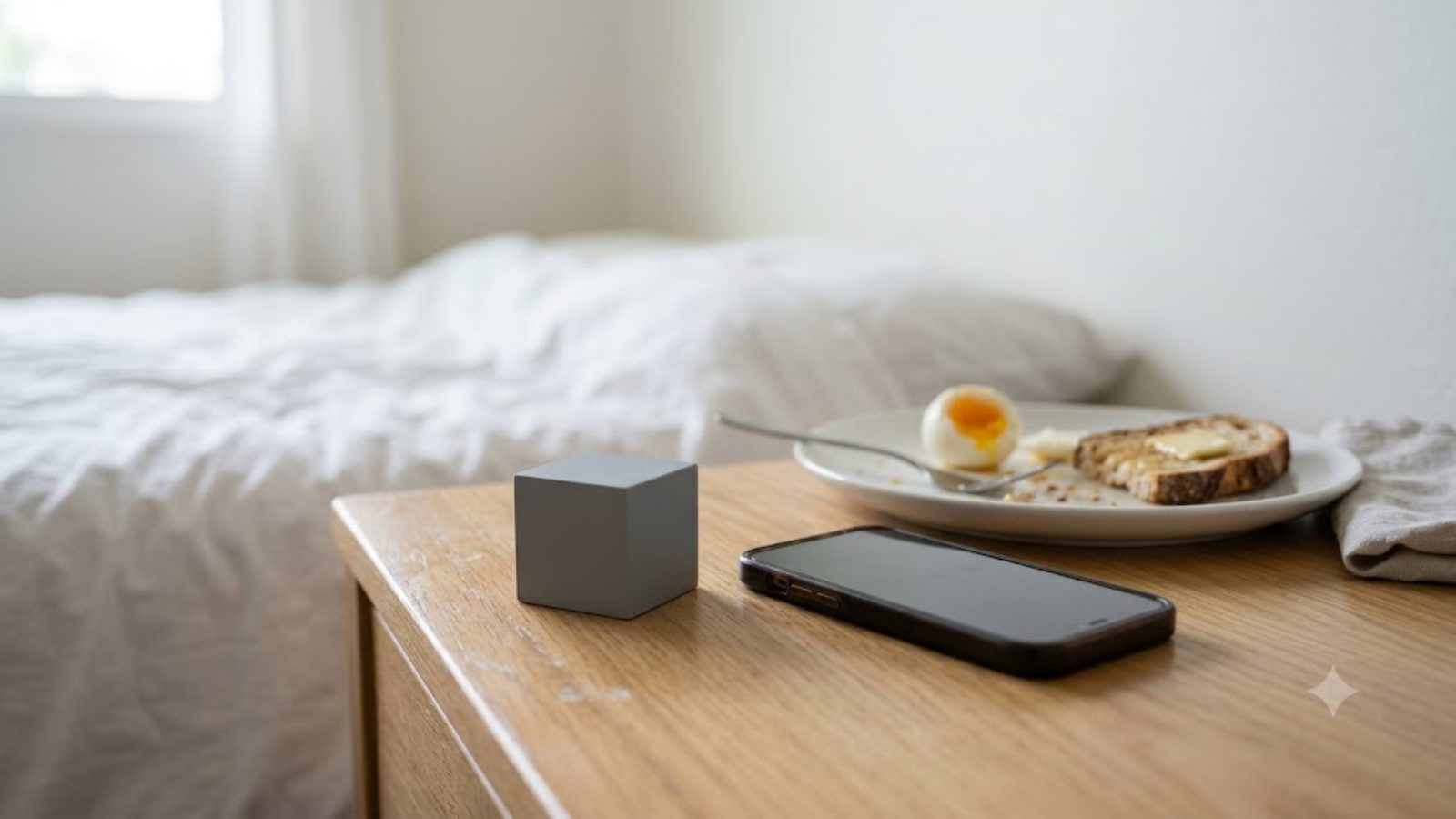
Three stories sat in the same day’s Journal, pretending to be unrelated. A $60 plastic brick that locks your phone. Nestlé re-spicing dinner for people on weight-loss drugs. And a six-year prison sentence for the founder of an instant-Adderall startup. They are one story. Americans have started paying cash for self-control.
The brick
Two friends from Wisconsin, both about 27, quit their software jobs to sell a gray cube called Brick for $60. It does nothing. That is the product. Tap your phone on it and your distracting apps lock until you physically walk back and tap again.
Downloads went from about 14,000 in October to 103,632 in January. Celebrities carry it. One influencer cut a double-digit daily screen habit down to four hours — by paying sixty dollars to be told no by a paperweight.
Understand what is being sold. Not technology. The opposite of technology. The product is distance between you and the impulse.
The tongue and the sentence
Exhibit two: Nestlé is re-engineering recipes because GLP-1 weight-loss drugs dull the taste buds. A 2025 study found all five basic tastes depressed. So: more pepper, smaller portions, high-protein formats, “GLP-1 friendly” labels. The largest food company on earth is redesigning dinner around a drug whose whole job is wanting less dinner.
Follow the money in a full circle. For decades, food scientists engineered products to overwhelm your appetite. Now pharma sells the appetite off-switch. And the food scientists are re-engineering around the off-switch. Both sides invoice the same customer.
Exhibit three is the criminal division. The founder of Done Global — the startup that advertised instant ADHD assessments and prescribed stimulants in minutes to over 100,000 patients — got six years in federal prison and a $1 million fine. She had privately called it a “drug business” she hoped would become a “unicorn.”
Brick sells friction. Nestlé sells accommodation. The pill mill sold frictionlessness itself — want it, click it, have it in minutes. A federal judge just priced what that business model is worth.
Bricks for money
Every economy eventually monetizes its scarcest resource. Ours has decided the scarce resource is impulse control. You can now buy friction, buy an off-switch, or buy frictionlessness from someone who will eventually meet a judge.
Why does this belong here? Because self-control is also the entire retirement business.
A written plan is a Brick for money. So is an automatic contribution. So is a rebalancing rule — a preset instruction for when to trim winners and refill laggards. Friction you install on purpose, before the impulse shows up.
The investor who needs willpower in the moment has already lost. The one who installed the system while things were calm never has to summon any. Two weeks ago the chip stocks fell 11% in two days. The households that did nothing were not braver. They had simply bricked the account.
Inside the Capital Wealth Growth Portfolio, the same idea shows up twice. Our growth names lean on pricing power wherever a customer’s impulses are engaged — including the companies re-engineering dinner. And our income holdings are a commitment device: a dividend schedule disciplines a company the way an automatic contribution disciplines a household.
So buy your own brick. Automate the 401(k) increase now, while nothing is on fire. Put the rebalancing rule in writing. Keep 12 to 24 months of income needs in short-term Treasuries so no market morning ever forces a decision. And when a product promises to remove all friction between you and money — instant approval, one tap, yields that read like typos — remember which exhibit that business model belongs to.