 Capital Wealth Daily
The Blink Issue
Our read of the July 8 Wall Street Journal. Tuesday’s close, every story tied to a move in the model books.
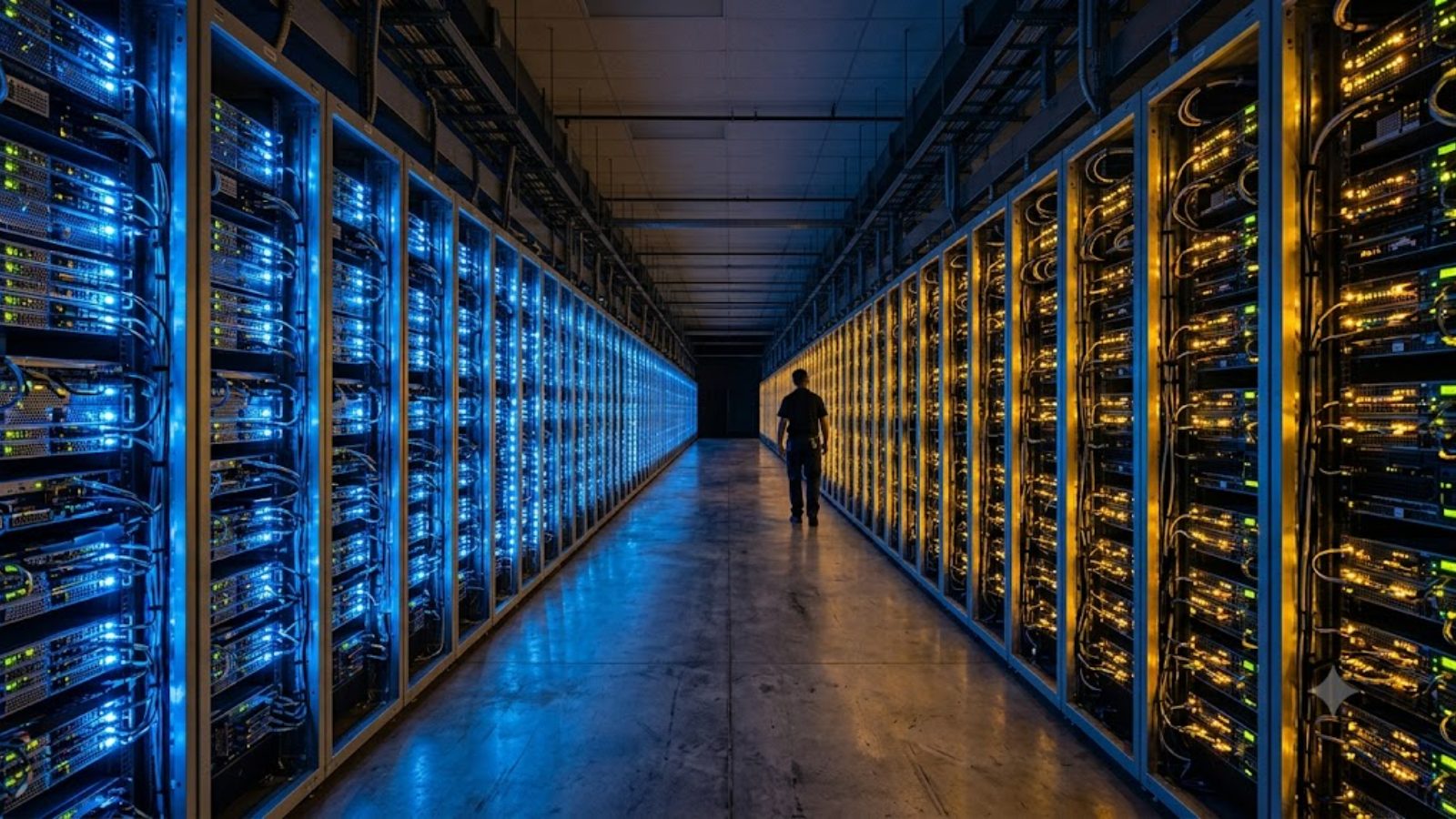
$710 billion and rising. Meta blinked, chips flinched, and here’s the damage report.
Four companies, Google (GOOGL), Microsoft (MSFT), Amazon (AMZN) and Meta (META), are spending $710 billion this year building AI. They are on the way to a trillion in 2027. Then Meta let slip it might rent out the compute it isn’t using. The market heard the first blink. If the biggest spender has spare capacity, maybe everyone is building too much. The PHLX semis fell 4.65% Tuesday, and 11% in two days. The casualty list was long. Micron (MU) −$46.37 to $938.38, AMD −$35.94 to $516.11, Marvell (MRVL) −$18.57, Lam Research (LRCX) −$24.07, Sandisk (SNDK) −$126.73, Western Digital (WDC) −$45.36 and Taiwan Semi (TSM) −$19.22. The damage spread to Caterpillar (CAT) −$29.80, GE Vernova (GEV) −$74.96, Vertiv (VRT) −$12.89 and Quanta (PWR) −$17.25. Here is the part the panic missed. Nvidia (NVDA) rose $1.38 to $196.93, MSFT added $2.10, and META itself gained $15.29 to $615.58. The generals held while the supply line ducked.
Our ReadNo forced selling. MU, AMD, MRVL, LRCX, TSM and AVGO all stay at their tactical targets. We sized them for exactly this kind of Tuesday. NVDA stayed green while its own sector fell 4.65%. That is the single most bullish datapoint in the paper, and it stays on WATCH as the tell. META joins it as the capex-discipline tell. The day “renting out compute” becomes a business line instead of a scare, this story flips from overbuild to margin. A sizing note for everyone else. Chips are now roughly 18% of the S&P 500, up from 5% five years ago. Your “boring” index fund is quietly a semiconductor bet. Size the sleeve so an 11% two-day slide is a headline, not a lifestyle change.
The Stories
6 stories · 3 pictured · 3 listed
The U.S. hits 80 targets in Iran and takes its oil license back. The sleeve gets paid.
The full energy sleeve stays reinforced at target across every tier. That means CVX, XOM, COP, KMI, WMB and TPL ($402.76, flat on a red market). This is the sleeve’s entire job. It pays a dividend while you wait, and it works hardest on exactly the mornings the rest of the market doesn’t. Peace is a headwind you rebalance into, not a reason to sell the insurance. SHEL goes on the watch list for the trading-desk P&L alone.

SpaceX joins the Nasdaq-100 and promptly falls 6.8%. You own it now. Congratulations.
No direct SPCX position. You already own it through every Nasdaq-tracking fund, sized by the market. That is exactly how a $2 trillion story stock should arrive in a retirement account. Diluted, cheap and automatic. It stays on the watch list for one number only, those bond spreads. When the bond market and the stock market disagree, we side with the one that read the covenants.
13,500 companies and nine years to the exit. Private equity’s traffic jam.
Evergreen and interval PE products stay on the avoid list in every tier, full stop. When these funds come to retail dressed as “democratized alternatives,” remember what the interval is for. It’s the door, and the manager holds the handle. Retirement income needs a public bid. PNC’s new dividend (next story) is that kind. It pays in cash, quarterly, with no waiting list.
- Heard On The Street · DividendsValue’s 43% “comeback” is mostly a costume change. The dividend raises are real.
- Your Money · EducationPell goes to trade school. $7,400 a year now covers eight-week credentials.
- Retirement & Real EstateFlorida’s $250,000 homestead revolt. The property-tax cut cities are bracing for.
Off Duty & The Life File
2 stories
A $60 brick, a duller tongue, and a six-year sentence. The willpower economy.
Americans now pay good money to have their own impulses taken away. That also happens to be the entire business model of a target-weight portfolio. We charge less than the brick.

30 million watched America collapse. Belgium 4, U.S. 1.
The record TV number is the real story. The audience showed up before the team did. Chips fell 11% in two days, and nobody scored four on our book.
From the desk Bias, the book, what’s priced, the planopen
The market blinked. It didn’t break. Nasdaq −1.16%, and the VIX awake at 16.13, which by history is still a nap. The generals stayed green while the supply line ducked (NVDA +$1.38, META +$15.29, MSFT +$2.10 against PHLX −4.65%). Two things decide the next leg. The June FOMC minutes land today with the target at 3.50–3.75% and the 10-year at 4.529%. And the Iran escalation just repriced the strait, with WTI +$1.89 to $70.44. We lean into what got paid on the red day, meaning energy, defense, UNH and JPM. We hold the AI hardware sleeve at the targets we sized for exactly this Tuesday. We let SGOV collect 4%+ while the committee argues.
- DJIA52,925.15 ▼0.25%
- S&P500 7,503.85 ▼0.45%
- NASDAQ25,818.69 ▼1.16%
- 10Y4.529%
- 2Y4.161%
- WTI$70.44 ▲$1.89
- GOLD $4,145.30 ▼
- VIX16.13
- PHLX −4.65% (−11%/2D)
If an 11% two-day chip slide changed your week, your allocation was doing the worrying your plan should be doing. Size the AI sleeve to the plan, and let the barbell hold the other end.