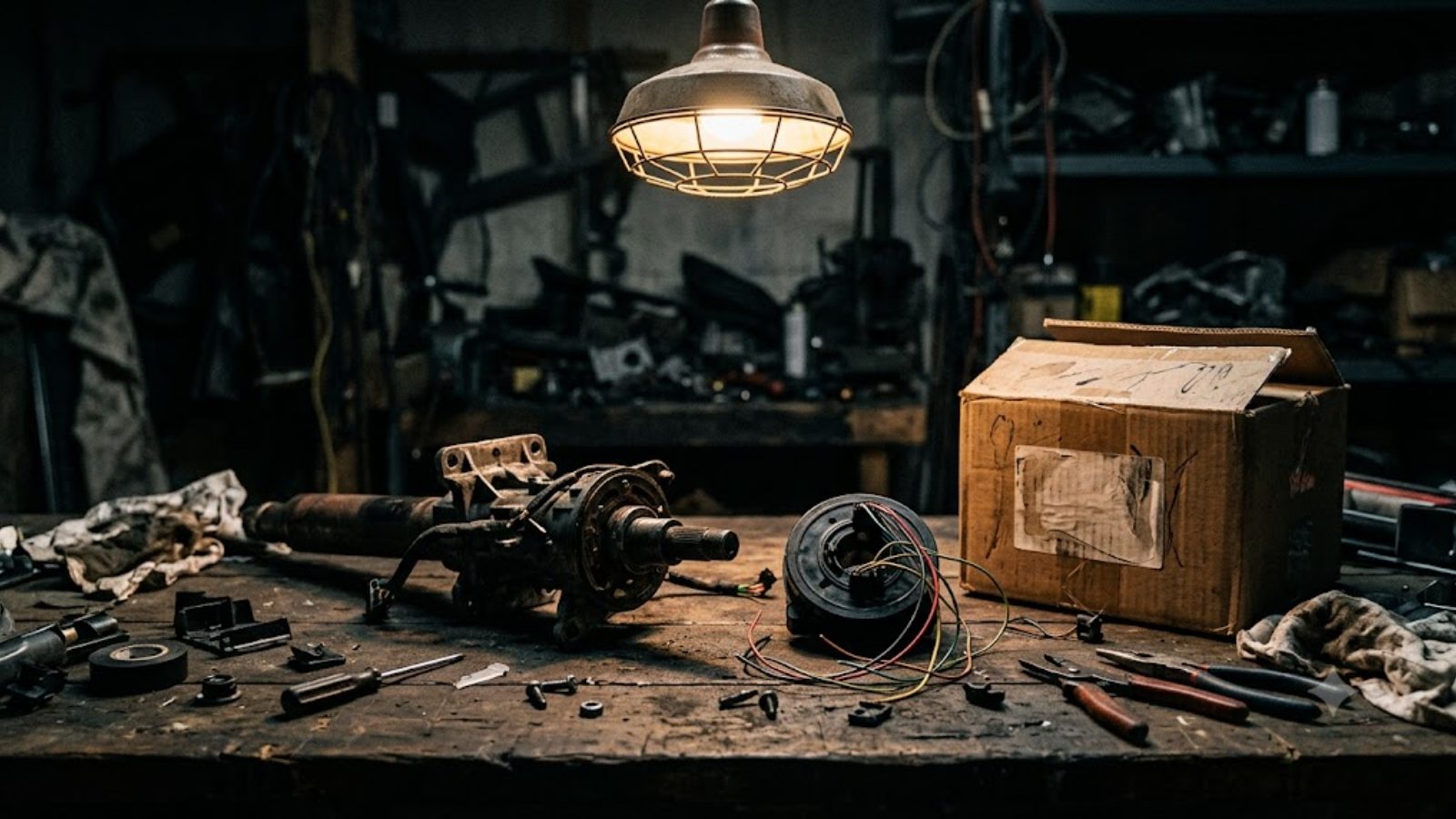
A teenager unwraps the keys to his first car — a used one, the birthday gift every parent hopes lands right. Neither he nor his parents know there is a counterfeit explosive bolted into the steering column.
A 22-year-old slides behind the wheel of a Chevrolet Malibu that got patched up after an old crash. That is the victim profile here: ordinary drivers in repaired used cars.
The Journal just published an investigation into air-bag inflaters — the little canisters that fire the bag in a crash. Knockoff versions, stamped with fake “DTN” branding, sell for about $100 on eBay and Facebook Marketplace. Some were smuggled into the country inside toys and dollhouses.
When the real part deploys, it cushions you. When the fake one goes off, it can spray metal into the cabin. At least ten Americans are dead.
A jury hit one seller with a $603 million verdict. Everybody agrees it will never be collected.
The recall that cannot happen
Here is what makes this uniquely nasty. The parts slipped into the country with no import records. So the National Highway Traffic Safety Administration cannot do the one thing it exists to do — recall them.
There is no list of what came in. No list of whose steering wheel holds one today. “Unprecedented,” the agency told the Journal. You cannot recall what you cannot find.
Think about what that means. Every other product scandal ends with a mailing list and a repair appointment. This one ends with a shrug — while roughly 4 million cars get recycled every year, feeding the used-parts market.
Risk management 101
Why is a financial planner writing this up? Because this is the first lesson of risk management. The first job is not buying insurance. It is identifying the exposures hiding in plain sight — then deciding, one by one, which to avoid, reduce, or transfer.
A low-odds, high-severity risk you cannot even see is the worst kind. The only honest defense is to verify the thing itself instead of trusting the label stamped on it.
So, as a general principle and not a hot tip: pull the vehicle history on any used car. If the air bag was ever replaced — or might have been — pay a mechanic to lay eyes on the actual part before you count on it.
Same rule as money
The same discipline protects a portfolio. Real assets held at an independent custodian — the outside firm that physically holds your investments — that you can call yourself. Statements that come from that custodian, not just from an advisor. Every wire instruction treated as guilty until confirmed by voice.
Fraud in both worlds works the same way. It counts on you trusting the label and skipping the verification. The fix in both worlds is the same, too: look at the actual thing.
For the Capital Wealth Growth Portfolio, there is nothing to buy or sell here. This is a client-protection brief, not a market story.
The action item is personal. If anyone in your family drives a used car that was ever in a crash, have the air-bag module verified by a mechanic before assuming it is real. And forward this page to the kids buying their first used car. It is a better gift than gas money.