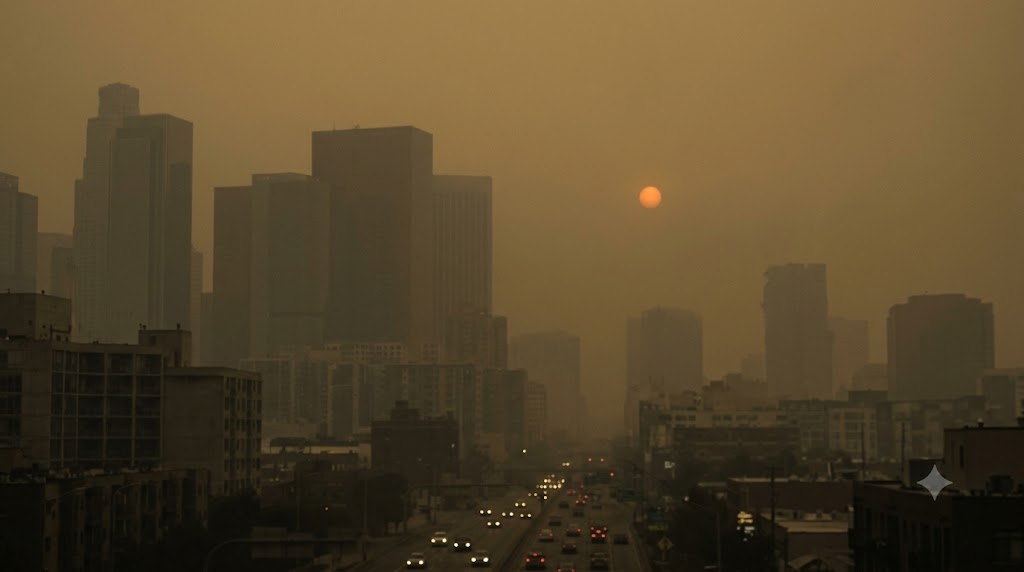
There is a particular quality to the light when the smoke arrives. Noon starts to look like a memory of noon, and the sun becomes a coin you can stare at without squinting.
Thursday, that light returned to a wide swath of the country.
More than 100 uncontrolled wildfires are burning in Canada, sending smoke rolling into the Northeast and Midwest.
Air-quality alerts run through Friday, from Michigan to Maine. Meteorologists call it the densest smoke event in more than a year.
It is also the second such event this summer. Airports are reporting delays. Insurers are doing math. Everyone else is just squinting.
If you are keeping score at home, this is what environmental risk looks like in practice. Not a debate — delays, claims, and a dim orange coin where the sun should be.
Weather Is Not a Thesis
The honest read: this is weather, not a thesis — a thesis is the written-down reason you own an investment.
We are not going to pretend a bad sky is a buy signal. Markets are full of people converting headlines into trades, and most of those trades become regrets with a timestamp.
But smoke has a way of becoming earnings if it lingers. So the file stays open.
Weather becomes earnings on a lag. The sky changes today; the insurance claim files next month; the earnings call flinches next quarter.
Three Channels to Watch
If the smoke persists, three channels can turn weather into earnings.
First, insurers — AIG and AIZ — if claims season runs hot. Fires create claims, and claims create quarters.
Second, utilities — NEE — if regulators start asking hard questions about grid hardening. Hardening the grid means spending money so power lines survive the weather.
Third, the fertilizer names — MOS and CF — if the haze settles over growing zones long enough to dent a crop.
For now, all three sit in the monitor column, not the action column. Monitoring is a real activity. It just does not require pressing buttons.
The Point of Building in July
The Capital Wealth Growth Portfolio was built so that a bad sky does not require a decision.
That is the whole point of building it in advance — in July, instead of during the fire.
A plan assembled in calm weather does not have to be reassembled in smoke. The alternative is deciding things while squinting, and nobody decides well while squinting.
Clients sometimes ask what we did during a week like this. The honest answer: we had already done it.
When the smoke clears — and it will — the plan will look exactly the same. That is not luck. That is the design.