 Capital Wealth Daily
IBM Falls Down the Stairs, and Other Stories
A 112-year-old company had the worst day of its life. A $14.8 billion food-delivery wedding. A cholesterol pill with a blockbuster’s name on it. And a consumer who just learned the word “no.” Our read of the July 17 Wall Street Journal, and what the model books did about it.

IBM fell 25% in a day. It took 112 years to have a day this bad.
Picture a company that survived the Depression, the war, the antitrust decade, the PC it invented and then fumbled, and four separate “IBM is back” magazine covers. Then watch it lose a quarter of its value before lunch. That’s what happened Thursday. IBM (IBM) warned before the open that Q2 would disappoint. Consulting demand is soft, and the AI roadmap is foggier than management had let on. The market reacted the way a dinner party does when someone drops the good china. Down 25%. It was the worst single day in the company’s history, and this is a company with a lot of history. CEO Krishna blamed macro headwinds. That’s what you say when the real answer is “the backlog isn’t there.” The AI reckoning, it turns out, doesn’t start with the chipmakers. It starts with the consultants who promised to install it.
Our ReadWe don’t own IBM, and Thursday is a pretty good advertisement for why. A stock that can reprice 25% on one pre-market phone call is a stock where the insiders and the shareholders were reading two different books. It looks cheap now, the way a flooded car is cheap. Everything works except the part you can’t see. We’ll look again after two straight quarters of steady consulting billings, and not one press release sooner. Meanwhile the real AI trade, the silicon rather than the slideware, stays where it was. AVGO, TSM and MU are held and unbothered.
The Stories
5 stories · 3 pictured · 2 listed
Uber just bought the food-delivery wars. Price: $14.8 billion.
UBER stays reinforced, and honestly this made the case for us. An all-stock deal this big means the balance sheet can carry the merger without a single loan covenant getting nervous. The war is over. What’s left is a toll road with a very large map. Delivery Hero (DLVY) itself we leave alone until the deal closes. Merger arbitrage is a profession, and it isn’t ours. The read for clients is simple. The best time to own a knife fight is the day it becomes a near-monopoly utility. That day was Thursday.
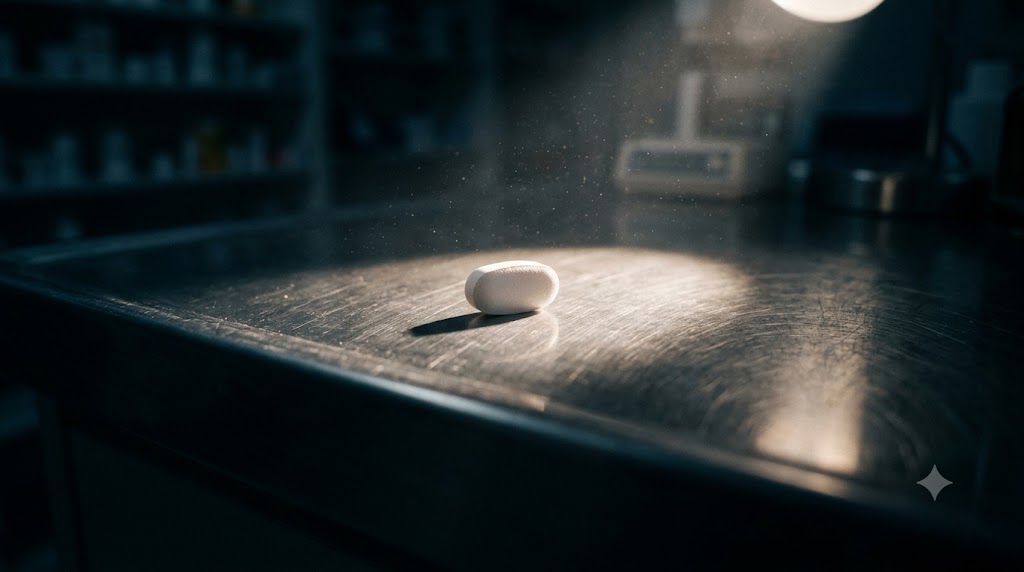
Merck's new cholesterol pill: 60% reduction, no needle, $5 billion attached.
MRK stays reinforced, but let’s be clear about why. One pill doesn’t make the company. Big pharma is a portfolio business, and Merck’s is deep. The reason is that a first-of-its-kind pill in a proven category is the cheapest kind of blockbuster. The science is already proven. The market already exists. The only change the patient notices is that nothing gets injected. AMGN and REGN stay held. A category this big doesn’t crown one winner. It feeds three. The cholesterol business has been minting money since the first statin. We see no reason to argue with fifty years of plaque.

The sun over the Midwest is a dim orange coin again. Canada is burning.
No trade, and no pretending weather is a thesis. But we keep the file open, because smoke has a way of becoming earnings. Insurers (AIG, AIZ) feel it if claims season runs hot. Utilities (NEE) feel it if regulators start asking about hardening the grid. The fertilizer names (MOS, CF) feel it if the haze sits over farm country long enough to matter. For now it’s a watch column, not an action column. We built the portfolios so that a bad sky doesn’t require a decision. That’s the whole point of building them in July instead of during the fire.
Off Duty & The Life File
6 stories · 3 pictured · 3 listed
Young drivers are going “psycho” on the road, and filming it for the algorithm.
Dash-cam chaos, posted near-daily to TikTok. An entire generation discovering that attention is a currency and the left lane is a stage. Behavioral risk is Risk 08 on our own map. Here it is doing 90 in a 55.

The job market is solid, unless you’ve been out six months. Then it’s a wall.
Nearly 2 million Americans have been locked out of work half a year or longer, and white-collar workers are hardest hit. The economy is hiring. It’s just not re-hiring. A split-screen labor market to match the split-screen everything else.

The FDA would like a word with 14 online ketamine sellers.
Warning letters are out, and the DEA is circling “bad actors” who prescribe remotely. The telehealth gold rush meets the part of medicine where supervision was the entire point.
From the desk Bias, the book, what’s priced, the planopen
Down at the indexes, but look closer. This wasn’t a market selling off. It was a market sorting. IBM −25% and UnitedHealth beat-and-raise on the same Thursday. Nasdaq −1.5% while the STOXX ticked up. The consumer at 0.2% while Uber writes a $14.8 billion check in its own stock. The AI story is splitting into silicon (fine) and slideware (repricing). The consumer is splitting into must-pay (fine) and can-wait (waiting). We own the must-pays and the silicon. We’re paid to wait in bills and dividends. And we let other people catch the falling mainframes.
- DJIA52,552.97 −0.20%
- S&P500 7,529.65 −0.50%
- NASDAQ25,881.95 −1.50%
- STOXX600 643.73 +0.20%
- 10Y 4.568% 2Y ~4.25%
- OIL$78.95 −$0.65
- GOLD$3,985.60 −$58.40
- EUR$1.1445
- JPY162.38
A blue chip lost a quarter of its value between your alarm clock and your coffee. If that sentence made your stomach drop, the question isn’t “did I own IBM.” It’s “how much of my plan depends on any single name behaving.” Sizing is the only opinion that gets graded every day.