If Americans fell less, they would live longer. That is not a slogan. Falls are the leading cause of injury-related death among adults 65 and older — and many happen in a room nobody thinks of as hazardous.
The case against the bathroom
Lloyd Alter, a Toronto architect and author, has spent years making the argument. We treat deaths from falls as a natural part of aging, he says, when they are really about bad design. We fixed smoke with required detectors. We simply accept falls.
His indictment is specific. The bathroom is wet. It is slippery. It makes us contort ourselves. And it is designed, mostly, for looks.
The glamorous freestanding tub is the worst offender. Its edges are thin for style rather than wide enough to sit on. Its bottom is often rounded. It stands away from walls, so there is nowhere to mount a grab bar. Alter jokes that owners should reinforce the ceiling, because one day they may need a winch to get out.
Ordinary tubs are safer, but most double as showers. Getting out means one foot on a slippery surface and the other swinging high over the side onto another slippery surface. Neither foot is stable.
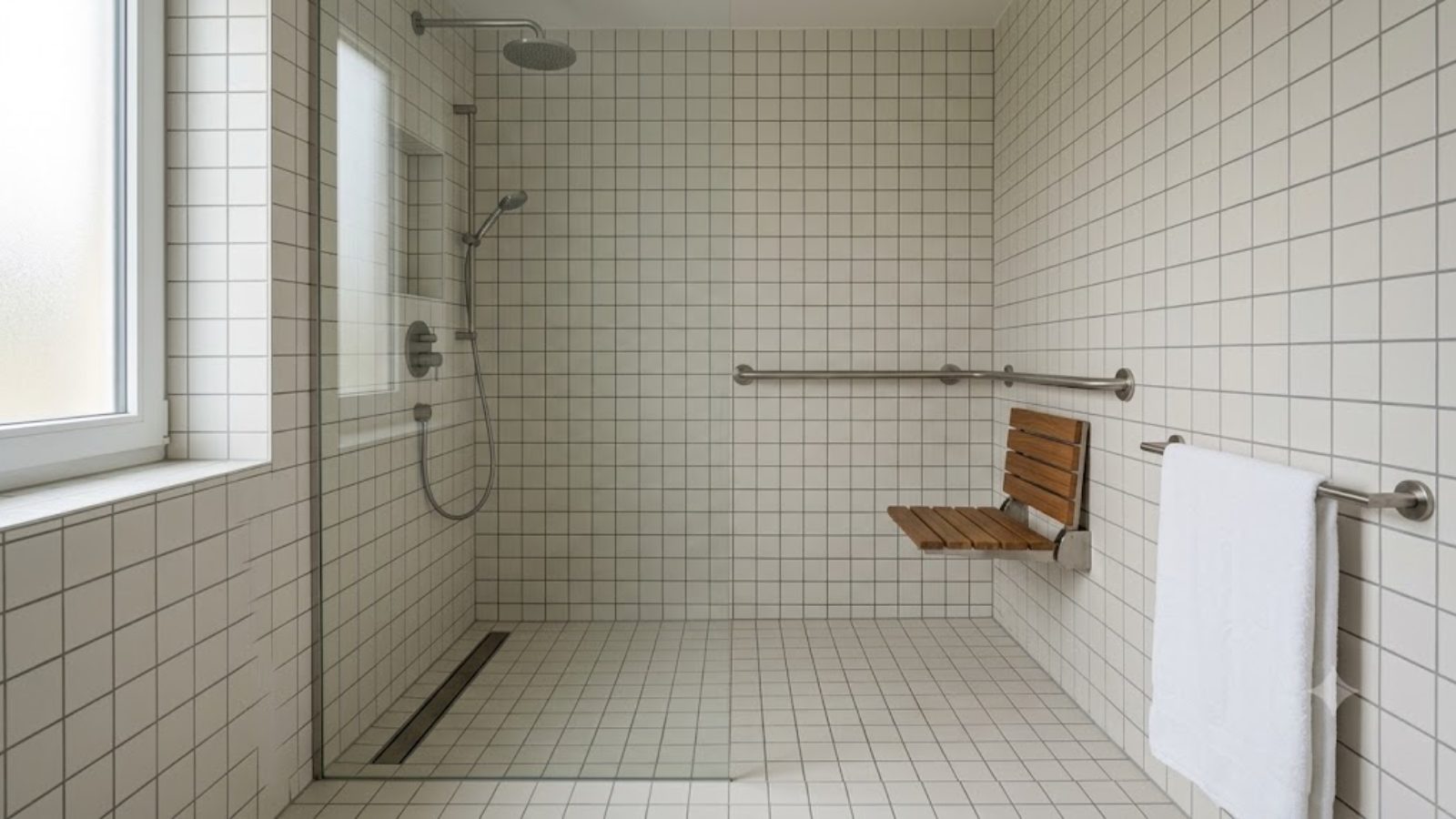
His fix: a stall shower, separate from any tub. Controls placed away from the water source, so you can turn things on without a soaking or a stretch. And grab bars in every shower. Falls kill far more people than fires, he notes, yet smoke detectors are required everywhere and grab bars almost nowhere.
Floors, and the delicate subject
Floors come down to the coefficient of friction — the engineering measure of slipperiness. Researchers in Arizona lower harnessed volunteers onto wet floors to rank surfaces.
You do not need the lab. Matte tiles beat shiny ones. Small tiles beat large ones, because grout lines add grip.
Then there is the toilet. Getting on and off it is a fall opportunity, especially for older adults. Standing up quickly can drop blood pressure — doctors call it orthostatic hypotension. A related reflex, vasovagal syncope, can briefly cut blood flow to the brain and cause fainting. Fainting means falling.
Builders keep installing taller comfort-height toilets, often with good intentions. Alter argues the ideal is the opposite: a lower toilet with grab bars beside it. Almost nobody has grab bars at the toilet. Almost everybody should. And they no longer need to look like hospital hardware.
Asked about the bathroom of the future, he is skeptical. The magazine version is the bathroom of the present with more gadgets — and the same slick steps, bare showers and unreachable paper.
Why this is a money story
This is a planning page wearing a design byline.
One fall that ends in a hip fracture can move a retirement plan from funded to funded-if-nothing-else-happens. Long-term care is the most expensive risk most families face, and prevention is its cheapest line item.
A bathroom retrofit runs about $2,000. Stall shower. Matte, small-format tile. Grab bars at the shower and the toilet. Controls away from the water.
It defends a plan better than most insurance riders, and it is the conversation we start with every client at 55 — before it is needed, which is the only time it is cheap.
No trade here. Put it on the household list, right next to the beneficiary review.