SK Hynix just earned more in three months than it earned in the past five years combined. The stock fell almost 10% anyway. That is the whole story, and it is a strange one.
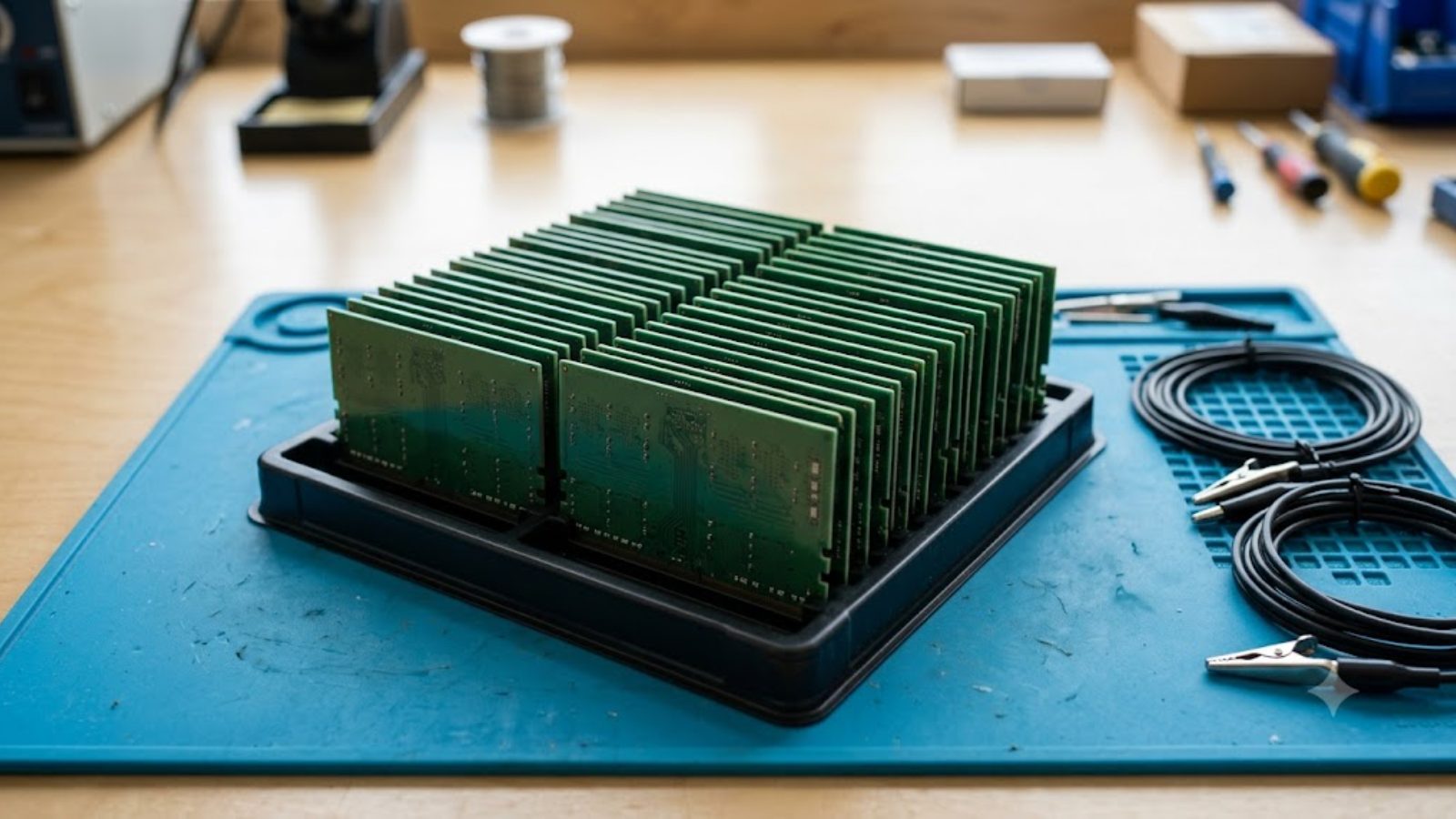
SK Hynix is a South Korean company that makes memory chips — the chips that store data for computers and AI systems. Last quarter it earned 93.9 trillion won, which is about $64 billion. That was 13 times what it made a year ago.
The market’s thank-you note? Shares fell as much as 19.6% during the day and closed down 9.6%. Samsung fell too. So did Kioxia, a Japanese flash-memory maker that has now lost about two-thirds of its value from its peak.
The run-up was wild
The party before this hangover was enormous. SK Hynix passed $1 trillion in market value in late May. On July 10 it listed on the Nasdaq and raised more than $26 billion. Late last week its parent, SK Group, announced a $500 billion partnership with Nvidia (NVDA) for next-generation memory and AI data centers.
Then came a blowout quarter. Then came the selling. When a stock has already priced in perfection, perfection is merely meeting expectations.
The bull case has not changed
AI data centers need giant piles of memory. Four big buyers — Microsoft (MSFT), Meta (META), Amazon (AMZN) and Google (GOOGL) — plan to spend as much as $670 billion on AI-related gear this year. SK Hynix and Samsung plan to invest more than $500 billion in a new chip hub in South Korea.
Nomura, a brokerage, projects revenue for DRAM — one of the two main types of memory chip — will pass $2 trillion by 2030. That would be roughly 12 times the 2025 level. One Seoul analyst called the sell-off “an excessive correction relative to the fundamentals.” Translation: he thinks the market panicked.
Three worries, stacked
So why sell a perfect quarter? Because the week delivered three scares at once.
Scare one is circular financing — deals where chip makers help their own customers pay for chips. Nvidia is in talks on a roughly $250 billion backstop that would help OpenAI finance a data-center project. We covered it in Part I. When the seller funds the buyer, the demand numbers get harder to trust.
Scare two is China. A state-backed memory maker called CXMT just went public in Shanghai, and we covered that debut too. Its shares rose 12.7% on Wednesday, making it worth more than $500 billion. SK Hynix was worth $705 billion at the same day’s close in Seoul. That gap is not comfortable anymore.
Scare three is the customers. Qualcomm (QCOM) blamed its own weak quarter partly on higher memory costs. When your prices start hurting your buyers, the boom is eating its own supply chain.
Here is the lesson to keep. When perfect earnings get sold, the market is not grading the quarter. It is grading how long the party lasts — and this week it heard “circular financing” and “state-backed rival” in the same session. It rhymes with the AI-credit story in this edition.