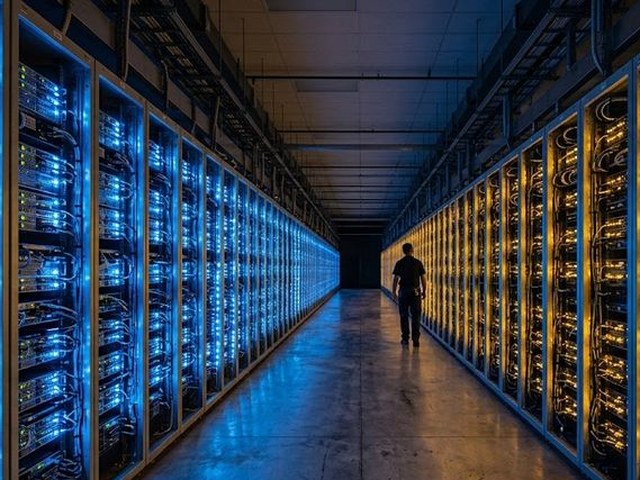
The response team at Sophos usually sees seven major break-ins in about three months. In October it saw seven in seven days. Then, on Monday, Nov. 2, grocery freezers started warming up across Europe. One Swedish store said someone had broken into its cooling system and turned the fridges and freezers up to 122 degrees. Staff threw out the food.
Security people are calling it Black October. The Journal's Angus Loten and Kim S. Nash report that the firms who rush in after a breach are swamped. Palo Alto Networks (PANW) says calls to its Unit 42 response team haven't let up. It isn't one big hole, it's the sheer number of break-ins. At MoxFive, new customers wait up to five days for help. The month ended with two security holes in PHP, software behind more than two-thirds of the world's websites. Many in the industry blame AI. The attackers' AI tools don't get tired. They keep working a lock long after a person would walk away. Sophos's security chief says defenders have "more to patch and potentially less time to do it."
The attack moved into the freezer aisle
The supermarket attacks hit stores in Sweden, Belgium, Luxembourg, Ireland and Estonia on Monday. Carrefour has more than 700 stores in Belgium, and 15 of them were hit. Delhaize counted several dozen. In Ireland, 13 SuperValu stores pulled chilled and frozen food as a precaution. Last month hundreds of French stores went through the same thing, with hackers running the cooling from afar. Nobody has been named as the attacker. The night before, at 10:47 p.m. Sunday, phones all over Kyiv lit up with warnings of radiation and fighting in the streets. None of it was true. Ukraine's air-alert app had been hacked. Hours later, Russia's government alert app was hit the same way. Ukraine blames Russia. Neither country has admitted to either attack.
Here's the number that explains the business. Even before October, one research firm expected the U.S. market for this cleanup work to grow more than 20% a year. That's about $14.6 billion last year becoming roughly $91 billion by 2035. Most insurers that sell cyber coverage now want a written plan for what a business does when it's hacked. The industry's own history offers a reminder. On Nov. 2, 1988, a student let loose the first internet worm. It knocked out about a tenth of a network almost nobody had heard of.
Our read
This is an Insurance / Consumer Protection · M11 story. CrowdStrike (CRWD) is held at weight in 20 books and Palo Alto Networks (PANW) in 9; nothing added. Sophos is private. For a business owner, the freezers are the lesson. Every connected machine is a door. The refrigeration, the thermostat, the cameras. Read your cyber policy and check whether it covers spoiled inventory and lost business, or only stolen data. Then write the response plan the insurer wants, and put a responder's phone number on it. Some of them now have a five-day line.
For the rest of us, the check this week has two parts. The cleanup crews are booked for days, so the free locks you can set yourself matter more. First, freeze your credit at all three credit bureaus. It's free, it takes about ten minutes, and it stops a thief from opening an account in your name. Second, turn on two-factor sign-in for your bank, your 401(k) and your email. Those are the three accounts a thief wants most. Those two steps are the umbrella. You don't shop for one once the freezer's already warm.