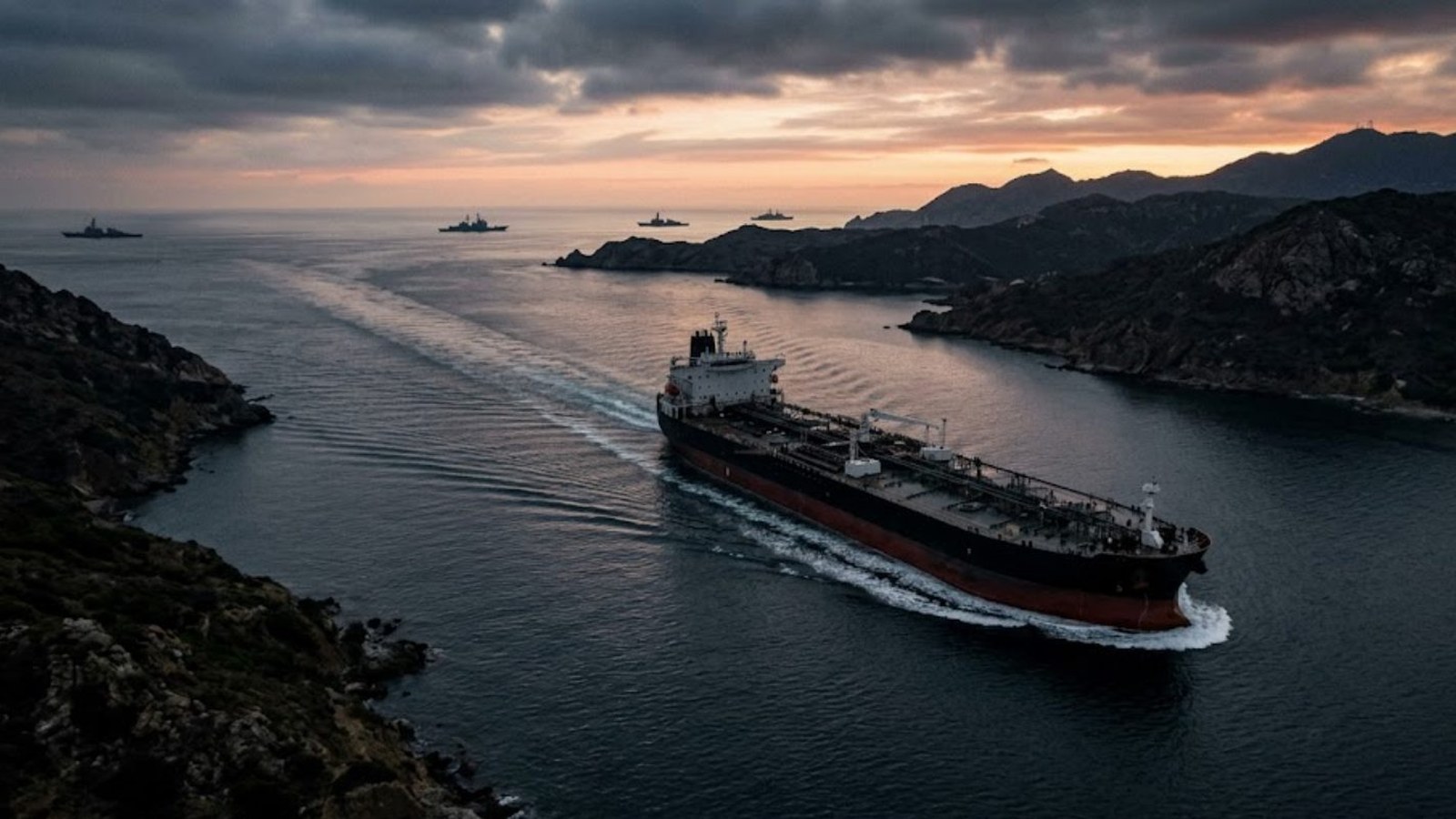
In 1998 a little-known company in Macau bought an aircraft carrier. The ship was the Varyag. It was ordered for the Soviet Union and left to rust in a Ukrainian yard. The buyers paid $20 million and said it would become a floating casino. That was a cover story. China's navy had never built or run a carrier. It took 15 years to make the hulk work.
The Journal's Niharika Mandhana, Josh Chin and Camille Bressange tell what came next. China now has three carriers, and a fourth is on the way. Western experts think that one will be nuclear-powered. Official U.S. counts seen by the Journal put China's battle force above 400 ships and submarines. That's about 35% more than the U.S. Navy by hull count. On any given day, as many as 100 Chinese navy ships are out at sea.
The yards are the story
Here's the part that matters for money. Every year, more than half of the world's merchant ships come out of Chinese yards. The same yards that build gas carriers and container ships also build warships. Satellite images from May showed two amphibious ships, two cruisers, three destroyers and two frigates under construction on one island at once. Since 2020 China has added 71 major warships and subs. Nineteen came last year alone.
The U.S. still leads by tonnage. Its ships are bigger. But America has about 290 ships. A recent Navy Department report says the shipbuilding budget doubled over two decades. The fleet is no larger than it was in 2003. A State Department spokesman called China's buildup a serious concern. The White House says it's restoring U.S. shipbuilding and cutting rules that slow it. Thomas Shugart, a former Navy submariner, summed it up in five words. "They're building a world-class navy."
Our read
Investments/Risk · IN04. Defense spending is a long cycle, and this story says the bottleneck isn't money. The U.S. budget doubled and the fleet didn't grow. Yards, workers and rules are the limit. So the defense names in our model books are held for the long run, as a hedge, never as a bet on a headline. Lockheed Martin (LMT) is held at weight in 29 books. General Dynamics (GD) and RTX (RTX) are in 19 each. Northrop Grumman (NOC) is in 16, L3Harris (LHX) in 11 and HII (HII) in 7. Nothing added.
Here's the check for your own plan. Open your biggest fund's fact sheet and find its defense and shipbuilding names. If they're there, you already own this story at a small weight. If one of them is your single biggest stock, say a company you worked for, that's concentration, and it belongs on the list we review together. A fleet takes decades to build. Your plan shouldn't change because one headline got loud. You check the roof while the sky is still clear.