A small boy and his father carry a cat away from the house to leave it somewhere. They go home. The cat is already sitting there, waiting. That's the scene that opens Haruki Murakami's new book, Abandoning a Cat. It's 80 pages long, it costs $26, and it's about his father.
Tara Isabella Burton reviewed it for the Journal's Bookshelf. She isn't sold. She calls the book "maddeningly sparse." Mr. Murakami is 77 now. He wrote The Wind-Up Bird Chronicle and 1Q84, big and strange novels. Here he writes like a man telling a stranger about his family. "Of course I have a lot of memories of my father," he says, and off he goes. He thinks the cat day was around 1955. He isn't sure.
His father was a priest's son in Kyoto. His brothers wanted him to take over the family temple. He wanted to write haiku and teach literature. Then the army took him. Mr. Murakami spent years afraid his father's unit had been at Nanjing in 1937. He finally learned his father wasn't drafted until the year after. That was a relief, but it wasn't the end. His father still saw terrible things in that war, and may have done some. The son stays outside that door. He writes that the experience stayed with his father as a deep scar, and he leaves it there.
The father's own words
Ms. Burton says the best lines in the book belong to the father, the soldier who wrote poems. One, likely written in China, has a soldier who's also a priest, praying toward the moon. Those few lines show more of the man than the son's whole account does. Father and son barely spoke for most of Mr. Murakami's adult life. They made peace at the father's deathbed. What they said stays private.
Our read
Our domain here is Estate, the family side of it. A will moves money. It doesn't move a story. This father left behind a stack of haiku written in a war. That's the only place his son could really find him. Most parents leave less than that. The kids get an account statement and a house full of things, and a lot of questions nobody can answer anymore.
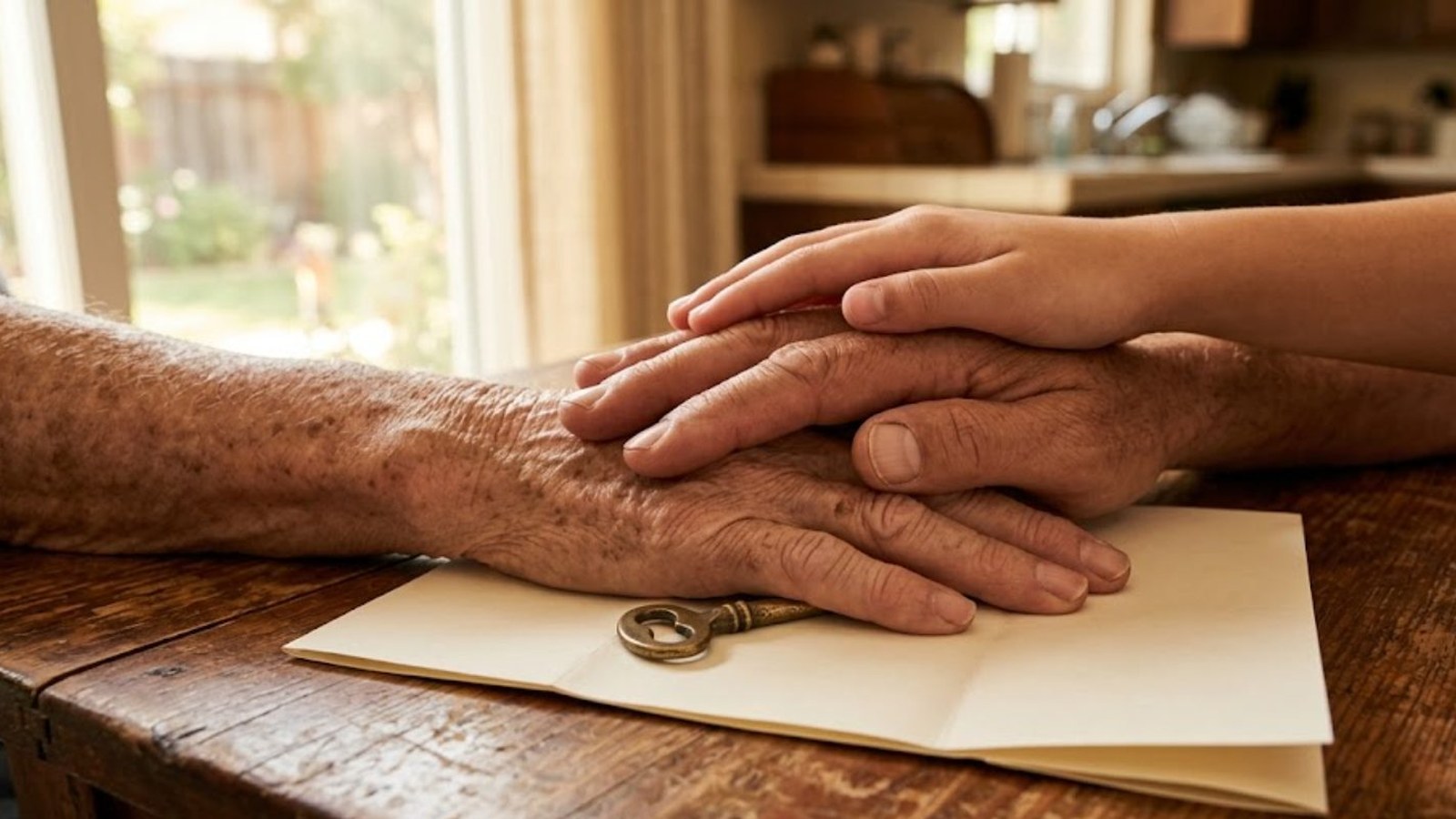
The thing in your own plan this story touches is the letter that sits next to your will. Some people call it a legacy letter. It's a page or two in your own words. Why you set things up the way you did. The story behind the ring, or the cabin, or the business. The one thing you'd want your kids to know about your parents. This week, write one paragraph about one story. Don't wait for a hospital bed to start the conversation. It's the cheapest page in your plan and the one your family will read first. Bring it to your next review and we'll make sure it sits where it'll be found.