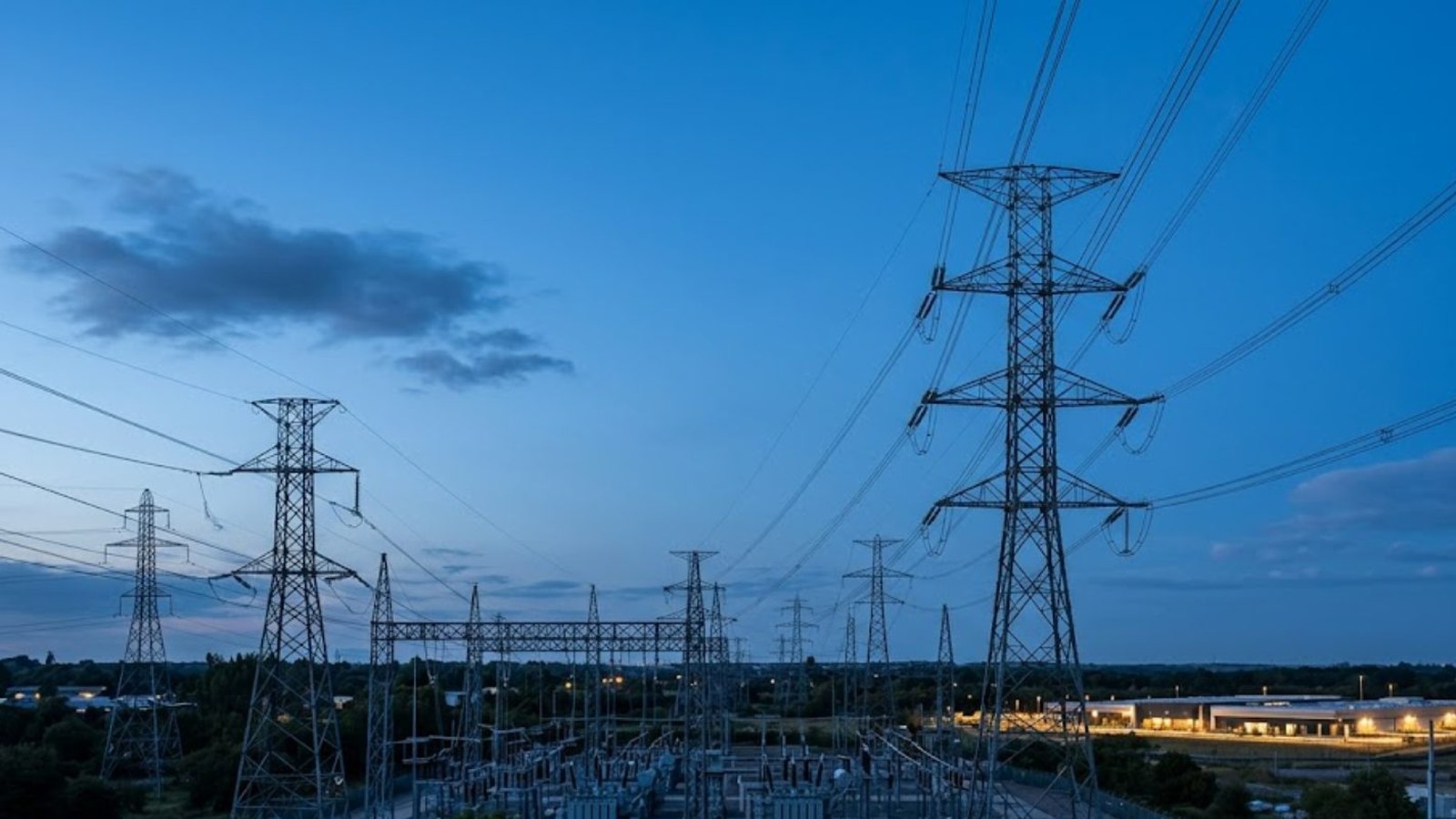
Vicky Hu got a phone call in the summer of 2025. It was her power company. The man said the company might put a high-voltage line through her backyard, with a pole to carry it. The pole would stand about 165 feet tall. Hundreds of trees on her 1.3-acre lot, and in the woods behind it, would come down. "What did you just say?" she asked him.
Hu has lived on her street in Ashburn, Va., for two decades. Behind the yard sit woods under a conservation easement, land set aside by agreement so it stays undeveloped. She assumed that meant no one could ever build there. She was wrong. Her utility, Dominion Energy (D), has the power of eminent domain. That lets it take private land for a public project, as long as it pays a fair price. And Hu's home sits near the center of the world's largest data-center market. As of March, Loudoun County had 233 data-center buildings finished or going up.
A once-in-a-generation grid build
The Journal's Jennifer Hiller reports that fights like Hu's are breaking out across the country. Investor-owned utilities expect to put $43.7 billion into transmission this year, by the Edison Electric Institute's count. Last year's estimate was about 10% lower. Data centers drive much of it, along with new factories, electric cars and population growth. Big parts of the grid are as old as the baby boom, and they need replacing. In Dominion's territory, demand growth has jumped to about 5.5% a year. Before 2022 it ran around 1% to 2%.
In Georgia, Cynthia Van Epps fought Southern Co.'s (SO) Georgia Power for more than a year. One plan would have torn out her pool and put the line about 12 feet from her house. She hired a lawyer. In the end she settled, and sold the house to the utility to be torn down. She says people who can't afford that lawyer are simply out of luck. Southern says it reaches voluntary deals more than 99% of the time. That 35-mile line will take down 29 homes, and every one of those owners has signed, the company says. Back in Virginia, Hu's homeowners association gave land to the school system. Virginia utilities generally can't use eminent domain against school boards. The state's utility commission approved the route all the same. The appeal is headed to Virginia's Supreme Court. No hearing date is set.
Our read
This is a Housing · M6 story with an investing shadow. The investing part is the easy one. The power builders in our model books work in this same build-out. GE Vernova (GEV) is held at weight in 30 books, Vistra (VST) in 17 and NextEra (NEE) in 21; nothing added. The story itself names only Dominion (D), held in 2 books, and Southern (SO), held in 7. Both held. The harder part is the house. An easement is a right someone else holds over your land. It can sit quiet for two decades and then show up as a 165-foot pole. Fair compensation gets you a check. It doesn't get you back the woods, or the sale price you had in mind.
Here's the check for this week. Pull the title report from when you bought your home, or the one on the house you're about to buy. Look for the word easement. Read who holds it and what it allows. Then look up your utility's pending route filings at the state commission. If you can't find the report, your title company can send it. A line on a map is far easier to fight before it's approved. You read the title report before the pole shows up, the way you check the roof before the rain.