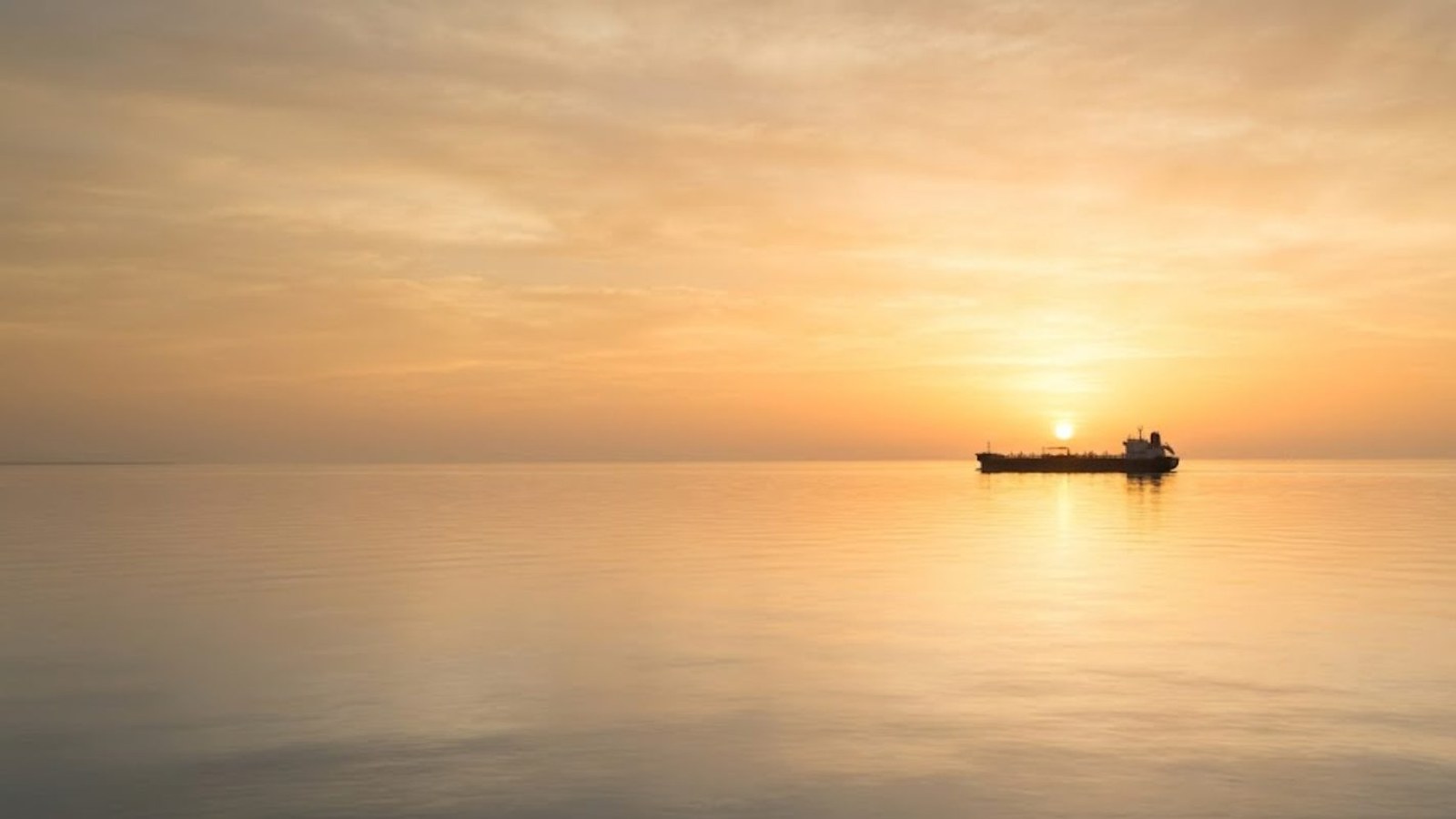
On Monday, Nov. 2, the president told reporters the U.S. had won its war with Iran. "We had a war with Iran. We won," he said. He added that the U.S. hadn't been fighting for months. Oil fell $7.66 a barrel that day, to $96.46. The same day, U.S. officials said, American forces struck Iran's Qeshm Island. The island sits at the mouth of the Strait of Hormuz.
The Journal's Alexander Ward, Lara Seligman and Shelby Holliday report the strike was one of a series. U.S. officials said the limited strikes have gone on for several weeks. The U.S. hasn't announced them. One official said the quiet is on purpose, to avoid signaling a return to major combat. Some officials called the strikes defensive, meant to keep Iran from attacking commercial ships in the strait. On Monday, Iran's Revolutionary Guard fired a missile at a U.S. fighter jet, officials said. The jet fired back. U.S. forces also intercepted a missile from Qeshm aimed at shipping, one official said.
Iran's Foreign Ministry spokesman said in Tehran that "the ball is in the U.S. court" on a deal. Other Iranian officials said Iran would hit back if the U.S. restarted the war. For weeks the president had said the U.S. might return to all-out war after the midterms. In the hours before Election Day, he and the vice president said talks on Iran's nuclear program might work. He added on social media that oil is dropping because "people feel" there won't be renewed war. The paper prints no other reason for Monday's drop. We won't invent one.
Words moved the price. The oil didn't move.
Monday's paper, the day before, said many investors worried the U.S. could resume attacks on Iran after the vote and push energy prices up. On Monday the president played that down. Oil dropped 7.36% the same day. The barrels didn't change. The president's own explanation was that people expect no new war. The paper offers no other. Walter Russell Mead's Global View column explains why the Gulf still matters. The Western Hemisphere pumped about 37.4% of the world's oil in 2025. The Middle East pumped about 30.9%. Yet when Iran effectively closed Hormuz this year, the price shock still hit everyone. Oil is one world market. By our own pull, December WTI was about $96.09 on Tuesday, Nov. 3.
Our read
This is an Investments/Risk · IN04 story with a Cash Flow · M5 lesson. Energy is held in our model books as the hedge. Chevron (CVX) is in 37 books, ExxonMobil (XOM) in 34, Cheniere (LNG) in 20, ConocoPhillips (COP) in 17, EOG (EOG) in 15 and Valero (VLO) in 12. All held at weight. Nothing added. They fell with crude on Monday. That's what a hedge does on a calm day. It gives a little back. You hold it for the day that isn't calm. Valero's written trim trigger is a published White House restriction on U.S. diesel exports. Neither paper reports one. The trigger is not met.
Now the part about your money. If oil can swing $7.66 on a few sentences, the swing isn't a signal. It's weather. Two things in your own plan touch this story. The first is your fuel line, what you spend each month on gas, heat and power. Write that number down this week and budget to it. Leave the headline out of it. The second is your energy sleeve. Look at how much of your portfolio sits in energy stocks or an energy fund. If it's there as a hedge, leave it at the weight you chose. If it crept up because the stocks rose this year, now you know. If you're not sure which it is, that's a good question for your next review. A hedge is a raincoat kept by the door. You don't throw it out on a sunny Monday.