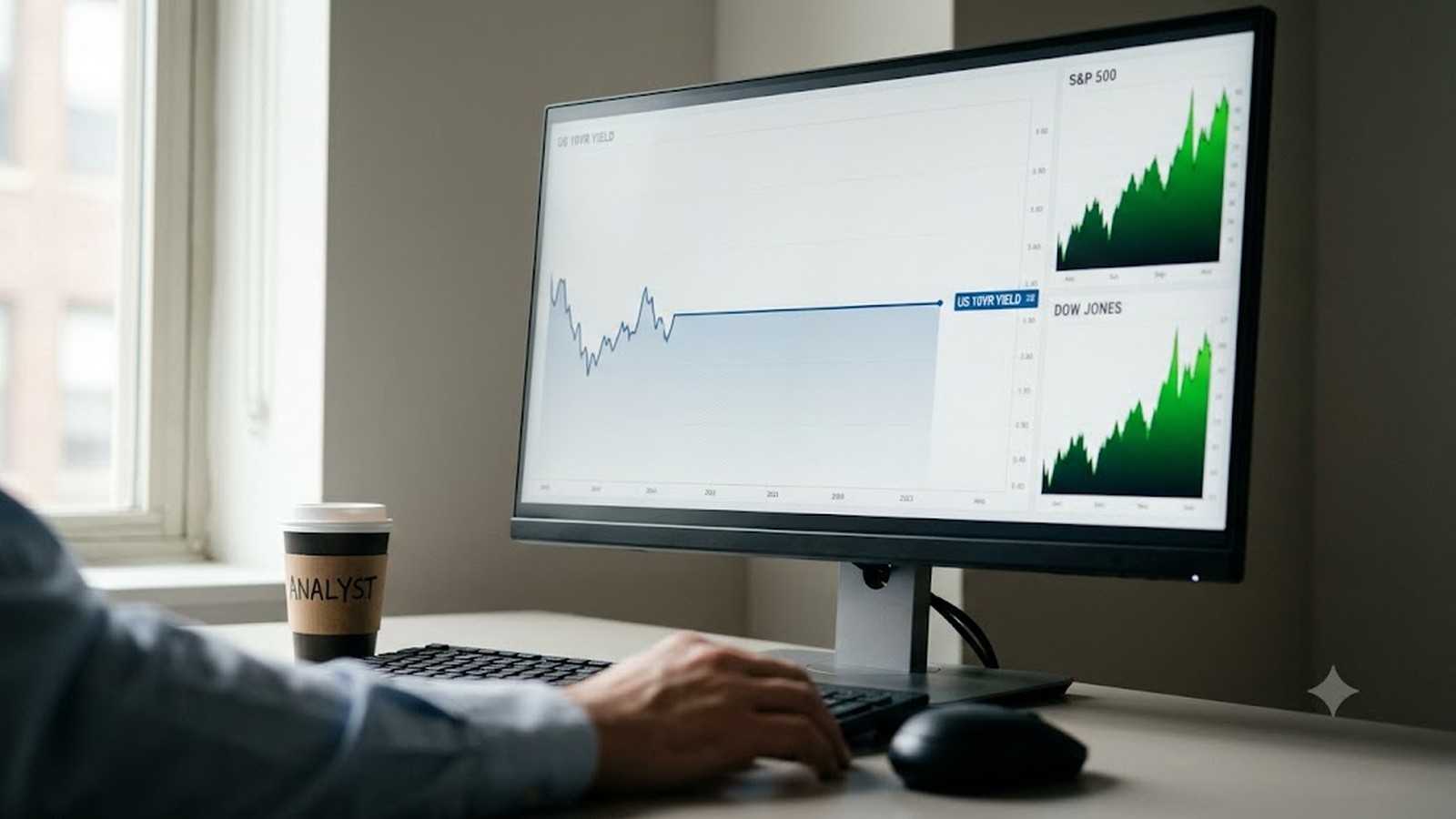
The bond market keeps turning the clock backward. Sellers kept leaning on Treasurys until, the Journal reports, the 10-year yield broke above 5.3% on Wednesday — past the 2007 peak, to a level last printed in 2002. It closed at 5.292% after trading as high as 5.306%. When yields last sat here, the dot-com bubble had already deflated and people still remembered the 1990s. The low-rate epoch a lot of plans were built on isn’t the one we’re in.
The 10-year had been below 4% as recently as Feb. 27, the Journal notes, just before the conflict sent energy prices higher. It ended the quarter with its largest quarterly gain since 1994, nearly 0.9 percentage point, while Brent crude futures rose 42% to $103.53 a barrel. Cboe Global Markets wrote in September that the correlation between oil and the 10-year is now higher than at any point since the First Gulf War in 1990. Diesel, the paper adds, recently hit record highs.
The bill market heard no urgency. The 10-year did not
On Tuesday, New York Fed President John Williams said there was currently no urgency to raise rates again. Short-term yields, which track the near-term path of policy, fell modestly. Longer-term yields barely moved, then climbed on Wednesday. To some analysts, the Journal reports, that means the market is setting rates now — more than the Fed. Blerina Uruçi, chief U.S. economist at T. Rowe Price, told the paper “the trend in yields is upward.” Structural forces she and others named: a tide of government debt, the AI investment boom, and trade barriers that push inflation higher. Desk figures from Treasury.gov put the 20-year at 5.68%, above the 30-year at 5.64% — a kink at the long end, not a clean Fed-hike story.
Our read
Fixed Income (IN02): long duration stays on the avoid list. A 24-year yield high isn’t an invitation to extend. A bond you buy here still loses price if yields keep climbing, and Wednesday’s session was the exhibit — bills eased on a dovish Fed comment, the 10-year didn’t. Safe money stays in Treasury bills and floating-rate paper (SGOV, USFR). The 3-month bill, on the desk’s figures, eased to 4.20%.
Match the money to the date you need it. Cash for this year does not belong in a 30-year bond, even when the coupon looks generous. Prediction markets, pulled at 8:16 a.m. PT Thursday, were pricing about 66.5% odds of no change at the October Fed meeting — the flip of the week from a hike. That is a crowd price, not a forecast, and it does not make the long end cheap. You don’t wait for the first drop to find the umbrella.