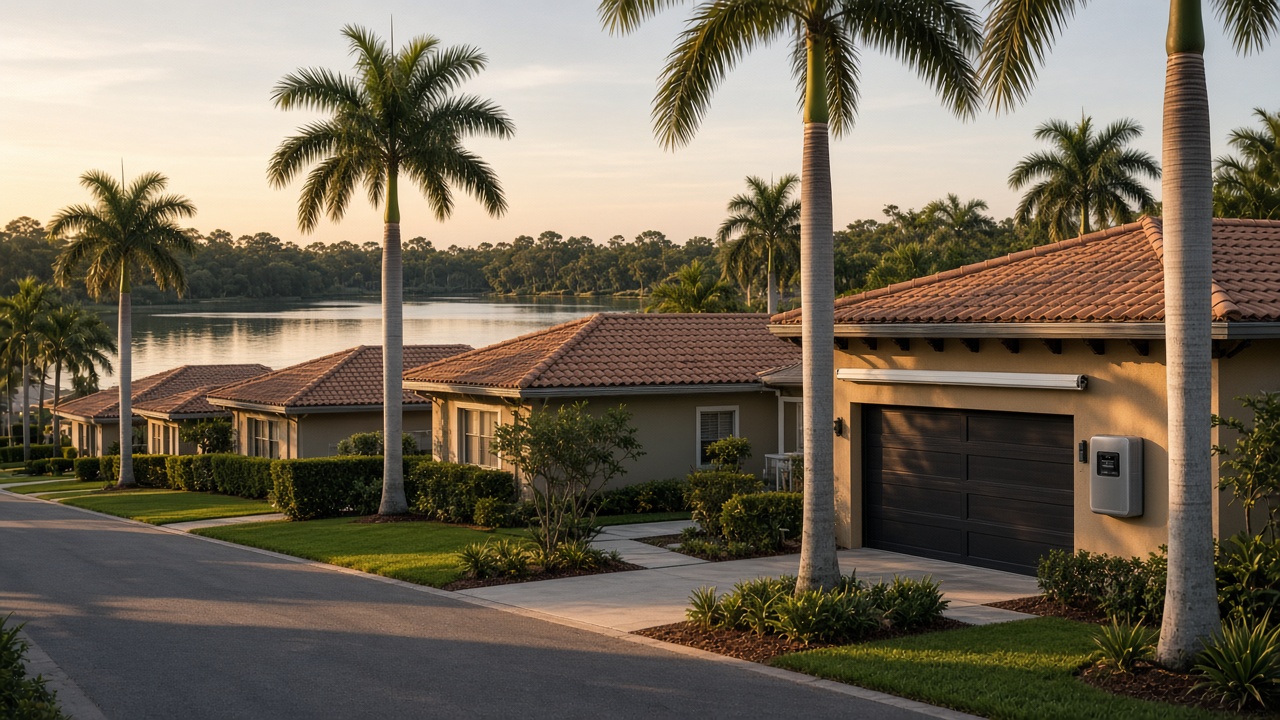
Somebody wanted houses in Palm Meadows Estates — a gated, lake-ringed enclave of about 290 homes in Boynton Beach, Fla. — and wanted a lot of them, fast, preferably ones nobody had put up for sale. When the 2023 spree was done, one LLC with a California mailing address had closed on eight of them for almost $10 million combined, and the neighbors had a mystery to chew on for years. They guessed a tech billionaire; they just kept guessing the wrong one. Katherine Clarke and Emily Glazer name the buyer in Friday’s Mansion section: Larry Ellison, the 82-year-old co-founder of Oracle (ORCL). The houses aren’t for him. They’re for his family’s staff, tutors for his young children among them.
The how is half the fun. One morning around March 2023, Kimmie Cruz — a LuxeIQ agent who lives in Palm Meadows — took a call from another firm’s agent: a client wanted roughly 10 homes and needed to see everything she had listed, right away. Proof of funds would have to wait; the showings, she was assured, would pay off. The team liked single-story ranches, then asked about houses that weren’t for sale, so Cruz went door to door. Her pitch to owners: “The money is there.” When the buyer finally came to look for himself, bodyguards at his side, it was Ellison. A signed contract landed that same night, and all eight deals closed in May and June. (The family’s base is about 30 minutes away in Manalapan, the oceanfront compound Ellison bought for $173 million the year before.)
Windfall first, new rules after
Every seller made a substantial profit, the Journal says — typical, local agents told the paper, for an area that drew a wave of Northeast buyers during the pandemic. Paul and Yvonne Carozza got $1.2 million for a three-bedroom, roughly 2,100-square-foot house they’d bought for $567,000 in 2019 — more than double in about four years. Permits later went in for Tesla (TSLA) Powerwalls in all eight; Ellison sat on Tesla’s board from 2018 to 2022. A neighbor says the staff house next door is especially well kept. Not everyone loved one buyer owning so many homes, though, and the homeowners association has since added rules to keep it from happening again, Cruz says. Staff housing is a growing perk among the very rich, says Peter Mahler of Mahler Private Staffing: in pricey markets, “investing in lodging can be a very smart decision.”
Our read
This is a Housing (M6) story with a Tax footnote, and the lesson isn’t about billionaires. It’s about the day a buyer with deep pockets knocks on your door. An offer is only a premium if you know what the house would fetch without it, so pull comps before you counter — and price where you’d live next, since a seller in a hot market is usually a buyer in one too. Then run the tax math before you sign. If it’s your primary home and you meet the IRS ownership-and-use tests, federal law lets you exclude gain up to a cap; gain above the cap is generally taxable, and documented capital improvements (not routine repairs) raise your basis and can trim the bill. A tax pro can tell you where you’d land.
Then the rulebook. An HOA can tighten its rules after you’ve bought — Palm Meadows’ association did, Cruz says — and that cuts both ways: limits on rentals, LLC owners or bulk buying can protect a street’s character, but they can also shrink your buyer pool or sink a plan to rent the place out later. Don’t count on the rules you bought under staying put. Read the covenants, the amendment process and recent board minutes before you buy, and again before you sell. Oracle and Tesla are each held at weight in 13 model books; nothing added — this one’s about the houses. Know your basis before the knock comes; nobody finds the umbrella faster in a downpour.