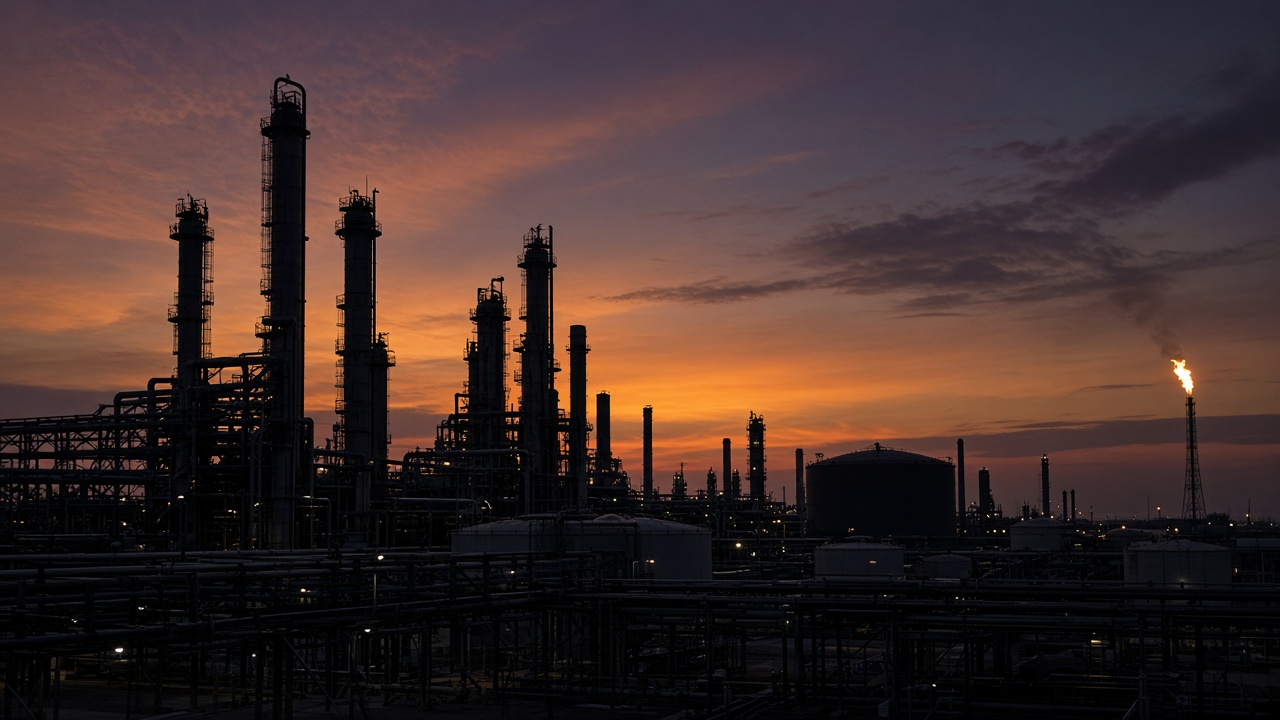
The diesel-export ban that’s hung over our Valero Energy (VLO) position since the day it went in just got a lot less likely, and it took seven governments and their allies to do it. The Group of Seven and allied nations agreed to release 100 million barrels of crude and fuel from emergency stocks over four months, diesel first, and to “take no measures to restrict” energy trade between partners, as France’s Emmanuel Macron put it. The Journal’s Matthew Dalton and Kim Mackrael write that the deal looks like it shelves talk of a U.S. diesel-export ban — for now.
The first batch starts immediately, runs 20 days and goes to diesel, the fuel the Iran and Ukraine wars have squeezed hardest. Friday’s Journal laid out the bind. The Middle East was the top diesel exporter last year, with 19% of the global trade, yet Gulf shipments ran at about a quarter of their prewar pace in August; Russia’s were down to roughly a fifth of their May level; and the U.S. refiners filling the gap are running flat out. That same Friday story put U.S. diesel at $6.39 a gallon, below the $6.52 record it said was set the week before — the late-September peak we covered last week, not a fresh one. A ban, analysts told the paper, risked outright shortages in Latin America, which gets about 90% of its diesel imports from the U.S., and could have raised prices for every fuel here, since refiners get diesel and gasoline from the same barrel in fixed proportions. President Trump voiced support for a ban this past week, then warned it could push gasoline prices up after oil companies and their trade groups lobbied hard; executives from Exxon Mobil (XOM) and Chevron (CVX) were among those steering his team toward alternatives.
What 100 million barrels buys
Scale it before you celebrate. IEA members pledged 400 million barrels in March, a record for the agency; 325 million have gone out, some 130 million of it from the U.S. Strategic Petroleum Reserve. Europe’s been slow — Germany had released only about five million of the 19.5 million barrels it pledged by late August. And crude isn’t the bottleneck; refining is. Friday’s paper also reported J.P. Morgan’s estimate that the Gulf’s refined-product exports are still around 40% below prewar levels, and a Dallas Fed survey in which 48% of energy executives expect at least a year before diesel’s spread over crude gets back to 2025 levels. Friday’s settle: November New York Harbor diesel at $4.5011 a gallon, down 14 cents, against $91.11 crude.
Our read
Cash Flow (M5) first. A release that leads with diesel helps the bill that moves everything — trucks, tractors, ships — but it’s a temporary draw on stockpiles, not new refining capacity, so don’t plan on lasting relief. If you heat with oil or run a business on diesel, budget the winter at today’s price and treat any decline as a bonus. Freight costs are likely to keep showing up in the grocery receipt for a while. Businesses face what U.S. Bank’s Charlie Macnamara, in Friday’s Journal, called the “Do I lock in now?” question; a household weighing a fixed-price heating-oil contract faces a smaller copy of it, and it’s answered by how much a spike would hurt, not by a forecast.
Then the Behavioral lesson, which is why we write the trim rule down before we buy. Valero Energy (VLO) went into 12 model books at 1.5% on Sept. 28 with one trim trigger: a published White House restriction on diesel exports. Not a post, not a column, not a rumor. The G-7 pledge moves that trigger further away, so the position holds — and the same rule keeps us from adding just because the threat faded. Valero closed Friday at $406.30, up 149.59% this year; we’re not chasing that, either. Exxon Mobil (XOM, 34 books) and Chevron (CVX, 37) are held at weight; nothing added. If anything in your own plan lacks a written sell rule, fix it while the sky’s clear — that’s when umbrellas are cheapest.