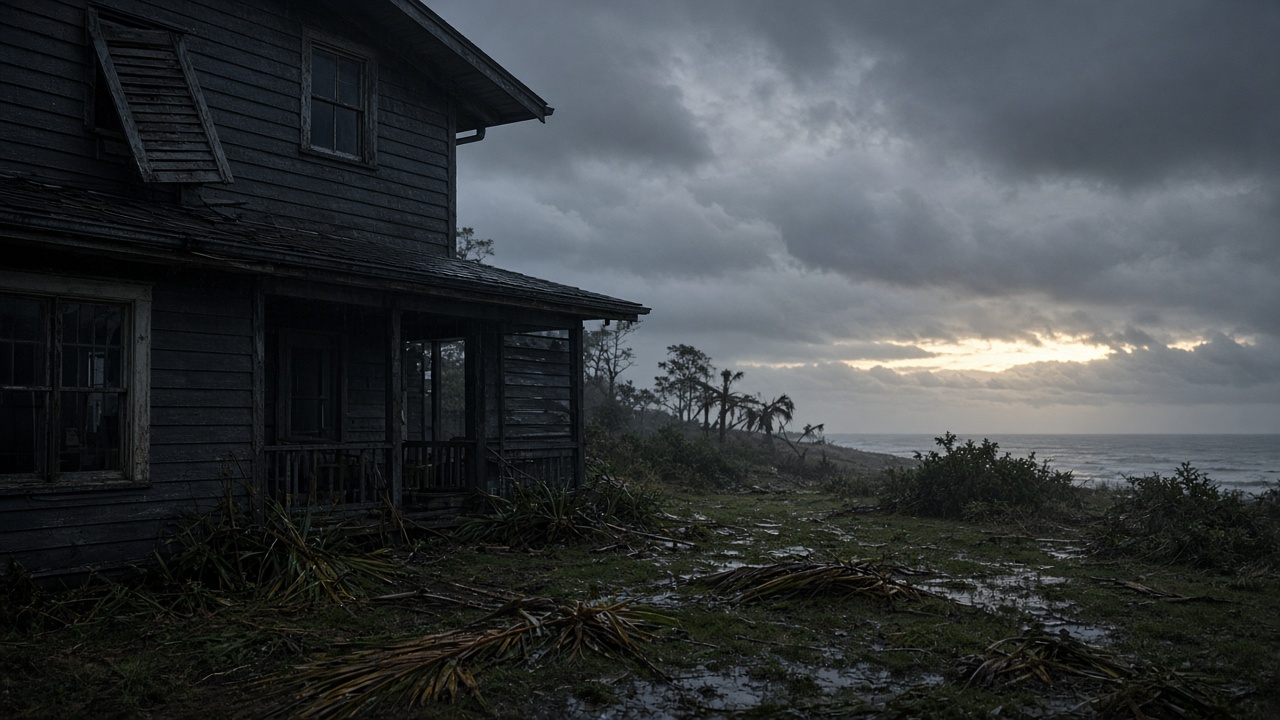
The Atlantic Hasn’t Had a Hurricane All Year — a Century-Old Record. Hawaii Got the Storms Instead
By now the North Atlantic usually has more than three hurricanes; this year it has none, as El Niño’s high-altitude winds shred storms before they can organize. The danger didn’t vanish — it changed oceans, and a quiet season is the best time to read your policy.
By Sean Anees Saifi · Capital Wealth · Published Sunday, October 4, 2026 · Source: The Wall Street Journal, October 3–4, 2026 weekend edition, whose market figures are the Friday, October 2 close (U.S. News)
Key Points
The Atlantic broke a century-old record in September for the latest point in the year without a hurricane, the Journal’s Carl Churchill and Katherine Chui report.
The North Atlantic typically has more than three hurricanes by now. This year: none, though eight named storms formed — some with the makings of hurricanes in other years, torn apart within days.
A big reason is vertical wind shear: in El Niño years, warm air rising off the Pacific drives fast high-altitude winds east, and this year they’re concentrated right where Atlantic hurricanes usually form, tilting storms until they come apart.
The Pacific got the opposite — unusually low shear and very warm water. Hurricane Lala hit Hawaii in August, one of the state’s most damaging storms in more than a century; Lowell grazed it in September, causing widespread outages; Polo hit Mexico’s west coast.
0
Atlantic hurricanes so far this year — a century-old record
3+
Hurricanes the North Atlantic typically has by this time of year
8
Named Atlantic storms this season; none became a hurricane
Lala
August hurricane, one of Hawaii’s most damaging in a century-plus
Low wind shear and very warm Pacific water let storms form in rapid succession — Lala in August, then Lowell grazing Hawaii in September.
In one line: El Niño shut down the Atlantic hurricane season and fed the Pacific’s — proof the risk moves rather than leaves, and that a calm stretch is when to check deductibles and flood coverage.
Here’s a sentence nobody on the Gulf Coast expected to read in October: the Atlantic hasn’t produced a single hurricane. No season in a century had gone this deep without one — the record fell in September — and by now the North Atlantic usually has more than three. The Journal’s Carl Churchill and Katherine Chui trace much of the drought to a historic El Niño, the same one that’s been feeding storms in the other ocean.
The mechanism is wind shear, and it’s brutal. During El Niño, heat rising off the Pacific spins up a fast eastbound current high in the atmosphere, so the air up top outruns the air near the sea. A hurricane is a heat engine that has to spin in one piece; push the top harder than the bottom and the whole storm tilts, then gets pulled apart. This year the shear is parked right where Atlantic hurricanes usually form. Eight storms still grew big enough to earn names, and a few looked like hurricanes in the making — the kind that would have made it in another year. The shear had them in pieces within days.
The risk changed oceans
Now flip the map. With all that air flowing out of the Pacific, shear there has been unusually low, and El Niño has left the water extremely warm — so storms have lined up one after another. In August, Lala hit Hawaii hard enough to rank among the state’s most damaging storms in more than a century. In September Lowell brushed past the islands and left widespread outages behind, and Polo has since come ashore on Mexico’s west coast with hurricane-force winds and heavy rain. A quiet season in one ocean isn’t a quiet planet.
Our read
This is an Insurance (M11) and Housing (M6) story, and the lesson is timing. A calm Atlantic is the cheapest moment to do the boring work, because once a storm is bearing down, insurers often won’t write or change coverage. Pull the homeowners policy and look for three things. First, the hurricane or named-storm deductible — often a percentage of the home’s insured value rather than a flat dollar amount, which can mean a far bigger check than the regular deductible. Second, whether the dwelling limit would still rebuild the house at today’s costs. Third, flood: standard homeowners policies generally don’t cover it, a separate policy does, and new flood coverage typically carries a waiting period — about a month for federal policies — so it has to be bought before the clouds show up.
And don’t read one El Niño year as a trend — or the season as over; the Atlantic season officially runs through Nov. 30. The Journal’s story is about where the energy went, not whether it went away; Hawaii homeowners just learned that the hard way. Patch the roof while the sun’s out — a policy review is the same job, done with a pen.
What It Means For Your Portfolio
Hold — review the policy while the skies are calm
No portfolio action — use the quiet Atlantic season to check hurricane deductibles, rebuild limits and flood coverage, because the risk shifted oceans rather than disappearing.
General planning principles, not advice for anyone in particular. Find the windstorm or hurricane deductible on your declarations page and translate any percentage into dollars; make sure the emergency fund could cover it. Confirm whether you carry flood insurance — standard homeowners policies generally exclude it — and remember a new flood policy usually doesn’t take effect right away.
Coastal and island owners, Hawaii included, can treat this year as a reminder that the hazard moves with the climate pattern. Price coverage on the long-run risk, not on one quiet season.