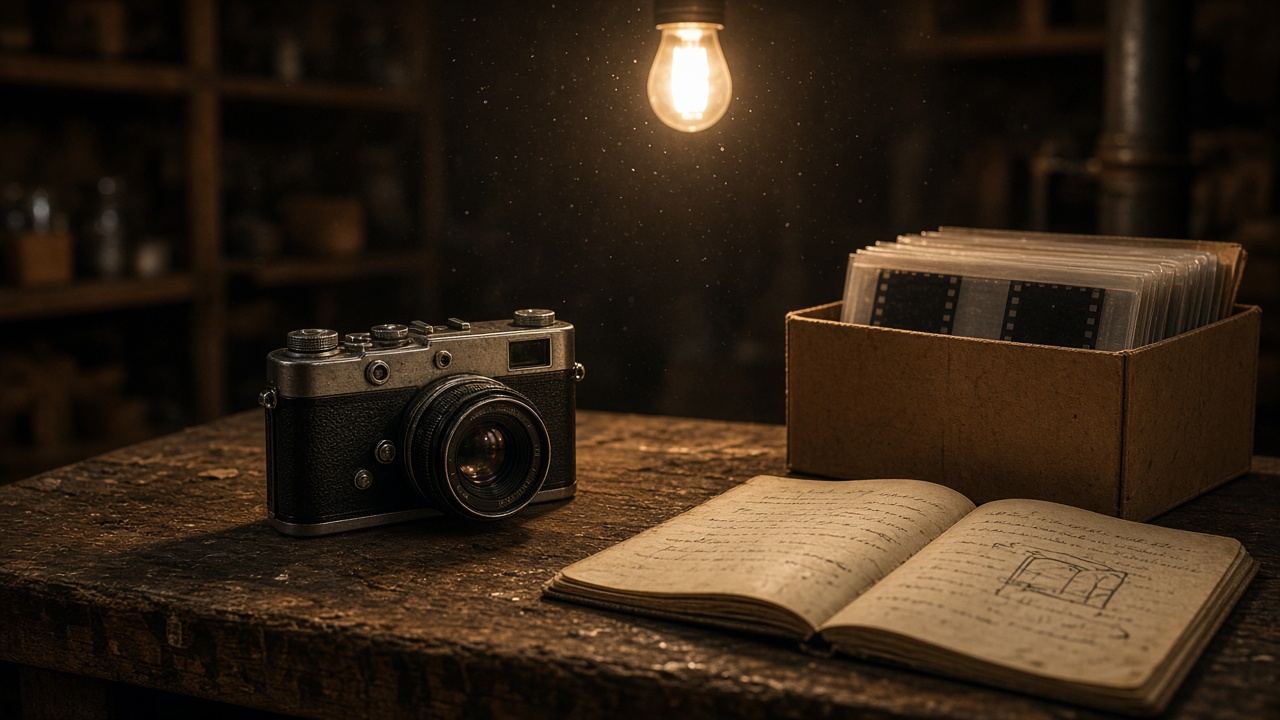
More Than 4,000 Negatives in a Rhode Island Basement: John Baer’s Photographs and the Estate Chore Families Put Off
A pharmacist’s son from coal country photographed a decade of postwar life, then put the camera down for good. His work survived because he kept it and family members found it — which is luck, not an estate plan.
By Sean Anees Saifi · Capital Wealth · Published Sunday, October 4, 2026 · Source: The Wall Street Journal, October 3–4, 2026 weekend edition, whose market figures are the Friday, October 2 close (Books)
Key Points
John Baer, a G.I. and pharmacist’s son from the coal-mining town of Bolivar, Pa., got a Leica III from a captured German soldier; in October 1945, with the 644th Tank Destroyer Battalion bound for home, he turned it on his buddies aboard a French train.
Baer shot more than 4,000 negatives between 1945 and 1954, from Manhattan’s East Village (he moved there in 1948) to postwar Europe (he went back in 1950), and kept them in his Rhode Island basement.
Late in the run he apparently pushed high-contrast printing to the extreme in a bathroom darkroom, then quit the camera cold. He died in 1994, never recognized for the work.
His son Andrew and daughter-in-law Megan Moynihan found and arranged the archive; some 250 images appear in print for the first time in John Baer: The Extraordinary Ordinary (247 pages, $65).
Reviewer Isaac Sligh of the New Criterion reads the book as proof of how the camera put serious art within reach of ordinary people.
4,000+
negatives Baer shot from 1945 to 1954, kept in his basement
250
images in print for the first time in the new book
1994
the year Baer died, his photos still unpublished
$65
price of the 247-page book from the John Baer Archive
Some 250 of Baer’s images are now in print — chosen from more than 4,000 negatives his family first had to find.
In one line: John Baer’s decade of photographs survived in a basement because he kept them and his family found them; plenty of family archives, and the stories that explain them, aren’t that lucky.
Plenty of family basements hold something nobody’s really looked at in years. John Baer’s held more than 4,000 negatives.
The camera came from the enemy. John Baer, a G.I. and pharmacist’s son from the coal-mining town of Bolivar, Pa., got a Leica III off a captured German soldier, and in October 1945 — his 644th Tank Destroyer Battalion bound for home after Normandy, the Battle of the Bulge and a Nazi concentration camp — he aimed it at the men around him on a French train: one trying to nap, another digging into a box of Cracker Jacks. Over the next nine years he kept shooting — street life in Manhattan’s East Village after he moved there in 1948 with his wife, Louise, his favorite model; cyclists and kids among Europe’s ruins after he went back in 1950.
Then he simply stopped
Isaac Sligh, reviewing the new book in the Journal’s Books pages, watches a self-taught snapshooter turn into a serious artist, one whose detailed darkroom notes show how hard he worked for his effects of light and shadow. Late in the run he pushed his prints to the edge in a bathroom darkroom, apparently with high-contrast printing and an X-Acto knife, until his figures became flat silhouettes. Then he quit photography for good. He died in 1994, and he’d never been celebrated for any of it. The negatives sat in his Rhode Island basement until his son Andrew and Andrew’s wife, Megan Moynihan, found and arranged them. Some 250 images are now in John Baer: The Extraordinary Ordinary (247 pages, $65), from the John Baer Archive.
Our read
This is an Estate piece, and it isn’t about money — until it is. Lots of families have a version of Baer’s basement: albums, a coin jar that’s secretly a coin collection, a watch from the war, letters, an old hard drive, a statement for an account nobody remembers opening. Baer’s work survived because he kept it and his son and daughter-in-law found it. Plenty of family archives run on the same luck, and when it runs out, it’s quiet — things get tossed, sold for scrap, split badly or fought over because nobody wrote down what they were or who should get them.
Here’s what beats luck. Take an inventory of what’s there and where it lives. Write down what it means: Baer’s darkroom notes are part of why a reviewer can describe his methods decades later, and a single line on the back of a photo does the same job for your heirs. And name who gets what, ideally in a written list your estate documents point to, including who’ll control any creative rights. Give the basement one fall Saturday and a notepad. Labeling the box yourself is a lot kinder than leaving the kids to guess — and the first pass is an afternoon, not a project.
What It Means For Your Portfolio
Hold — inventory the basement and write down the stories
No portfolio action — the move is an estate chore: list what’s stored, say what it is and why it matters, and name who gets it.
General planning principles, not advice for anyone in particular. Many states let a will refer to a separate written list for tangible personal property — the watch, the albums, the camera — which is easier to update than the will itself. Ask your estate attorney whether that works where you live.
Creative work carries rights as well as objects: photographs, manuscripts and recordings can carry copyrights that pass through an estate. Say who controls them, and leave a note on what’s in the box. Heirs can’t value, or treasure, what they can’t identify.