Amy Tara Koch turned 55 and, by her account, her tidy life came apart at the seams: no sleep, night sweats, anxiety up, libido gone, and a waistline that staged a sit-in against her favorite jeans. She’d been drafted, she writes, into “Club Menopause, a membership about as unsexy as AARP.” Her first-person piece in this weekend’s Journal Off Duty is a dispatch from the clubhouse — which turns out to be a circuit of medical spas that bill in the thousands.
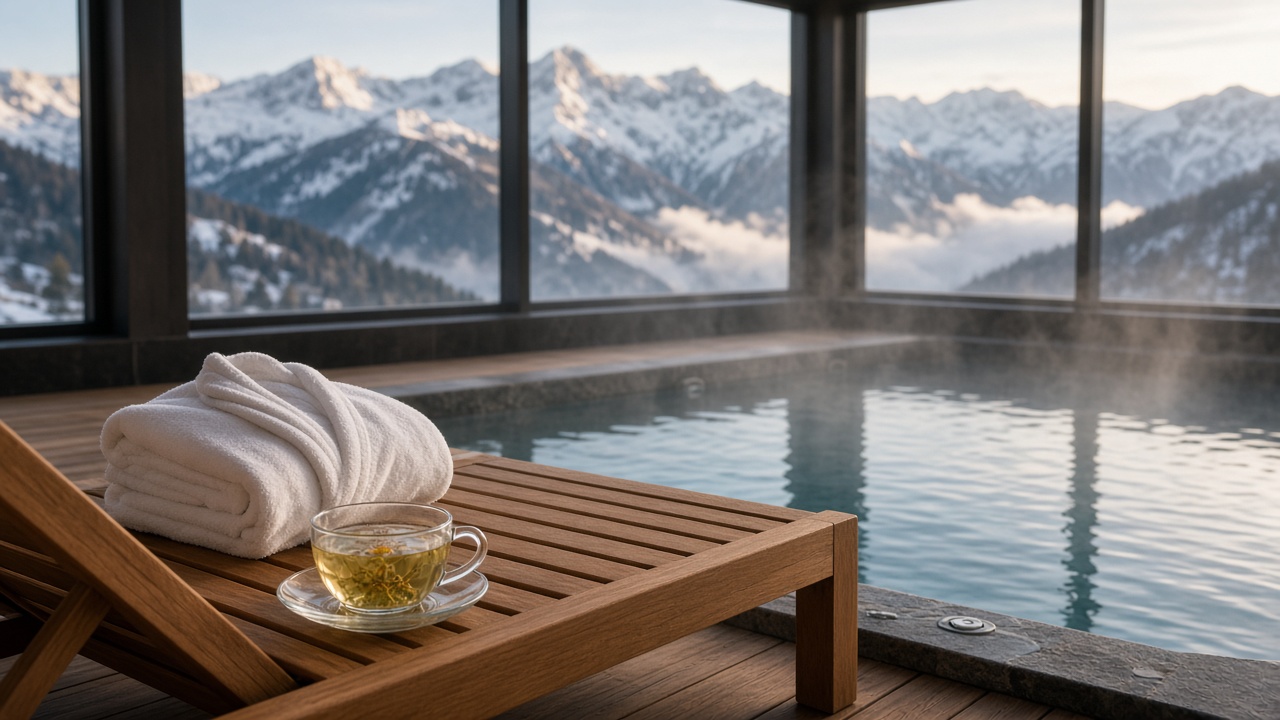
Medicine came first. Bijuva, the bioidentical hormone her gynecologist prescribed, barely moved the needle; a year on, a menopause specialist’s patch, cream and pills ended the hot flashes and the sleepless nights without making her feel like herself. So she followed a friend’s tip to Palace Merano, below Italy’s Dolomites — a 9-hour flight, then a 2.5-hour drive up from Milan, rewarded with fennel tea where a Negroni should’ve been. The four-day Detox & Longevity program runs around $3,700, plus roughly $500 a night, and pairs Traditional Chinese Medicine with Western science: a diagnostic panel, vitamin B and glutathione drips, acupuncture, cupping, mud, and a menu without cheese, red meat, white bread or pasta. She left sharper, steadier under stress and 5 pounds lighter, while conceding that four days can’t rewrite hormonal biology.
The Cancún wing, with fine print
Sha Mexico, in Costa Mujeres just north of Cancún, sold her two line items: a Women’s Health Pack ($1,800) with hormone testing and gynecologic consults, and the four-day Rebalance & Energize program ($2,880). The room was another $755 a night. It felt more like a vacation — paddleboards, movie nights, fresh fish — until a doctor, hearing she couldn’t focus, floated two things the FDA hasn’t approved — the peptide Semax and oral oxytocin — plus exosome treatments. She did try the exosomes, two inhaled doses, and felt calmer for a while; within a week of getting home, her thoughts were racing again. Northwestern’s Dr. Lauren Streicher says there aren’t enough clinical trials to know what peptides and exosomes do over the long run. “The wellness landscape is filled with unproven remedies,” she told the Journal.
The business isn’t slowing down. Grand View Research puts menopause — skin care, cooling products, supplements — at $18.7 billion, headed for $28.8 billion by 2033, and the Global Wellness Summit called women’s longevity programs a top trend for 2026. Koch’s next booking is Mayrlife in the Austrian Alps: seven days of Meno Classic for around $4,442, plus about $545 a night. Colon irrigation and hypoxia training are on the card; she suspects the lake swims will do more.
Our read
This is a Health Costs and Cash Flow (M5) story in a bathrobe. Midlife care — specialist visits, hormone prescriptions, testing — is a real, recurring line in a retirement budget, and it often lands in the decade of the biggest savings decisions. Give it its own line instead of raiding the travel fund or the emergency cash. Some of a trip like Koch’s may be medical and some plainly isn’t; whether any of it can be paid from an HSA or FSA turns on IRS rules and documentation, not the spa’s brochure, so check with your plan administrator or a tax pro before you book, not after. And price the whole trip: the program fee is only the headline, and at $500 to $755 a night the room alone can add thousands.
Then bring the skepticism you’d bring to a hot stock tip. A treatment without FDA approval or solid trial data behind it isn’t a bargain at any price; it’s an unpriced risk, and that’s a cost too. Pay for what’s proven, enjoy the pool as the vacation it is, and keep the two ledgers honest. A fast-growing market means more people selling answers — it doesn’t mean more answers. Sketch the midlife-care line on a dry afternoon; it’s a lot harder to find the umbrella at 3 a.m. in a night sweat.