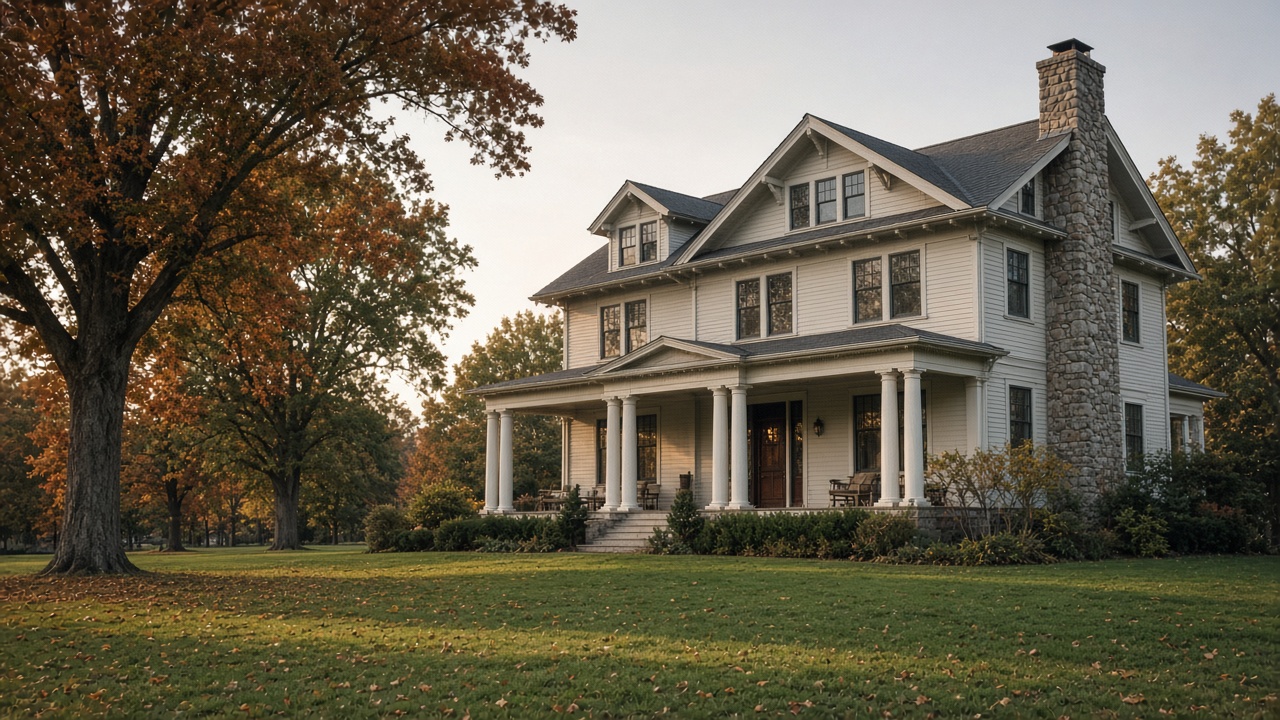
Sometime in the early 1990s, about two dozen Ann Arbor, Mich., neighbors gathered in Sally Bund’s living room for a slide show, and the subject was the ground under their own houses. It had been Oaklands, a 600-acre estate where Arnold Goss, a General Motors (GM) vice president, raised blue-ribbon Jersey cows and supplied Just Jerseys dairy to the neighbors. Goss also helped found Kelvinator, so, naturally, there was a Kelvinator in the kitchen. The main house, circa 1923, is now listed at $3.5 million, Sarah Paynter reports in Friday’s Mansion section.
The farm ended when Goss died in 1938. Gertrude stayed until her death in 1973, the family sold off land, and in 1985 a developer bought the house and cut the last roughly 40 acres into lots. That same year Sally, a preservationist, and Ian Bund, a venture capitalist, paid $671,000 for the house on 5 acres and spent $300,000 over about a year putting it right: peeling off 1960s aluminum siding to find cypress clapboard, restoring the columns, chimneys and stone walkways, eventually rewiring the servants’ call box. In 2012 they put a preservation easement on it that bars future demolition, alteration or development. Sally’s reasoning was blunt — sell it unprotected and “there could be six new homes built.”
Downsizing in their 80s
Both Bunds are now in their 80s, and they’re trading down without leaving town. Their listing agent, Matt Dejanovich of Real Estate One, figures the right buyer will pay a premium for the pedigree. For scale, Redfin puts the city’s median sale at about $475,000 for the three months before September, roughly flat on the year.
Our read
Housing (M6) with an Estate chapter. A preservation easement is about as permanent as a planning decision gets. It’s recorded against the property, usually held by a preservation nonprofit or public agency, and it typically binds every owner who comes after you. It takes the development value off the table — no six lots, no teardown — and narrows the buyers to people who want this house as it is. That may be exactly the buyer who pays up for pedigree, as Dejanovich hopes; it can also mean a longer wait. A donated easement may qualify for a charitable deduction, but those deductions draw close IRS scrutiny and need a qualified appraisal, so they’re a bonus, not the reason to do it.
Then the estate question. The $671,000 purchase plus the $300,000 restoration comes to a bit under $1 million, against a $3.5 million ask: four decades of gain. On a primary home, the federal home-sale exclusion can shelter only part of a gain that size, since it’s capped, and under current law, property held until death generally gets a stepped-up basis for heirs. So for owners in their 80s, selling versus holding is partly a tax call — only partly. Upkeep, liquidity, care costs and simply wanting a smaller life count too, and Ian Bund’s standard for the place (“it’s got to be done right”) doesn’t get lighter with age. Run both paths with your estate attorney and tax preparer before the sign goes up; an umbrella’s cheapest on a dry day.