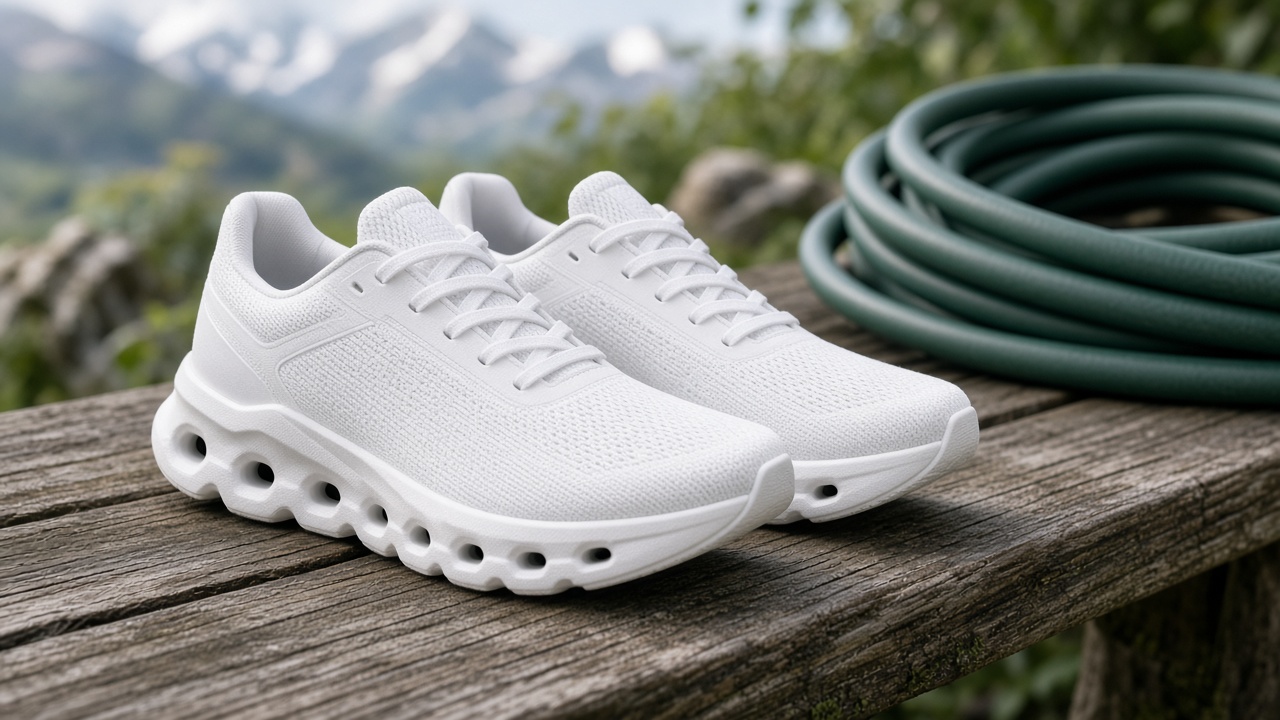
On Built a $160 Sneaker From a Garden Hose and Taught Buyers Not to Wait for a Sale. Its Stock Is Down 33.63% Anyway
On’s founders started with a garden hose and a mood board of iPhones, Eames chairs and Dyson vacuums, and they won’t discount their way to growth. A great product isn’t automatically a great stock — and paying full price on purpose can be a perfectly sound budget decision.
By Sean Anees Saifi · Capital Wealth · Published Sunday, October 4, 2026 · Source: The Wall Street Journal, October 3–4, 2026 weekend edition, whose market figures are the Friday, October 2 close (Exchange)
Key Points
Founder and co-CEO Caspar Coppetti says he sees the world feet up; the company traces back to a retired Swiss Ironman champion, Olivier Bernhard, building a prototype from garden hose, scissors and glue.
The founders’ first mood board held the iPhone, the Eames chair and the Dyson vacuum — products that command a premium. Five years after going public, On does more than $3.5 billion in annual sales.
Classic Ons cost $160; the average footwear price has climbed to $170, among the industry’s highest, and Coppetti told investors the company is teaching customers not to expect a sale.
On’s August report fell short of sales forecasts and showed its weakest quarterly revenue growth since it went public, and the shares lost 20% in one session; the company said it had held back shipments to retailers to protect its pricing.
On Holding (ONON) closed Friday at $30.85, down 33.63% this year; Nike (NKE) is down 46.84% and hit a new 52-week low.
$3.5 billion+
On’s annual sales, five years after going public
$170
average price of On footwear, among the industry’s highest
20%
On’s one-day stock drop after its August report
−33.63%
On Holding (ONON) year to date at Friday’s close
On’s average shoe now sells for $170, among the industry’s highest — and the company is working hard to keep it off the sale rack.
In one line: On turned a garden-hose prototype into a $3.5 billion premium sneaker brand that fights discounting, yet its stock is down 33.63% this year — a reminder that a great product isn’t automatically a great stock, and that paying full price on purpose is a budget choice, not a failure.
Caspar Coppetti doesn’t start with your face. “I see the world feet up,” the founder of On Holding (ONON) tells the Journal’s Ben Cohen, and he isn’t kidding: he clocked Cohen’s Adidas Stan Smiths from across a hotel lobby, and the first thing he noticed about the woman he’d marry was her footwear. She was wearing Ons. Lucky man.
On’s origin story starts with a tinkerer: Olivier Bernhard, a retired Swiss Ironman champion, couldn’t buy the running shoe he had in mind, so he hacked one together from garden hose, scissors and glue. He, Coppetti and David Allemann set up shop in 2010 in Allemann’s kitchen, and their first mood board held three things that sell at a premium: the iPhone, the Eames chair and the Dyson vacuum, which Allemann says sells at five times the category price. Five years after going public, On does more than $3.5 billion in annual sales, its hollow-pod soles are office wear, and Roger Federer is the face.
Full price, on purpose
The strategy is restraint. Classic Ons cost $160, and the average pair now runs $170, among the highest in the business. “We’re educating our consumer not to expect a sale,” Coppetti told investors in Zurich. Restraint has a price, though. On’s August report came in under sales forecasts with its weakest revenue growth since the IPO, and the stock lost 20% in a day; the company said it had held back shipments to retailers to protect its pricing and keep shoes off the markdown rack. On Holding closed Friday at $30.85, down 33.63% for the year.
Our read
Investments/Risk (IN04): a product you love and a stock worth owning are separate questions. On has the brand and the discipline Cohen describes, and the shares are still down about a third this year (33.63%), because a stock prices expectations, and growth slowed. We don’t own it; it’s a watch, not a buy, and the desk isn’t adding anything this weekend. Nike (NKE), down 46.84% for the year and at a new 52-week low, is held at weight in one model book; nothing added.
Then the Behavioral half. On’s whole pitch to you is that waiting for a sale isn’t the smart move, and sometimes that’s right. Paying full price for running shoes you’ll actually wear out is a budget decision, not a failure — cost per wear beats the sticker. The trap runs the other way: the markdown that talks you into a third pair you didn’t need. Give the things you value a line in the budget, set the number once, and checkout stops being a test of your character. And if a favorite brand has crept into your portfolio because you love the product, that’s worth a look at the next review — better to lace up before the rain than after.
What It Means For Your Portfolio
Watch — love the shoe, price the stock separately
No portfolio action — On Holding (ONON) isn’t owned and stays on watch; Nike (NKE) is held at weight in one model book, nothing added. A great product isn’t a valuation.
General planning principles, not advice for anyone in particular. Before buying a stock because you love the product, ask what the share price already assumes; On fell 20% in a single day when growth slowed, even as the brand held its prices. Size any single-company idea so a day like that doesn’t change your plan.
On the spending side, give full-price purchases you genuinely value a fixed line in the budget. Paying full price on purpose usually beats buying extras because they’re marked down.