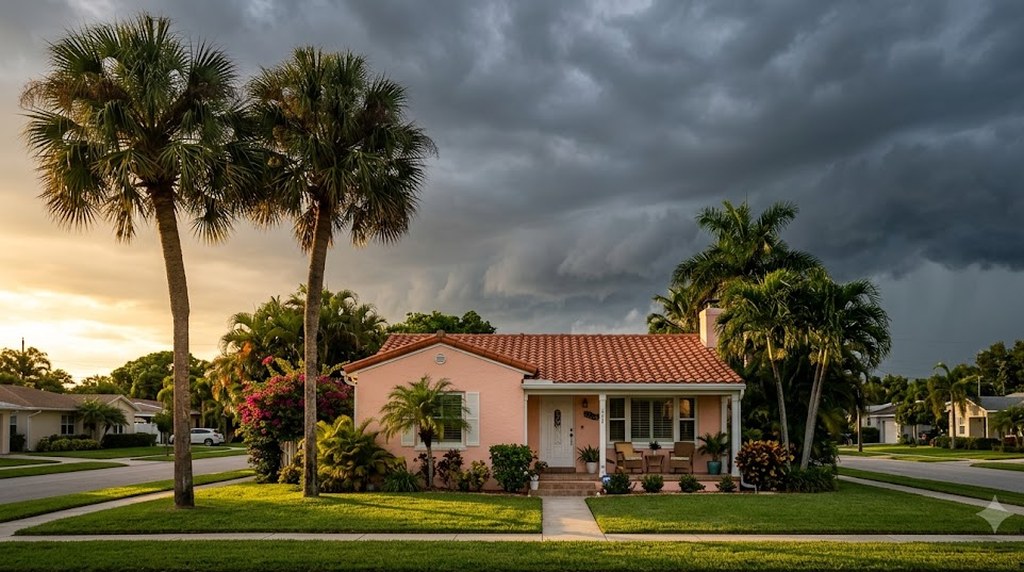
The man who made a career out of guillotines and boa constrictors has, it turns out, the most conservative housing plan in rock and roll. Alice Cooper bought a house near Phoenix in 1972 with his first rock-star paycheck — $90,000 — and he and his wife, Sheryl, still live there. It's more than tripled since, to 7,000 square feet from 2,000, and it's a Spanish hacienda now. And his latest splurge, he tells the Journal's Marc Myers in Friday's House Call? “A new central AC system.” In that heat, he says, it runs constantly.
The money story starts well before the money. He was born Vincent Furnier — only Keith Richards calls him Vinny — and the first family home was an old two-story house in Eastpointe, Mich., outside Detroit. His father had learned drafting in the Navy and worked his way from salesman to electronics engineer; his mother had riveted during World War II. He was born with infantile asthma, and at 10, in 1958, the family moved to a Phoenix duplex. “The dry heat burned the asthma out of me,” he says. Two family restaurants came and went, there was a short spell back in Detroit, and then a West Los Angeles apartment, where an uncle helped his father into a job at the Jet Propulsion Laboratory.
At 13 he was back in Phoenix, in a two-bedroom camper in a trailer park, when the appendix went: a rupture and peritonitis, a doctor warning his parents he might not survive, 25 days in the hospital, a year in bed, the remainder removed at 14. By the end he was rail-thin, his spine curved, much of his hair gone to the antibiotics. Then a Goodyear Aerospace job moved the family into a new three-story house. Count the addresses: a half-dozen before the band, most of them following a paycheck or a failed business. The kid dressed as Zorro every Halloween, loved horror films for the humor, saw Salvador Dalí on television in 1963 and decided eccentric was cool.
The same house since 1972
The health came back; so did the hair. He made varsity cross-country as a freshman, formed a band with four friends for a talent show — Beatle wigs, track outfits, girls hired to scream — and cycled through the Earwigs, the Spiders and the Nazz before landing on Alice Cooper. A 1969 deal with Frank Zappa's Straight Records produced two LPs that went nowhere; Shep Gordon, the manager, relocated the band to Michigan, Midwestern crowds went for the horror-show rock, and Warner Bros. took over the contract. The first big check went into a house, and the house is still there. In October they're almost always on tour, so a cauldron of candy waits outside. “We rely on the honor system,” he says.
Our read
This is Housing (M6) with Time Value of Money (M3) riding along. Strip off the eyeliner and it's a plan we'd draw for a lot of people: buy once, with the first real windfall; stay; add on instead of trading up. Every move costs money — commissions, transfer taxes, a new mortgage at a new rate, furniture that doesn't fit — and 54 years in the same house (1972 to now, our arithmetic) skips that bill again and again and lets time do the compounding. Additions aren't free either, and the paper prints no current value for the house or price for the work; we won't guess. The point isn't the gain. The point is he never had to pay to start over.
And the splurge at 78 is an air conditioner. That's Cash Flow (M5). Later in life — and he's still touring — the roof, the AC and the plumbing are a budget line with a date on it, not a surprise. A Phoenix compressor that runs constantly has a lifespan, and the plan should know roughly when it ends, the way it knows when the car gets replaced. You don't wait for the first hot week in June to learn the unit's dead, and you don't wait for the drip to look at the roof.