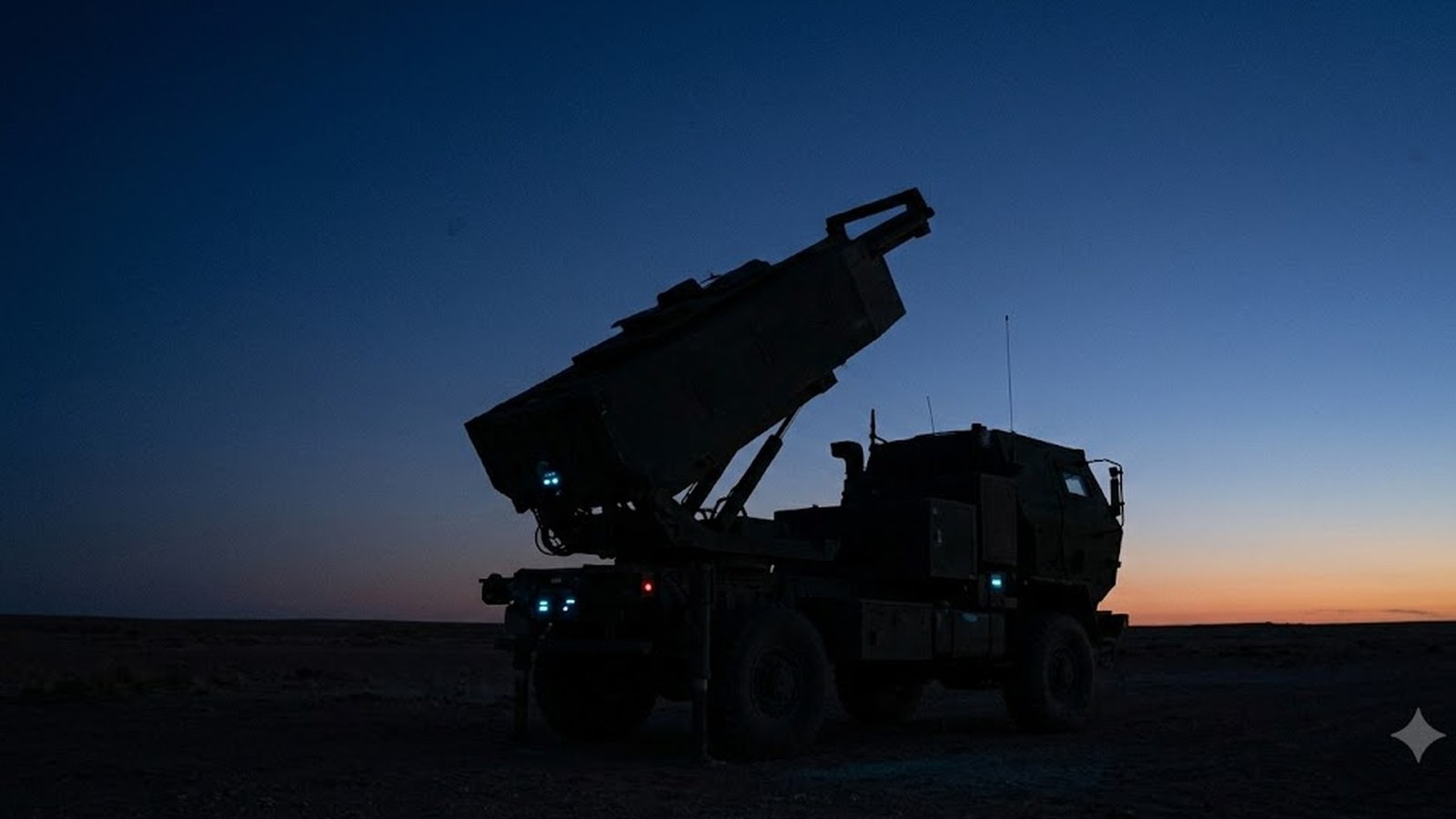
“The president wants more. The secretary wants more. I want more.” That's Steve Feinberg — a Bronx-raised private-equity billionaire, co-founder of Cerberus Capital Management and now the Pentagon's No. 2 — in his first interview since taking the job last year. The more is weapons. In July, the Journal reports, the president had him called from Camp David to ask why reports still said the U.S. had paused attacks on Iran over dwindling weapons stocks, when restocking was Feinberg's job. For a Lockheed Martin (LMT) or RTX (RTX) shareholder, the question is narrower: what's a deal headline worth?
Lara Seligman, Drew FitzGerald and Marcus Weisgerber lay out what reads like a buyout firm's playbook run inside the Defense Department: a procurement office that answers to him, billions of dollars in government stakes in suppliers of critical materials, rocket engines and other parts, and a heavy reliance on firms and executives he knew from Cerberus. The itemized bills: $300 million to Alvarez & Marsal, the turnaround firm and longtime Cerberus partner; about 300 retired auto and other executives paid $150 to $170 an hour to walk contractors' factories and offer advice; and up to $244 million to Palantir (PLTR) for a platform called War Machine. Some officials have privately asked why the Pentagon, rather than the contractors, is paying; Feinberg says the department is short of people who've actually run a factory.
A framework is not an order
Here's the part that touches a portfolio. Under Feinberg the Pentagon has signed more than a dozen preliminary deals to push weapons makers and their suppliers to build munitions faster. The Journal's chart shows five early framework deals — Patriot and THAAD interceptors with Lockheed; Tomahawk, Standard Missile-3 and Standard Missile-6 with RTX — struck early in the year and months ahead of the contract actions, some of which aren't final. Congress hasn't funded most of the program; lawmakers are still haggling over the administration's $1.5 trillion defense-budget request. Todd Harrison of the American Enterprise Institute calls the preliminary deals “a plan to make an agreement”; without funding, nothing starts. Last December showed the gap: Feinberg asked lawmakers for roughly $28 billion more for new missiles after the year's spending bills were done, and Congress eventually found about $8 billion. On A9 is the demand side: Ukraine is short of Patriot interceptors because of a global shortage since the U.S.-Iran war. The need is real. The money is the slow part.
The conflict-of-interest file gets both sides. Feinberg put his Cerberus interests in an irrevocable trust for his adult children; critics, among them some of the president's allies and Democrats, point to Cerberus companies that draw on national-security spending and to the defense-focused venture fund the firm launched in 2024. A senior Pentagon official says national-security profits that would otherwise reach the trust will go to charity, and a Cerberus spokesman says Feinberg isn't involved in its operations. The Pentagon also hired Cerberus's law firm to help negotiate some deals, and some weapons makers hired advisers including Goldman Sachs (GS), his former bank, to negotiate back.
Our read
This is Investments/Risk (IN04), and the rule is old: an announcement isn't an order, an order isn't revenue, and revenue isn't cash until it's billed and paid. A framework struck in winter that turns into a contract action months later — on a chart that warns some contracts aren't final — is a plan to buy. The Journal doesn't tie any of this to Thursday's prices and neither do we; for the record, Lockheed closed at $507.89, up $8.67, and RTX at $184.32, up $4.06. Lockheed is held at weight in 29 of our 81 model books, RTX in 19, General Dynamics (GD) in 19, Northrop Grumman (NOC) in 16 and Palantir in 20; nothing added.
Verdict: hold. When the next headline deal lands, look for the funded backlog in the company's filings rather than the press release — and the appropriation rather than the request. December made the point: a roughly $28 billion ask, made after the year's bills were done, came back as about $8 billion. That's one request, not a rule, but it's the difference between money asked for and money appropriated. If defense names have grown into a bigger slice of your portfolio than you decided on — general principles, not advice — that's a review question, and it's easier asked before the next budget fight than during it.