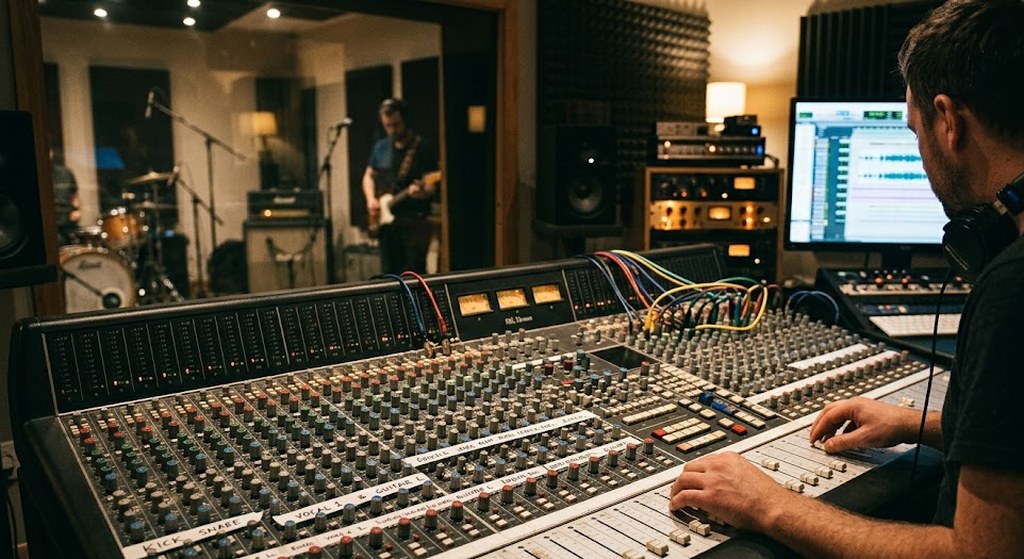
One man, a microphone and a small team now reach about 28.4 million Americans a week. That's Edison Research's count for the second quarter, and it's more than four times the 6.6 million the show drew at the start of 2020, the year Spotify first wrote a nine-figure check — our arithmetic, the napkin kind. Now Spotify (SPOT) has signed Joe Rogan again, Anne Steele reports on Friday's B3: a multiyear deal that keeps the show's licensing rights and ad sales with the streamer. People familiar with the matter say the terms look like his last contract, whose earnout was estimated at $250 million. The new number isn't printed. The old one tells you enough.
The interesting part isn't the size; it's the shape. In 2020 Spotify paid more than $100 million to make the show exclusive and jump-start a podcast business it barely had. Exclusivity is the classic distributor's move — lock up the talent, make the audience come to you — and for some shows it backfired: they went Spotify-only and lost listeners. Rogan's grew. So in early 2024 the two sides renewed on different logic: Spotify stopped keeping the show to itself and sent it out across podcast platforms, YouTube among them, and the audience kept climbing. It now has more than 18 million followers on Spotify and more than 21 million on YouTube, and it has topped Edison's list of the most-listened-to U.S. podcasts since that tracking began in 2019. Spotify stays hands-off; Rogan and a small team keep editorial control. His verdict on the arrangement: “I'm extremely happy and excited to continue with them for years to come.” Spotify's head of content partnerships, Jordan Newman, says the company's podcast business grew up alongside the show; Spotify, the biggest audio streamer, has 300 million premium subscribers.
Own the audience, rent the pipe
Here's the business-owner translation. Rogan owns the thing that can't be copied — an audience's habit, built since the show launched in 2009 — and licenses the things that can: distribution and ad sales. That's the reverse of how most creative careers work, where the platform owns the relationship and the talent rents a slot. It's also, quietly, the reverse of how most small businesses are built: the franchisee, the agency with one anchor account, the consultant whose biggest client is most of the revenue. The person with the audience sets the terms. The person with the pipe pays for them.
Our read
We'll file this under Career — human capital — because that's what's being priced. A multiyear deal with one counterparty is still a one-client income, however many zeros it carries, and we'd give a podcaster the same counsel as a dentist whose practice lives inside one insurer's network or an engineer whose net worth is one employer's stock: the paycheck is the biggest asset you own and the least diversified. The Rogan structure handles that about as well as it can be handled — the audience looks portable, the contract is a license, and if the distributor walked, the followers would most likely stay with the show. Most people's version is a skill the market pays for without the badge on the building, a reputation that travels, and a savings rate that doesn't assume the current deal renews.
On the money side, lumpy contract income — an earnout, a commission year, a bonus — wants a different plan than a salary: pay the tax before you spend it, park the next two or three years of fixed costs where a bad renewal can't reach them, and set the household's lifestyle on the floor of the income, not the ceiling. Spotify isn't held in the practice's books; YouTube's parent, Alphabet (GOOGL), sits in 28 of 81, held at weight, nothing added, and nothing here changes that. The review question for any one-client earner is worth asking before the contract comes up, not after: if this check stopped, how many months would the plan run on its own?